Island hopping Palawan Philippines turquoise lagoons limestone karst aerial
🌏 Asia · Southeast Asia
🇵🇭

Best Things to Do in the Philippines

7,641 islands — and nine experiences that show you why the Philippines is one of the most extraordinary countries on Earth.

The Philippines is one of the most naturally extraordinary countries in the world — 7,641 islands stretching across the western Pacific, with some of the most biodiverse marine ecosystems on Earth, an active volcanic landscape that produces scenery of breathtaking drama, limestone karst formations rising from impossible turquoise water, and a culture of warmth and generosity that makes every encounter feel genuinely welcoming. From the electric-blue waterfalls of Cebu to the glowing firefly rivers of Palawan to the perfect volcanic cone of Mayon, these nine experiences are where to start.
1

ATV Around Mayon Volcano

🏍 Adventure · Easy · Year-Round
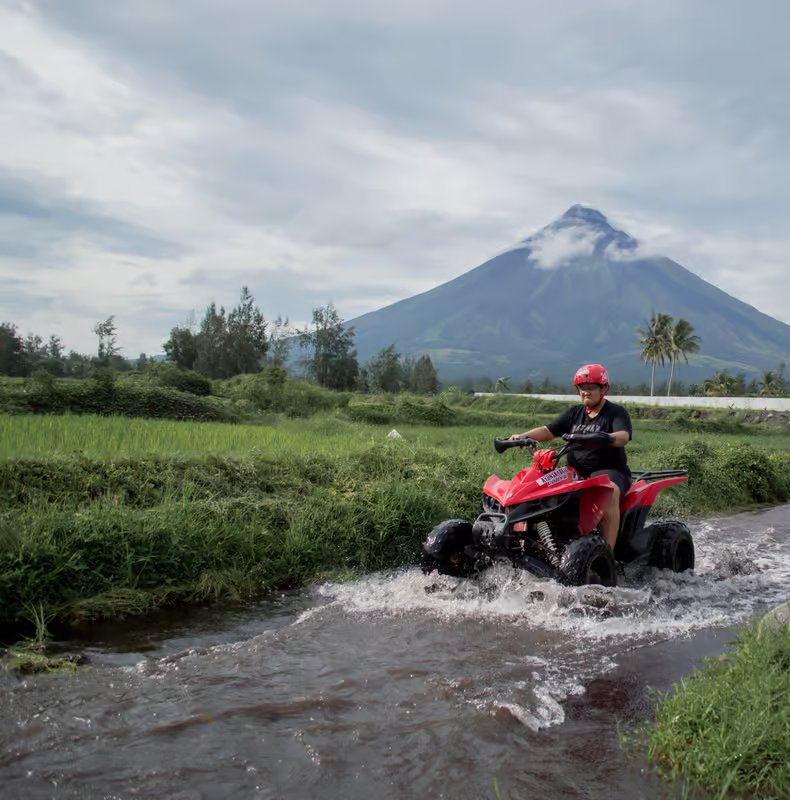
ATV around Mayon Volcano Philippines rice paddies river crossing

Mayon Volcano is considered the world's most perfectly formed volcanic cone — its near-symmetrical profile rises 2,463 metres from the Albay plain in a near-perfect triangle that has made it one of the most photographed natural formations in Southeast Asia. The Mayon ATV tour takes you across the lava fields, through river crossings, and between the rice paddies of the surrounding farmland with the volcano dominating the entire skyline above you — cloud-wreathed at altitude, its flanks scarred by lava flows, its form impossibly geometric against the Philippine sky.

The ATV route covers terrain that ranges from smooth agricultural tracks to rough lava-field crossings and shallow river fords — genuinely varied riding that produces real adrenaline without requiring any previous ATV experience. Hotel pickup is included in the tour. Mayon is an active volcano (it has erupted over 50 times since records began) — tours operate when activity levels are safe, and the combination of potential danger and perfect beauty creates a distinctive atmosphere that conventional sightseeing doesn't deliver.

Getting to Legazpi City

Legazpi City in Albay province is served by direct flights from Manila (1 hour) and Cebu. It is one of the Philippines' most rewarding secondary destinations — the Albay region combines Mayon's volcanic landscape with excellent seafood, the historic Cagsawa Ruins (a church buried by Mayon's 1814 eruption), and a genuinely uncrowded travel experience.
Volcano Height
2,463m
Eruptions
50+ since records began
From Manila
1 hour by flight
Season
Year-round (when safe)
Hotel Pickup
Included
Difficulty
Easy
📋 Planning Tips
Book through GetYourGuide in advance — hotel pickup is included. Early morning provides the clearest views of Mayon's cone before afternoon clouds build around the summit. Check current volcanic activity levels before travelling — tours are suspended during elevated alert periods. Combine with a visit to the Cagsawa Ruins where Mayon's lava buried an 18th-century church, leaving only the bell tower visible above the lava field.
⭐ Why It's Worth It
Riding an ATV through river crossings and lava fields with the world's most perfectly shaped volcano filling the entire horizon is the kind of experience that doesn't translate well into descriptions — you just have to be there, in the warm Philippine air, with the cone rising above you and the rice paddies spreading below, to understand why Albay is one of the country's most extraordinary landscapes.
Mayon Volcano ATV tour Legazpi GetYourGuide Philippines
Mayon Volcano ATV Tour — Legazpi City
Ride ATVs through rice paddies, river crossings, and lava fields with the world's most perfect volcanic cone dominating the skyline.
Book Tour →

2

Swim with Whale Sharks, Oslob

🦈 Wildlife · Easy · Year-Round
Snorkelling with whale shark Oslob Cebu Philippines underwater

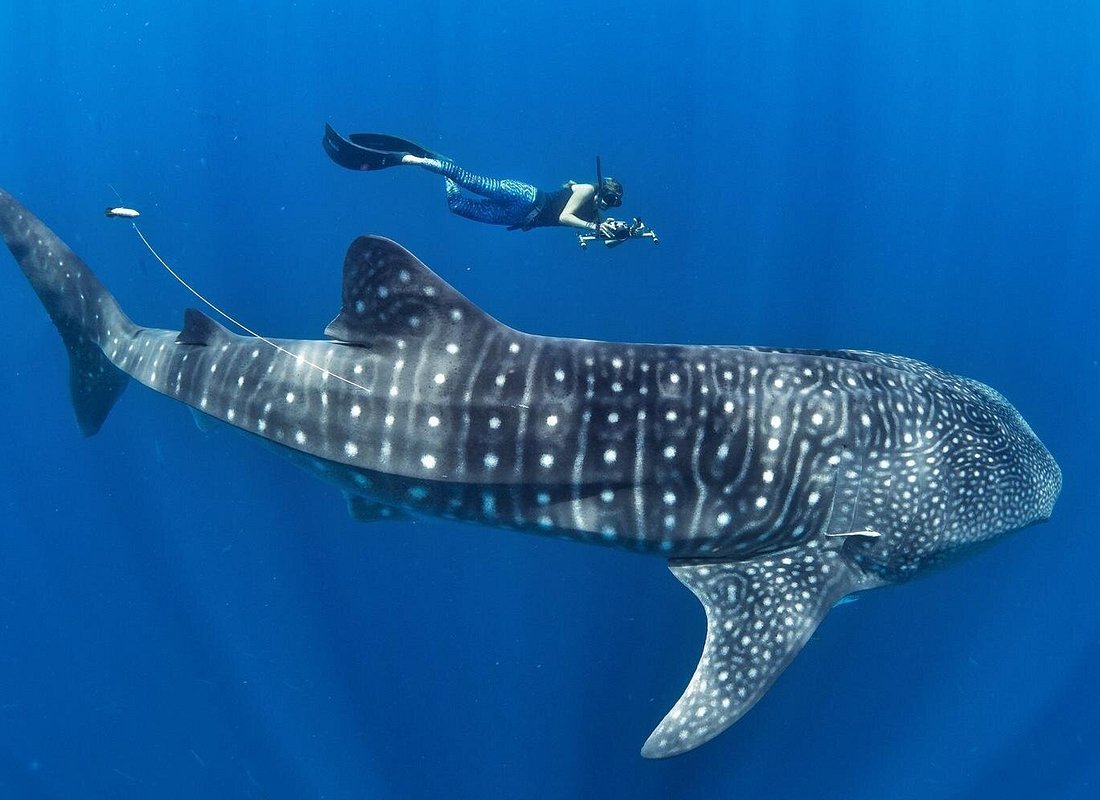
Oslob on the southern tip of Cebu is one of the few places in the world where you can reliably snorkel alongside whale sharks year-round — the largest fish on Earth, reaching up to 12 metres in length, moving through the water with an unhurried grace that makes the scale of their bodies completely astonishing from just a few metres away. The whale sharks are attracted to the area by local fishermen who feed them small shrimp, which has created a consistent year-round encounter that is the most accessible whale shark experience in Southeast Asia.

The encounter takes place in a small area of shallow water just off the beach — snorkellers enter the water from outrigger boats and the whale sharks move between and around them, completely unbothered. The spotty grey-blue skin, the enormous flat head with its wide filter-feeding mouth, and the sheer scale of the animal are overwhelming in person. The experience typically lasts 30 minutes and the guides are excellent at positioning snorkellers near active sharks.

Conservation Note

The Oslob encounter is controversial among conservationists who argue that feeding wild sharks changes their natural behaviour and creates dependency. Responsible travellers should weigh this — but the encounter remains the most accessible whale shark experience in Asia and operates under regulations that limit boat numbers and prohibit touching. Donsol in Sorsogon offers a non-feeding alternative where whale sharks are encountered on their natural migration route.
Shark Length
Up to 12m
Season
Year-round
From Cebu City
~3 hours by bus
Duration
~30 min in water
Experience
None needed (snorkelling)
Difficulty
Easy
📋 Planning Tips
Arrive as early as possible — the whale sharks are most active in the early morning and the crowds build significantly after 8am. No touching is strictly enforced; fins and sunscreen are prohibited in the water (use reef-safe lotion). Book a combined tour from Cebu City that includes transport and combines Oslob with the Tumalog Waterfalls nearby — one of the most beautiful short hikes in Cebu.
⭐ Why It's Worth It
The scale of a whale shark in person is one of those things your brain simply cannot process from photographs. When a 10-metre animal glides past you just below the surface, moving slowly but covering ground faster than you can swim, and you register just how large it is — there is a specific kind of awe that kicks in, different from anything else in nature. It is one of the most viscerally remarkable wildlife encounters available in Southeast Asia.
Whale shark swim Oslob Cebu Viator Philippines
Whale Shark Swim — Oslob, Cebu
Snorkel alongside 10-metre whale sharks year-round in Cebu's warm waters — the most accessible whale shark encounter in Southeast Asia.
Book on Viator →

3

Canyoneering to Kawasan Falls, Cebu

🏞 Extreme · Moderate · Year-Round
Canyoneering Kawasan Falls Cebu Philippines waterfall jungle gorge

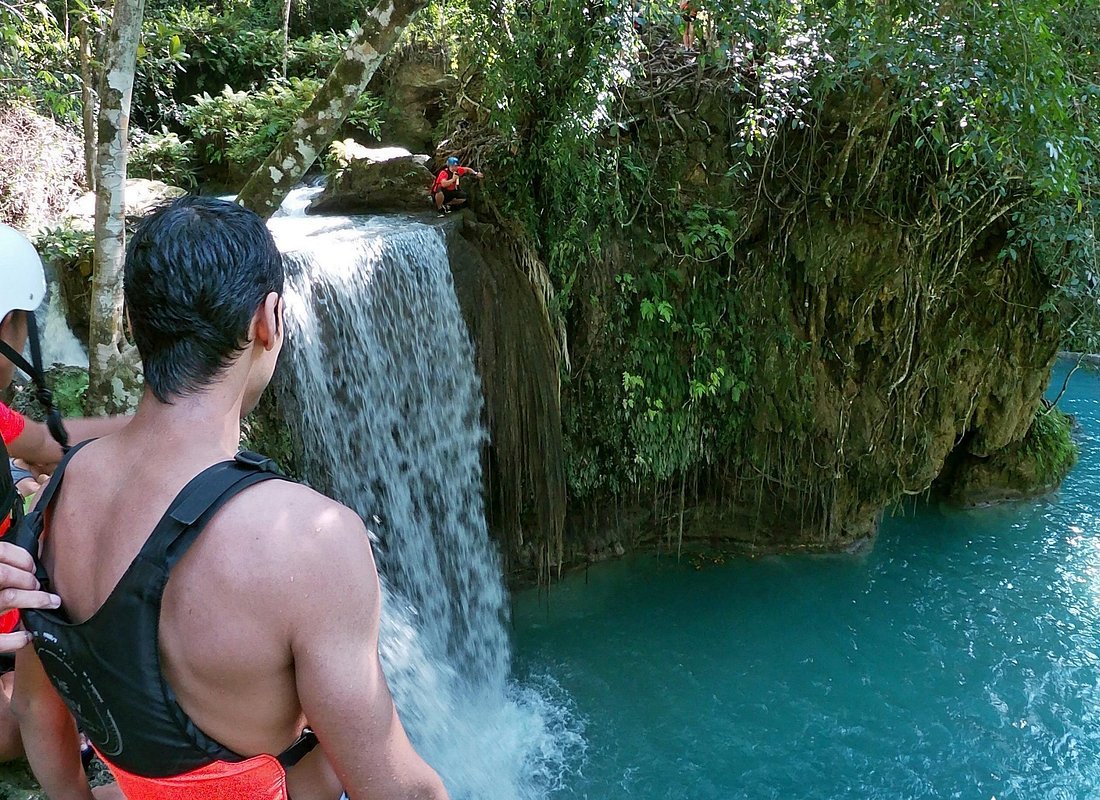
The Kawasan Falls canyoneering experience is one of the finest half-day adventures in Southeast Asia — a 4–5 hour journey through a series of jungle gorges in the mountains of southern Cebu, involving swimming through river pools, cliff jumping from platforms at 3 to 10 metres, rappelling down rock faces, sliding through natural water chutes, and crawling through narrow canyon passages, all building toward the finale: the electric-blue pools of Kawasan Falls, where three tiers of turquoise water cascade from the jungle above into pools you can swim in.

The canyon is carved through limestone by the Matutinao River, and the water ranges in colour from deep blue to vivid turquoise depending on the light — a geological phenomenon caused by the mineral content of the limestone and the depth of the pools. The entire route is guided, all safety equipment is provided, and the operators running the canyoneering routes are experienced. No previous canyoneering experience is required, but a reasonable level of fitness and basic swimming ability are essential.

Getting to Kawasan Falls

The canyoneering starts in Badian, about 90km south of Cebu City — roughly 2.5 hours by bus or 2 hours by private car. Most tour operators provide transport from Cebu City as part of the package. The route ends at Kawasan Falls where you can swim before the return journey. Book with a licensed operator — there are unfortunately operators who cut safety corners; stick to reputable names.
Duration
4–5 hours in canyon
Jump Heights
3–10m cliff jumps
From Cebu City
~2.5 hours by bus
Season
Year-round (avoid typhoon)
Swimming
Required ability
Difficulty
Moderate
📋 Planning Tips
Book with a reputable, licensed operator — Viator listings verify operators. Wear sports sandals or water shoes (not flip-flops); secure your valuables in a waterproof bag. The cliff jumps are optional — you can always take the alternative route. Go hungry: most operators provide a snack stop near the end. Combine with Oslob whale sharks in the same day by doing canyoneering in the morning and whale sharks in the afternoon (or vice versa — both are in southern Cebu).
⭐ Why It's Worth It
Canyoneering Kawasan is the kind of experience where you're slightly terrified for most of it and completely euphoric by the end. The moment you arrive at the turquoise pools of Kawasan Falls after four hours of swimming, jumping, and rappelling through the jungle is one of those earned travel moments that feels genuinely extraordinary. The electric blue of the water is unlike anything you'll have seen before — it is one of the most beautiful natural colours in Southeast Asia.
Canyoneering Kawasan Falls Cebu Viator Philippines
Canyoneering to Kawasan Falls — Cebu
Swim, jump, rappel, and slide through jungle gorges to the electric-blue pools of Kawasan Falls — one of the finest half-day adventures in Southeast Asia.
Book on Viator →

4

Swim with Dugongs, Coron

🌊 Wildlife · Easy · Year-Round
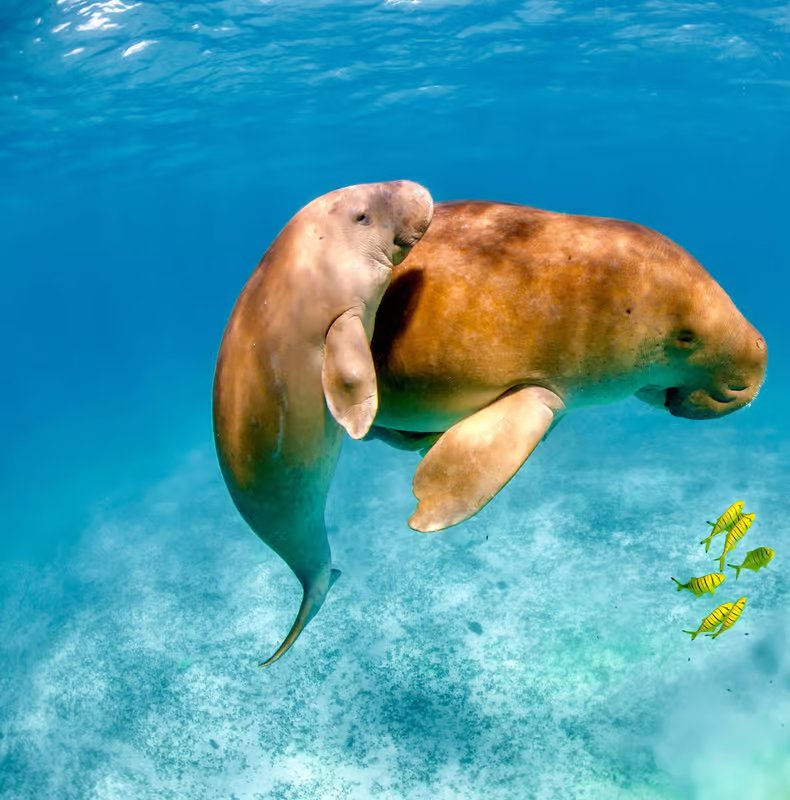
Dugong mother and calf Coron Philippines underwater

The dugong — the gentle, endangered sea mammal related to the manatee — is one of the rarest wildlife encounters in Southeast Asia. Coron Bay in northern Palawan holds one of the healthiest dugong populations in the Philippines, grazing on the extensive seagrass beds in the shallow lagoons between the limestone islands. Snorkelling alongside a dugong — watching it graze slowly across the sandy bottom, rising periodically to breathe at the surface — is one of the most moving wildlife encounters in the region. A mother and calf together in the shallows is genuinely extraordinary.

The GetYourGuide tour combines the dugong encounter with a visit to a sea turtle cleaning station and a coral garden snorkelling stop — making a single trip a comprehensive marine wildlife experience that most visitors don't know exists in Coron. The dugong sighting is not guaranteed (they are wild animals) but the operators know the regular grazing areas and sighting rates are consistently high in the calm lagoons of Coron Bay.

Getting to Coron

Coron is served by direct flights from Manila (1 hour) and Cebu. It is one of the Philippines' most rewarding destinations — combining the dugong encounter with wreck diving (Coron Bay holds some of the best wreck dive sites in the world, including Japanese WWII ships), clear kayaking in the lagoons, and island hopping between the limestone formations.
Also See
Sea turtles, coral gardens
Status
Vulnerable (IUCN)
From Manila
1 hour by flight
Season
Year-round
Sighting Rate
High (not guaranteed)
Difficulty
Easy
📋 Planning Tips
Book in advance — this tour is popular and group sizes are capped. Move slowly and quietly in the water near dugongs — they are shy animals and will leave the area if startled. The sea turtle cleaning station is an extraordinary bonus — turtles swim through a coral arch to have parasites cleaned by small fish, completely ignoring snorkellers watching from a few metres away. Use reef-safe sunscreen only.
⭐ Why It's Worth It
Snorkelling alongside a dugong is the most unexpectedly emotional wildlife encounter in the Philippines. They are unhurried, gentle, completely absorbed in grazing — enormous animals moving with absolute calm through clear shallow water, surfacing to breathe with a quiet exhalation. Seeing a mother and calf together in the lagoon shallows is the kind of moment that stays with you permanently. Most people who visit Coron don't know this exists. It is the best-kept wildlife secret in the Philippines.
Dugong watching sea turtle coral garden tour Coron GetYourGuide Philippines
Dugong Watching with Sea Turtle & Coral Garden — Coron
Snorkel alongside wild dugongs, sea turtles, and coral gardens in the shallow lagoons of Coron Bay — one of the rarest wildlife encounters in Southeast Asia.
Book Tour →

5

Kayaking & Snorkelling in Coron

🚣 Water · Easy · Year-Round
Clear kayaking Coron Palawan Philippines turquoise lagoon limestone cliffs

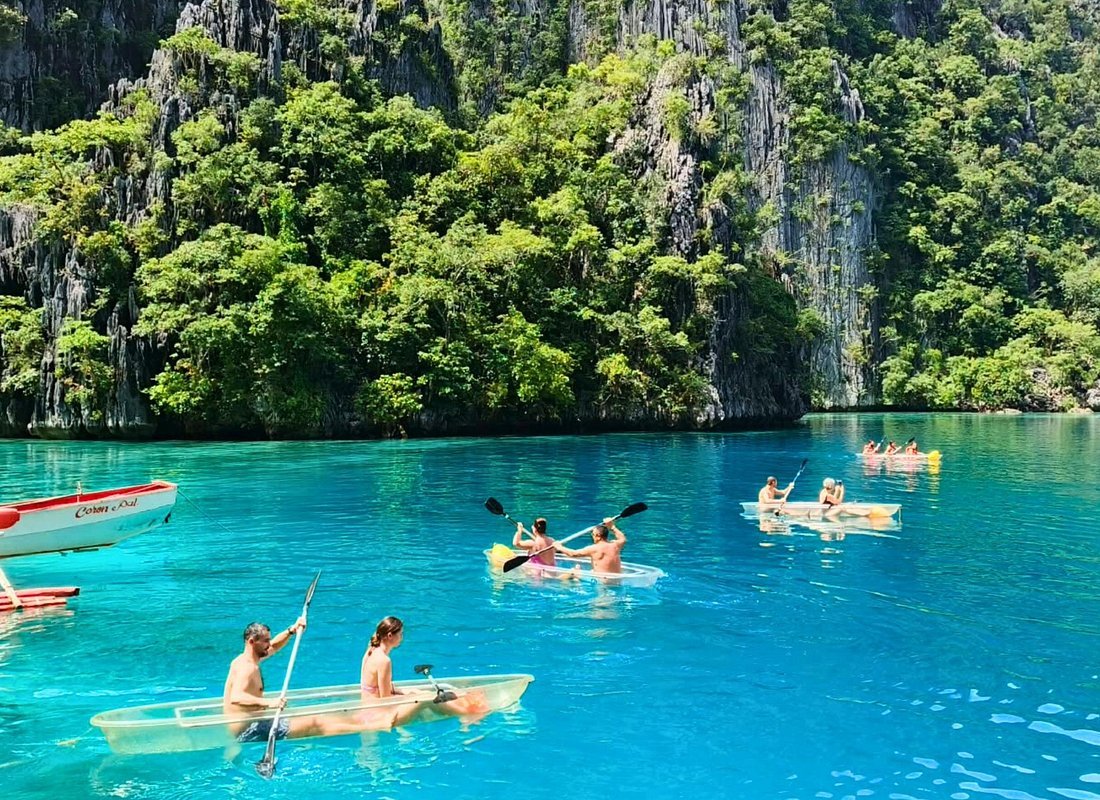
Coron's limestone karst landscape is one of the most visually extraordinary in the Philippines — and the clear-bottomed kayaks that operate in its lagoons give you a view through the crystal water to the sandy bottom and coral gardens below while you paddle through channels between the vertical rock walls. The water in Coron's enclosed lagoons is a shade of turquoise that seems almost artificial: the combination of white sand bottom, shallow depth, and the clarity of the water in this part of Palawan creates colours that photographers consistently underexpose because the results look edited.

The kayaking routes thread through the maze of limestone islands, connecting lagoons that vary from completely enclosed (accessible only through low arches where you have to duck below the rock) to wide open bays where the full scale of the karst landscape becomes visible. Snorkelling stops at coral gardens and fish schools are integrated into most tours. Coron Bay's wrecks — the largest collection of World War II Japanese shipwrecks accessible in one area — are also a short boat ride away for certified divers.

Coron vs El Nido

Both are extraordinary — Coron is generally considered better for diving and wildlife (dugongs, wrecks, Barracuda Lake), while El Nido's lagoons (Big Lagoon, Small Lagoon, Secret Lagoon) are more dramatically beautiful and better for island hopping. Budget 3–4 days for each if possible. Flying into Puerto Princesa and overlanding to either is a common route that allows you to visit the Underground River en route.
Water Visibility
15–25m
Kayak Type
Clear-bottomed
From Manila
1 hour by flight
Season
Nov–May (best conditions)
Also
WWII wreck diving nearby
Difficulty
Easy
📋 Planning Tips
Morning departures give the best light for photography and the calmest water. Bring waterproof bags for your phone — the clear kayaks are stable but water gets in. The Kayangan Lake viewpoint (a short climb from a lagoon cove) is one of Coron's most photographed spots — arrive early before the day-tour crowds. Barracuda Lake (a warm thermocline lake inside a limestone rock formation) is one of Coron's strangest and most memorable snorkelling experiences.
⭐ Why It's Worth It
Kayaking through Coron's limestone lagoons in a clear-bottomed kayak, with the water such a vivid turquoise you keep looking at it to check it's real, and the karst walls rising on both sides, is the Philippines at its most purely beautiful. It is one of those places where you stop paddling and just float for a moment because moving feels like it would disturb something. Among the most visually extraordinary landscapes you can move through in all of Asia.
Kayaking snorkelling Coron lagoon Viator Philippines
Kayaking & Snorkelling — Coron Lagoons
Paddle clear kayaks through turquoise lagoons between Coron's limestone karst cliffs — some of the most visually extraordinary water in Southeast Asia.
Book on Viator →

6

Puerto Princesa Underground River

🏛 UNESCO · Easy · Year-Round
Puerto Princesa Underground River boat tour Palawan Philippines cave entrance

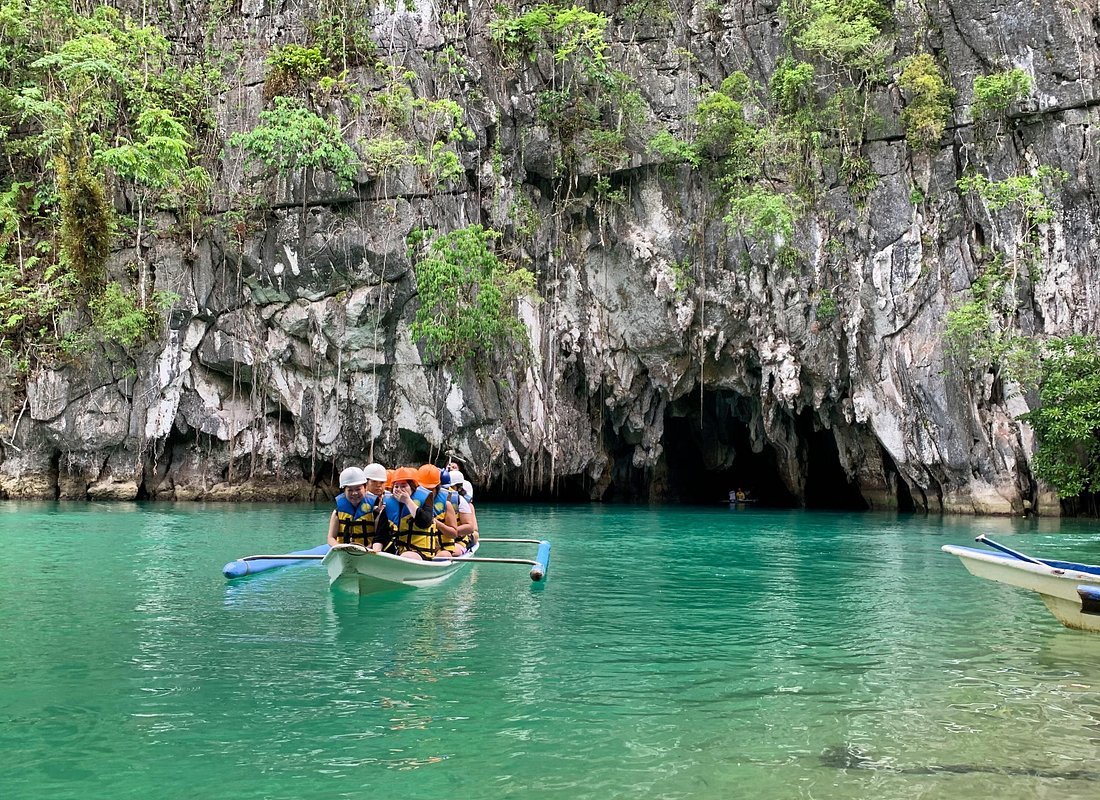
The Puerto Princesa Subterranean River National Park is a UNESCO World Heritage site and one of the New 7 Wonders of Nature — an 8.2km underground river that flows through a series of massive cathedral-like limestone chambers before emptying directly into the sea. Visitors explore the first 4.3km by paddled boat, passing beneath stalactites and stalagmites that have been forming for millions of years in chambers large enough to hold entire cathedrals — the largest, the Italian's Chamber, is over 300 metres long and 60 metres high.

The experience of entering the cave by boat from the bright Philippine sunlight into the cool darkness of the mountain interior — with the sound of the river, the dripping of water from the formations above, and the guide's torch catching the aragonite crystals — is genuinely awe-inspiring. The bat colonies that roost in the upper chambers periodically take flight in clouds that pass overhead. The cave also contains prehistoric rock paintings, and a monitor lizard population around the cave entrance that has become so habituated to visitors they sit at eye level on the rock walls.

Getting to Puerto Princesa

Puerto Princesa is the capital of Palawan province and a major gateway — served by direct flights from Manila (1.5 hours), Cebu, and other Philippine cities. The Underground River is 80km north of the city — most visitors take the guided tour that includes transport, the required park permit, and a certified guide. Permits are strictly capped; book well in advance for December–May visits.
River Length
8.2km (4.3km open)
UNESCO Status
World Heritage + 7 Wonders
From PP City
80km / ~2.5 hours
Season
Year-round
Permits
Strictly capped — book ahead
Difficulty
Easy
📋 Planning Tips
Book permits and the guided tour well in advance — daily visitor numbers are strictly capped and it sells out weeks ahead during December–April peak season. The tour from Puerto Princesa City includes transport, lunch, and park fees. Combine with a mangrove kayaking experience on the Sabang River near the cave entrance — the wildlife in the mangroves (monitor lizards, kingfishers, macaques) is extraordinary. Allow a full day for the trip.
⭐ Why It's Worth It
The Underground River is one of those experiences where the UNESCO/New 7 Wonders status turns out to be entirely earned rather than promotional. Paddling into the mountain on a small boat as the light from the entrance fades and the scale of the cave chambers opens up above you — stalactites the size of trees, chambers the size of cathedrals, a river disappearing into complete darkness ahead — is a genuinely profound experience. It is one of the most remarkable natural environments in Southeast Asia.
Puerto Princesa Underground River tour Viator Palawan Philippines
Puerto Princesa Underground River — UNESCO World Heritage
Paddle into one of the New 7 Wonders of Nature — an 8km underground river through cathedral-like limestone chambers in the heart of Palawan.
Book on Viator →

7

Firefly Tour, Palawan

✨ Wildlife · Easy · Year-Round
Firefly tour Palawan Philippines night boat mangrove river

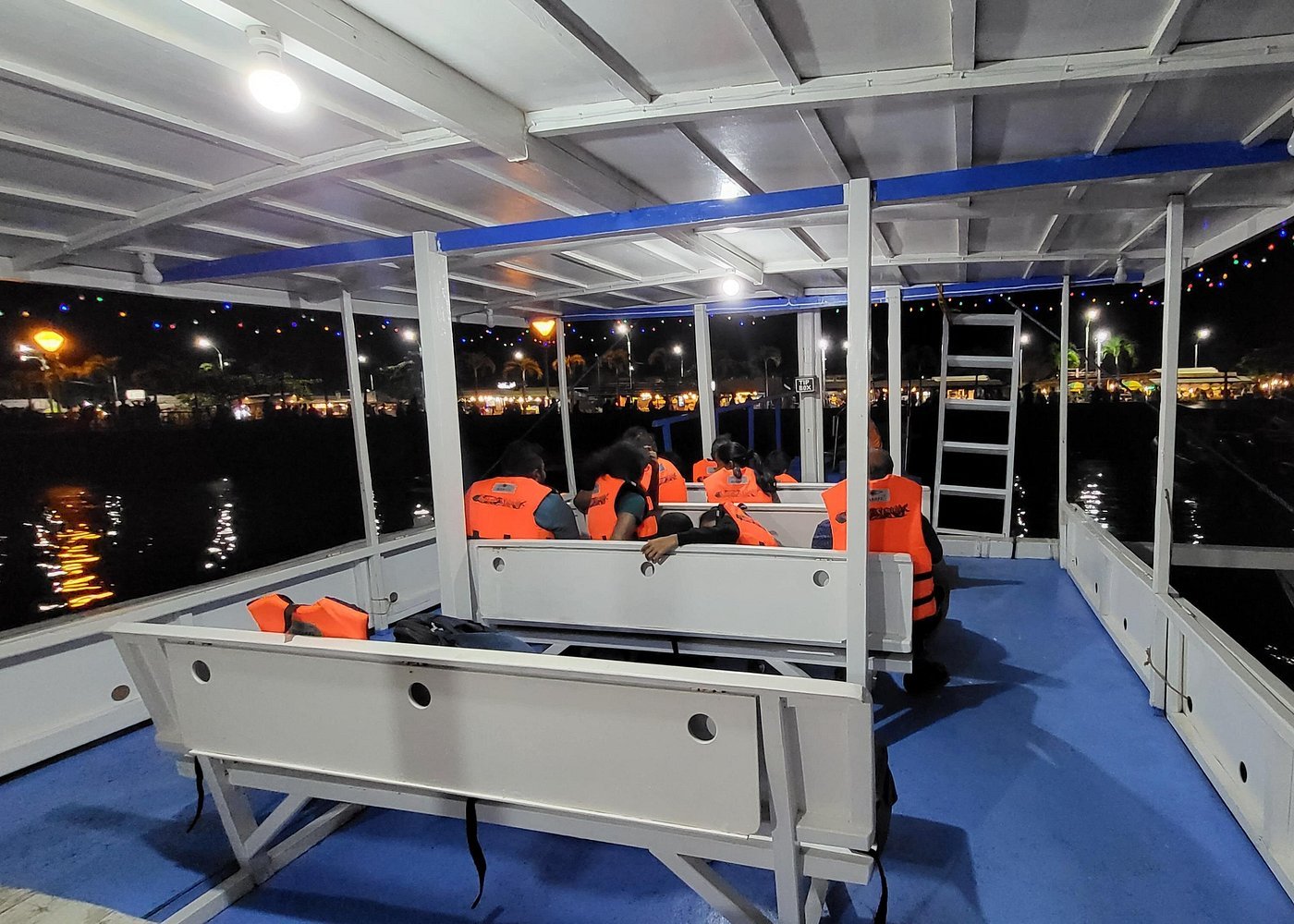
The firefly rivers around Puerto Princesa in Palawan are one of the most quietly magical experiences in the Philippines — an after-dark boat journey through mangrove channels where synchronised fireflies illuminate the riverbank trees in pulsing waves of light, creating an effect that looks exactly like someone has decorated the mangroves with thousands of tiny fairy lights that breathe in and out in unison. The silence, the warm air, the darkness punctuated only by the green-gold bioluminescence of the fireflies — it is one of those experiences that is impossible to photograph and impossible to forget.

The fireflies (Pteroptyx tener) that create this display are a specific species that synchronise their flashing — a communication behaviour unique to certain firefly populations in Southeast Asia. The rivers around Honda Bay and the mangroves near Puerto Princesa hold large, stable populations. The boat journey typically lasts 90 minutes to 2 hours, moving slowly through the mangrove channels as the guide cuts the engine and lets the boat drift in silence through the light show.

Planning Your Firefly Tour

Most firefly tours depart from Puerto Princesa City in the late afternoon and return by 9–10pm. They can be combined with a sunset bay cruise to Honda Bay or a mangrove forest kayak in the afternoon. The firefly display is best in calm, dry weather — rain reduces sighting quality. Year-round viewing is possible, with November to May offering the most reliable dry conditions.

Best Time
After dark (depart ~5pm)
Duration
~2 hours on river
From PP City
~30–45 min by road
Season
Year-round (dry season best)
Species
Pteroptyx tener (synchronised)
Difficulty
Easy
📋 Planning Tips
Book in advance — the best operators are popular and often sold out in peak season. Wear dark clothing (light colours attract insects). Leave your phone in your bag — the experience is better without a screen in front of your face, and phone light disturbs the fireflies. The firefly tour combines perfectly with the Underground River — do the river in the morning, explore Puerto Princesa in the afternoon, and take the evening firefly tour.
⭐ Why It's Worth It
The firefly river is one of those experiences that completely surprises you — you arrive expecting something nice and you get something genuinely magical. Drifting in silence through dark mangrove channels while thousands of fireflies pulse in synchrony on both banks is one of the most beautiful and most unexpected things you can see in the Philippines. It costs almost nothing, requires almost no effort, and produces a memory that stays with you completely intact for years.
Firefly tour Palawan night boat Viator Philippines
Firefly Tour — Palawan Mangrove River
Drift by boat through mangrove channels as thousands of synchronised fireflies illuminate the trees on both banks — one of the most magical experiences in the Philippines.
Book on Viator →

8

Island Hopping, Palawan

🏝 Water · Easy · Nov–May
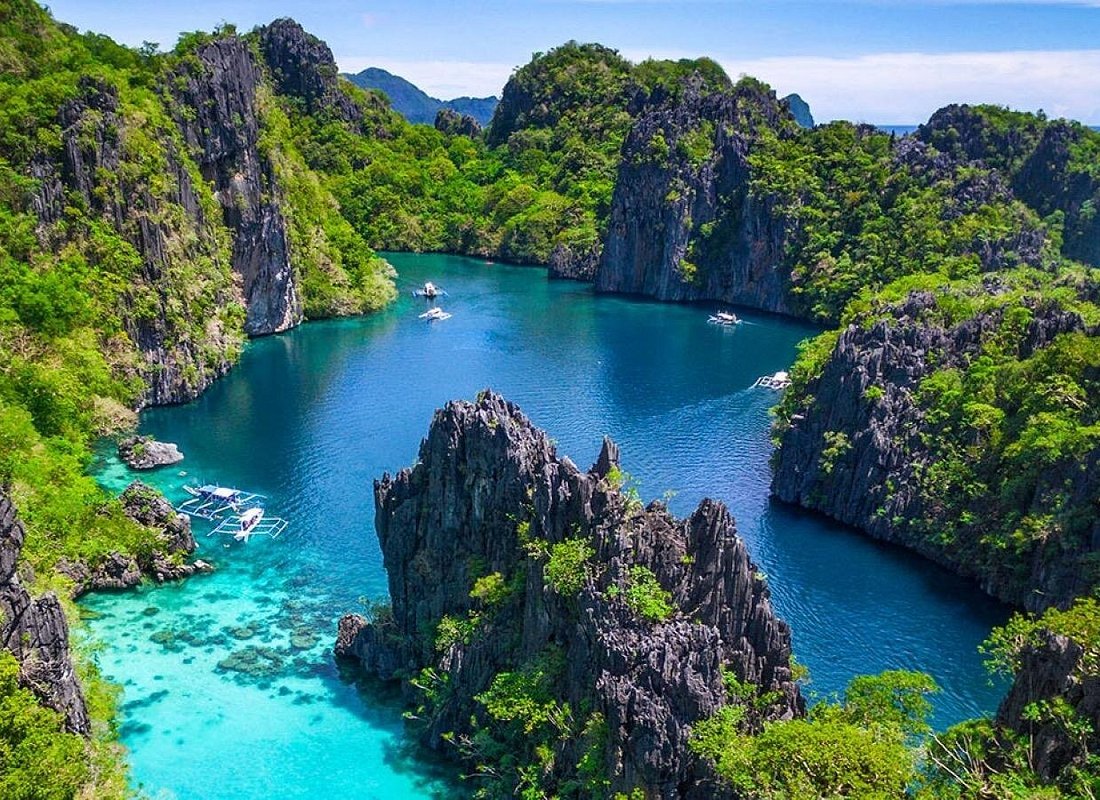
Island hopping Palawan El Nido Philippines turquoise lagoons limestone karst aerial

Palawan's island hopping — by traditional wooden outrigger bangka boat through the limestone karst archipelagos of El Nido or Coron — is the quintessential Philippines experience and one of the most beautiful things you can do in Southeast Asia. The karst towers rise sheer from the water, enclosing secret lagoons only accessible through low arches at the water line; the snorkelling reefs in the channels between islands are vivid with colour; the empty white beaches where the boat stops for lunch are backed by jungle. The light on the water in Palawan is unlike anywhere else on Earth.

El Nido has four standardised island hopping tours (A, B, C, and D) that cover different island groups — Tour A hits the Big Lagoon, Small Lagoon, Secret Lagoon, and Shimizu Island reef; Tour C reaches the most remote islands with the fewest visitors. Most travellers do at least two tours. Coron's island hopping covers different terrain — Twin Lagoon (two lagoons separated by a limestone wall you swim through), Kayangan Lake (the clearest water in the Philippines), and the sea between the islands where WWII wrecks lie in the shallows.

El Nido vs Coron for Island Hopping

El Nido is more dramatic — the lagoons are enclosed by higher karst walls and the variety of landscape on each tour is greater. Coron is calmer and less crowded, with a more wilderness feel and the added dimension of the underwater wrecks. Both are worth visiting. Flying into Puerto Princesa and overlanding north to either (or both) is the most common route.
Best Season
Nov–May (dry, calm seas)
Transport
Traditional bangka boat
El Nido Tours
A, B, C, D (full day each)
Gateway
El Nido or Coron town
Includes
Lunch on beach, snorkel gear
Difficulty
Easy
📋 Planning Tips
Book tours the day before or on arrival in El Nido or Coron — most operators are based on the main streets and fill from day visitors. June to October sees rough seas and many tours are cancelled; November to May is strongly recommended. Bring reef-safe sunscreen, a hat, and cash (most bangka operators don't take cards). Tour A at El Nido is the most popular — do it on your first day so you can adjust plans based on what you most want to see again.
⭐ Why It's Worth It
Palawan island hopping is the Philippines at its most impossibly beautiful — and it consistently exceeds every expectation set by photographs, which is a rare achievement. Paddling a kayak through the Secret Lagoon at El Nido, with 200-metre limestone walls on all sides and the water a shade of turquoise that doesn't appear to exist in nature, is one of those pure travel moments that you carry intact for the rest of your life. There is nowhere quite like it.
Island hopping Palawan El Nido Coron Viator Philippines
Island Hopping — Palawan, El Nido & Coron
Bangka boat through the limestone karst lagoons, hidden coves, and turquoise bays of the most beautiful island province in the Philippines.
Book on Viator →

9

Manila Street Food Tour

🍜 Food & Drink · Easy · Year-Round
Manila street food tour siomai dumplings Philippines

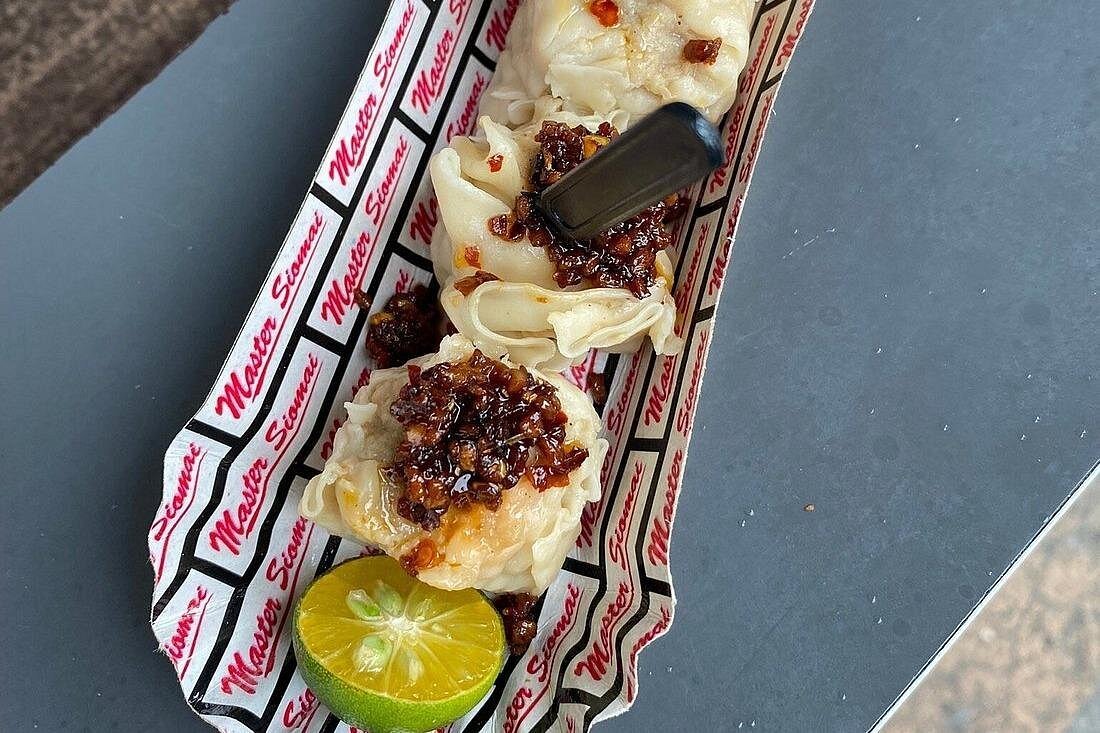
Manila's street food culture is one of the most vibrant and most underrated in Southeast Asia — a living culinary tradition that draws on centuries of Chinese, Spanish, Malay, and American influence to produce a street food scene that is distinctive, generous, and extraordinarily good value. The Master Siomai dumplings topped with chilli oil and calamansi (Philippine lime), the kwek-kwek quail eggs in orange batter, the fishballs on skewers with sweet and spicy dipping sauces, the halo-halo shaved ice desserts layered with ube, coconut, leche flan, and sweet beans — Manila street food is a genuinely world-class culinary experience that costs almost nothing.

A guided street food tour takes you through the city's best food districts — Binondo (the world's oldest Chinatown), Quiapo, and the streets around Ermita — visiting vendors who have been making the same dishes for generations and explaining the history and cultural mixing that produced each one. Binondo's Chinese-Filipino food in particular is extraordinary — the pancit lomi, the tikoy, the pork dumplings, and the deep-fried sesame balls filled with red bean paste are all available from small stalls that have barely changed in a century.

The Brave Choices

Balut — a fertilised duck egg with a partially developed embryo, eaten warm from the shell with salt and vinegar — is the Philippines' most famous food challenge. It is genuinely eaten by millions of Filipinos daily and tastes, if you can get past the idea, remarkably like a rich egg custard with soft bone. Most street food tour guides will offer it; trying it is entirely optional but culturally interesting.

Must Try
Siomai, kwek-kwek, halo-halo
Best District
Binondo Chinatown
Tour Duration
3–4 hours
Season
Year-round
Average Dish Cost
₱10–50 (~$0.20–$1)
Difficulty
Easy
📋 Planning Tips
Go hungry — a proper tour visits 8–12 stalls. Evening tours are most atmospheric when the street vendors are at maximum activity. Binondo's streets are best explored with a guide who knows the hidden stalls and the history — the area is one of Asia's most historically layered neighbourhoods. Manila is often dismissed by visitors who pass through on the way to Palawan or Cebu; spending a full day in the city, anchored by a food tour, rewards those who give it proper time.
⭐ Why It's Worth It
Manila street food is one of those culinary discoveries that makes you wonder why it isn't more famous internationally. The siomai with chilli oil and calamansi is extraordinary. The halo-halo is one of the great dessert experiences in Asia. The fishballs with their sweet-spicy sauce are compulsive in the best way. And Binondo, the world's oldest Chinatown, is one of the most historically fascinating neighbourhoods in all of Southeast Asia — a neighbourhood where four centuries of Chinese-Filipino cultural mixing has produced a food culture unlike any other.
Manila street food tour Viator Philippines
Manila Street Food Tour
Siomai, kwek-kwek, halo-halo, and balut through Binondo Chinatown and Manila's best street food districts — one of Southeast Asia's most underrated food cultures.
Book on Viator →

🗓 Best Time to Visit the Philippines

The Philippines has two distinct seasons. Planning around them makes a significant difference to your experience.

☀️ Dry Season — Nov to May (Amihan) The best time to visit. Clear skies, calm seas, excellent visibility for snorkelling and diving. November to February is cooler and ideal for Palawan, Cebu, and Siargao. March to May is hotter but still excellent. Peak season December to February — book accommodation and permits ahead.
🌧 Wet Season — June to October (Habagat) Typhoon season — the Philippines experiences 20+ typhoons annually, mostly tracking through Luzon and the Visayas. Palawan and Mindanao are more sheltered but still affected. Many island tours are cancelled due to rough seas. June to October travel is possible but requires flexibility. Whale sharks at Oslob are year-round regardless.

Frequently Asked Questions — Philippines Travel

When is the best time to visit the Philippines?
November to May is the dry season (amihan) and the best overall time to visit — clear skies, calm seas, and excellent diving and snorkelling conditions. December to February is the coolest and most popular period. June to October is typhoon season; many tours are cancelled and seas can be rough. Whale sharks at Oslob are available year-round.
Is it safe to swim with whale sharks?
Yes — whale sharks are completely harmless to humans, feeding only on plankton. The Oslob encounter involves snorkelling (not diving) in shallow water. Strict rules apply: no touching, no flash photography, minimum distance maintained. The main conservation debate is about the feeding programme used to attract the sharks to the area, not safety.
Is Palawan really the best island in the Philippines?
Palawan has been ranked the world's best island multiple times by Condé Nast Traveller readers. The combination of El Nido's limestone karst lagoons, Coron's WWII wrecks and dugong population, the Puerto Princesa Underground River (UNESCO/New 7 Wonders), and the firefly rivers makes Palawan one of the most concentrated collections of natural wonders in Southeast Asia. It deserves at least a week.
How many islands does the Philippines have?
7,641 islands. The three main island groups are Luzon (north, including Manila), Visayas (central, including Cebu and Bohol), and Mindanao (south). Palawan is a long southwestern province. Budget airlines (Cebu Pacific, AirAsia Philippines) connect the major islands cheaply.
Is canyoneering at Kawasan Falls safe?
Yes when done with a licensed, reputable operator — life jackets and helmets are provided, guides are experienced, and cliff jumps are optional. Good swimming ability is required. Book through Viator to ensure licensed operators. The activity is physically demanding but does not require technical skills.
Do I need a visa to visit the Philippines?
Citizens of most countries (including the US, UK, EU, Australia, Canada, and many others) can enter the Philippines visa-free for 30 days, extendable to 59 days at an immigration office. Check current entry requirements before travelling. Manila's Ninoy Aquino International Airport is the main international gateway; Cebu's Mactan-Cebu Airport and Clark International Airport also have international connections.

🇵🇭 Practical Tips for the Philippines

The Philippines uses the Philippine Peso (PHP). English is an official language and is widely spoken across the country — communication is rarely a barrier. The country operates on 220V electricity with Type A and B plugs. Budget airlines (Cebu Pacific, AirAsia Philippines, Philippine Airlines) connect Manila to Cebu, Palawan, Siargao, Davao, and 20+ other destinations cheaply — book 2–4 weeks ahead for the best fares. Manila can be chaotic and traffic is severe; allow extra time for airport transfers. The Philippines is generally safe for tourists but exercise standard precautions in busy urban areas. Tap water is not safe to drink; bottled water is cheap and widely available. Tipping is customary (10%) in restaurants and for tour guides. Cash is king outside Manila and Cebu — bring enough PHP before heading to islands.
More Destinations to Explore
Malaysia travel guide TheCantMiss
🇲🇾 Things to Do in Malaysia
View Guide →
Singapore travel guide
🇸🇬 Singapore
South Korea travel guide
🇰🇷 South Korea
China travel guide
🇨🇳 China
Nepal travel guide
🇳🇵 Nepal
Chile travel guide
🇨🇱 Chile
Slovakia travel guide
🇸🇰 Slovakia
Romania travel guide
🇷🇴 Romania