🇳🇵 Nepal · Complete Activity Guide
🇳🇵
Things to Do in Nepal
The roof of the world — Himalayan treks, ancient stupas, dawn helicopter flights over Everest, and Buddhist pilgrimage sites 2,000 years in the making
The roof of the world — Himalayan treks, ancient stupas, dawn helicopter flights over Everest, and Buddhist pilgrimage sites 2,000 years in the making
Nepal is one of the world's great travel destinations — a country the size of Arkansas that contains eight of the ten highest mountains on Earth, 2,000 years of living Buddhist and Hindu culture, and trekking routes that have defined adventure travel for generations. From the prayer-flag-draped passes of the Khumbu to the steaming jungles of Chitwan, the range of experience packed into this Himalayan nation is extraordinary.
This guide covers the 11 best things to do in Nepal in 2026 — from the world's most iconic trek to sacred Buddhist birthplaces and the most spectacular tandem paraglide in Asia.
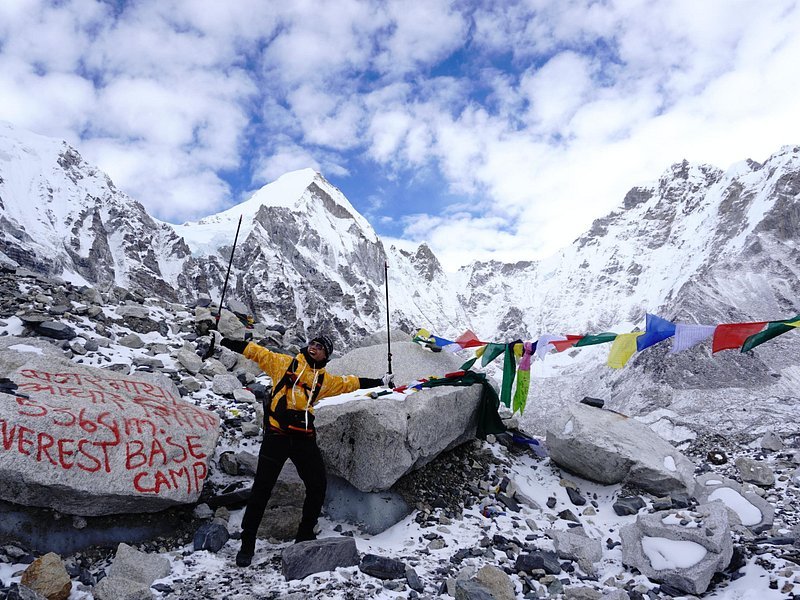
The Everest Base Camp Trek is the most iconic trekking route on Earth — a 14-day journey through the Khumbu valley that takes you from Lukla (2,860m) through Sherpa villages, past glacial moraines, and beneath the world's highest mountains to stand at 5,364m at the base of Everest itself. Along the way you pass through Namche Bazaar, the beating heart of Sherpa culture; Tengboche Monastery, perched above the treeline with Ama Dablam rising behind it; and the barren, otherworldly landscape of the upper Khumbu where the air is thin enough to feel with every step.
The trek requires no technical climbing skills — it is a walk, albeit a very high-altitude one. The challenge is entirely aerobic: the route climbs steadily over two weeks with built-in acclimatisation days. The reward is one of the most visually stunning environments on the planet and the profound sense of having earned something genuinely difficult.
The trek begins with a 35-minute mountain flight from Kathmandu to Tenzing-Hillary Airport in Lukla — famously one of the world's most dramatic runway approaches at 2,860m. Flights are weather-dependent and cancellations are common — build buffer days into your itinerary. Most trekkers book a guided package that includes the Lukla flight, teahouse accommodation, a certified guide, and a porter.
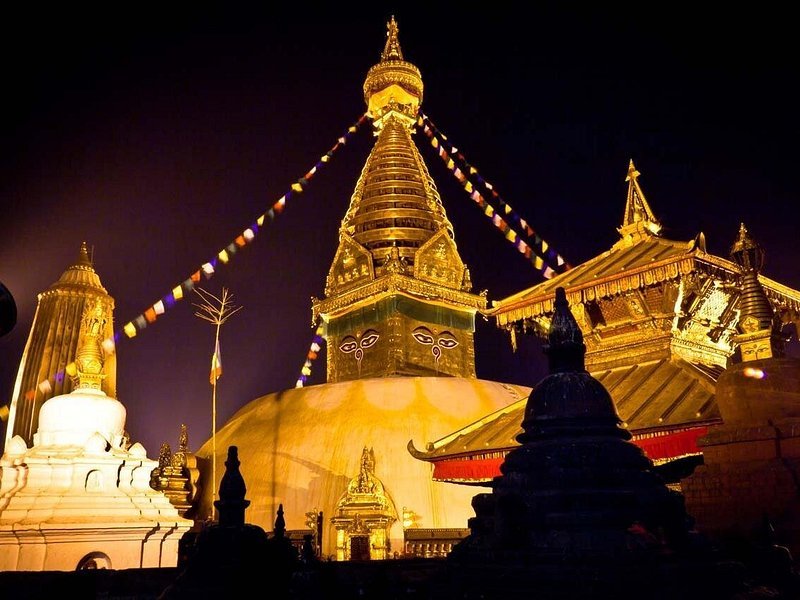
Swayambhunath is one of the oldest and most sacred Buddhist sites in the world — a hilltop stupa complex that has been a place of pilgrimage for over 2,000 years, predating the founding of Kathmandu itself. The 365 stone steps to the summit are crowned by the great white dome of the stupa, above which the all-seeing eyes of the Buddha gaze in four cardinal directions over the Kathmandu Valley. Prayer flags stream from every pillar and dozens of rhesus monkeys — resident for generations — swarm the shrines with complete confidence.
At dawn, the atmosphere is extraordinary: priests ring bells and spin brass prayer wheels while incense smoke drifts through the stone courtyards and the city below emerges from the morning mist. The combination of ancient architecture, living religious practice, and the frankly chaotic monkey population makes Swayambhunath one of the most memorable sites in Asia.
The temple is 3km west of central Kathmandu — a 15-minute taxi ride from Thamel. Entry fee is approximately $3 for foreigners. Best visited early morning (6–8am) for the dawn rituals and soft light, or at dusk. The monkeys are generally harmless but will steal food and unsecured items — keep bags zipped.
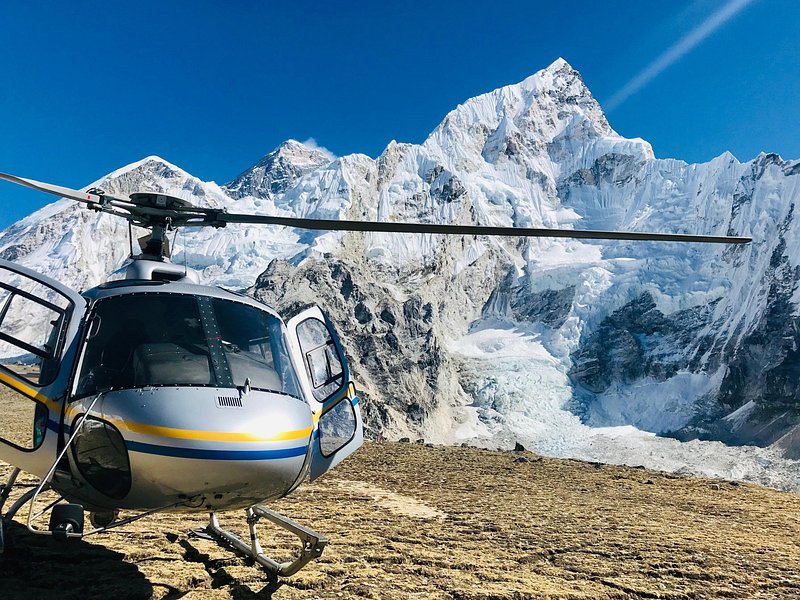
For those who cannot commit to 14 days of trekking, the Everest helicopter circuit offers the most dramatic condensed Himalayan experience available — a 4–5 hour flight from Kathmandu that takes you to Everest Base Camp, Kala Patthar (5,545m), and the Khumbu Icefall, landing at high altitude with views of Everest and the surrounding massif that are simply impossible to prepare for.
The flight passes through the Khumbu valley at low altitude, close enough to the glacier to see the ice seracs clearly and to understand the scale of the mountain above. Most flights land at Kala Patthar — the viewpoint that many trekkers consider the finest Everest view on the route — before returning to Kathmandu. The aerial perspective of Everest, Lhotse, Makalu, and Cho Oyu all simultaneously visible is one of the most overwhelming experiences in adventure travel.
Most packages include hotel pickup, the full circuit flight with mountain landing, and breakfast at a high-altitude teahouse. Group helicopter flights (5–6 passengers) are significantly cheaper than private charters — book a shared flight for the best value. Clear weather is essential; reputable operators will reschedule rather than fly in poor visibility.
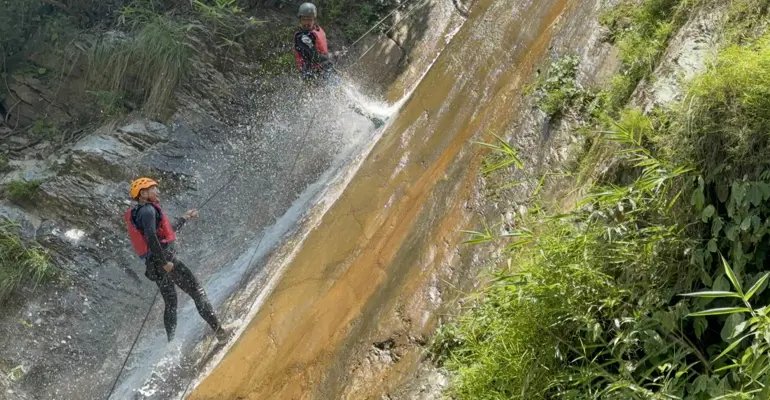
Pokhara sits at the base of the Annapurna massif, where fast-flowing rivers have carved spectacular limestone canyons through the Himalayan foothills. The Jondre Khola and Rupse Chhahara canyon systems offer some of the most scenically dramatic canyoning in Asia — cascading waterfalls, natural water slides, swimming holes, and vertical abseils through gorges with the snow-capped Annapurna range visible above the canyon walls.
No prior experience is required: instructors provide full safety briefings and all equipment. The Himalayan backdrop makes this one of the most visually spectacular canyoning settings anywhere in the world — abseiling down a waterfall with Annapurna peaks above you is an experience specific to Nepal.
Multiple licensed adventure operators in Pokhara Lakeside offer half-day and full-day canyoning trips. The half-day Jalbire Canyon is the most popular beginner option — accessible and spectacular. All equipment (wetsuit, helmet, harness) is provided. Season runs September–June; July–August flood conditions make canyons inaccessible.
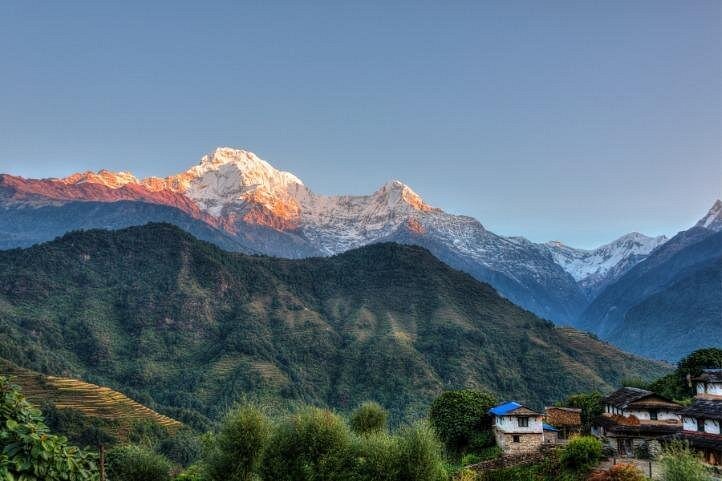
Poon Hill (3,210m) is the most accessible Himalayan sunrise viewpoint in Nepal — a 4-day circuit from Pokhara through the Gurung villages of Ghorepani and Ghandruk that culminates in a pre-dawn climb to a hilltop observation deck where, at first light, the entire Annapurna and Dhaulagiri ranges ignite in alpenglow simultaneously. Annapurna South, Machhapuchhre (Fishtail), Dhaulagiri I, and the full Annapurna massif are all visible in a single unobstructed panorama — one of the great sunrise views on Earth.
Unlike EBC or the Annapurna Circuit, Poon Hill requires no technical preparation, carries minimal altitude sickness risk, and can be completed in 4 days — making it the ideal first Himalayan trekking experience. The route passes through traditional Gurung villages where the culture is as compelling as the landscape, with rhododendron forest blazing red and pink in spring.
The alarm goes off at 4am at the Ghorepani teahouses — every trekker on the circuit makes the 45-minute climb to the observation deck in darkness to secure a spot before sunrise. The reward: watching the Annapurna range turn from dark silhouette to orange to gold as the sun crests the horizon. One of the great mornings in Asian travel.
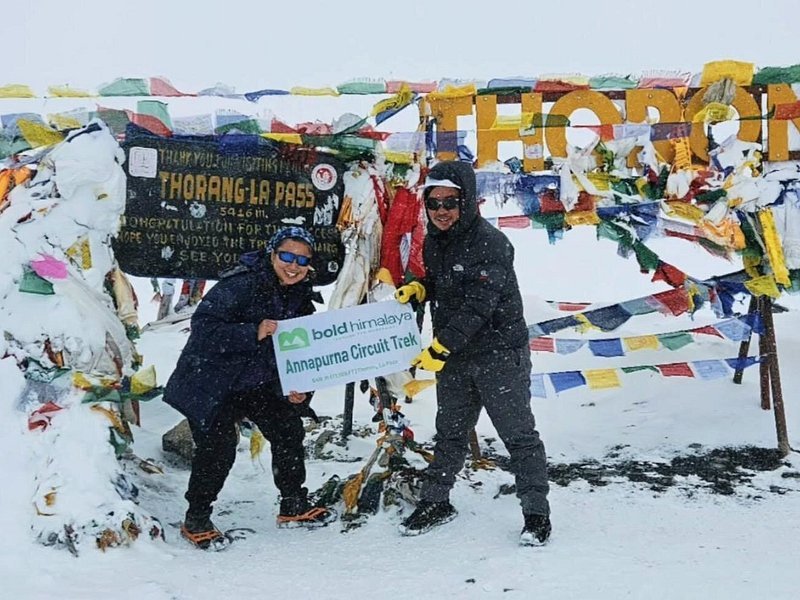
The Annapurna Circuit is one of the world's great long-distance treks — a 21-day loop around the entire Annapurna massif that crosses the Thorong La pass (5,416m), traverses the ancient Buddhist kingdoms of Manang and Mustang, and passes through landscapes so varied — alpine desert, subtropical rhododendron forest, terraced rice paddies, Hindu river gorges — that it feels like walking through multiple countries in a single journey.
The diversity of landscape, culture, and altitude is unmatched on any comparable route in the Himalayas. The high-altitude core — the Manang valley, the Thorong La crossing, and the Mustang descent to Muktinath — remains extraordinary despite new road construction on some lower sections.
The dramatic high point is the Thorong La at 5,416m — a full-day crossing (8–10 hours) that begins before dawn and descends steeply to Muktinath on the Mustang plateau. The descent reveals the rain-shadow landscape of the trans-Himalayan zone: stark, wind-scoured mountains in ochre and rust, completely different from the forested valleys on the southern slopes.
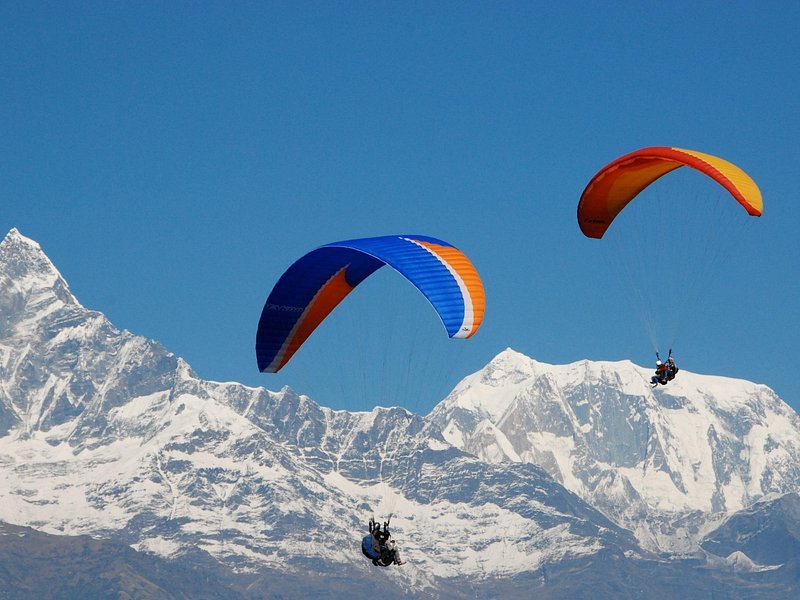
Pokhara is widely regarded as one of the premier paragliding destinations in the world — reliable Himalayan thermals, a vast north-facing bowl created by the Annapurna massif, and a takeoff site at Sarangkot that delivers one of the most extraordinary aerial views available from any paragliding location on Earth. You launch from 1,592m above Phewa Lake and soar on thermals with the entire Annapurna range — Annapurna I, II, III, IV, Machhapuchhre (Fishtail), and Dhaulagiri — spread across the northern horizon at eye level.
Tandem paragliding requires no experience — you are strapped to a certified pilot who handles all flying. Eagles and Himalayan griffon vultures ride the same thermals and will often fly alongside you, which recalibrates your sense of what is normal. Flights last 25–45 minutes; longer acrobatic flights are available for the adventurous.
Dozens of operators in Pokhara Lakeside offer tandem flights launching from Sarangkot and landing above Phewa Lake. Book through Viator or a licensed Lakeside operator — avoid unlicensed operators. Best weather is morning (8am–noon) before valley winds build. Runs year-round, but clearest Annapurna views are October–November and March–May.
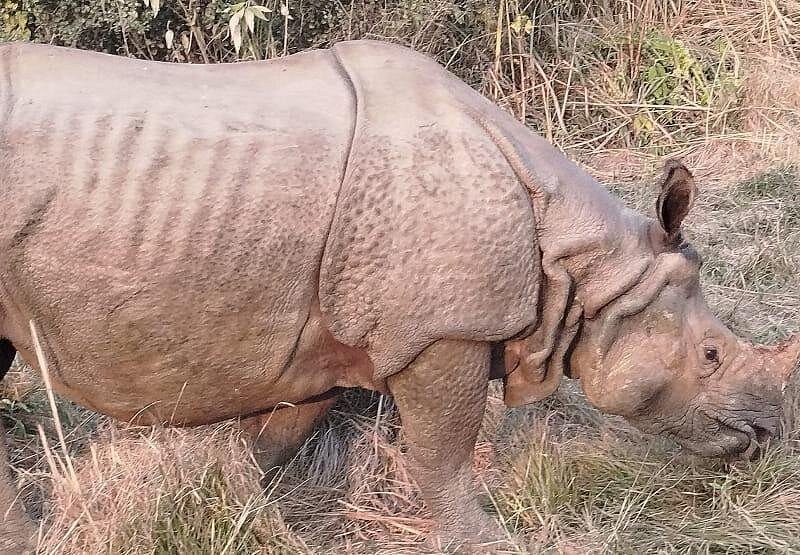
Chitwan National Park is Nepal's premier wildlife destination — a UNESCO World Heritage Site in the subtropical terai lowlands where the sal forest, tall elephant grasslands, and oxbow lakes of the Rapti River valley support one of Asia's most impressive concentrations of large mammals. The one-horned rhinoceros (Chitwan holds one of the world's largest populations), Bengal tiger, gharial crocodile, Asian elephant, sloth bear, and over 600 bird species make this one of the most biodiverse parks in the subcontinent.
Game drives run in open jeeps through the sal forest and grasslands at dawn and dusk. Walking safaris with armed naturalist guides take you through the grasslands on foot — an entirely different and more visceral experience. Canoe rides on the Rapti River offer close approaches to gharial and mugger crocodiles basking on the banks.
Chitwan is approximately 5 hours from Kathmandu by tourist bus or 4 hours from Pokhara. The park town of Sauraha is the base for most visitors. Accommodation ranges from budget guesthouses to luxury jungle lodges. Most travellers spend 2–3 nights to allow for multiple game drives and activities.
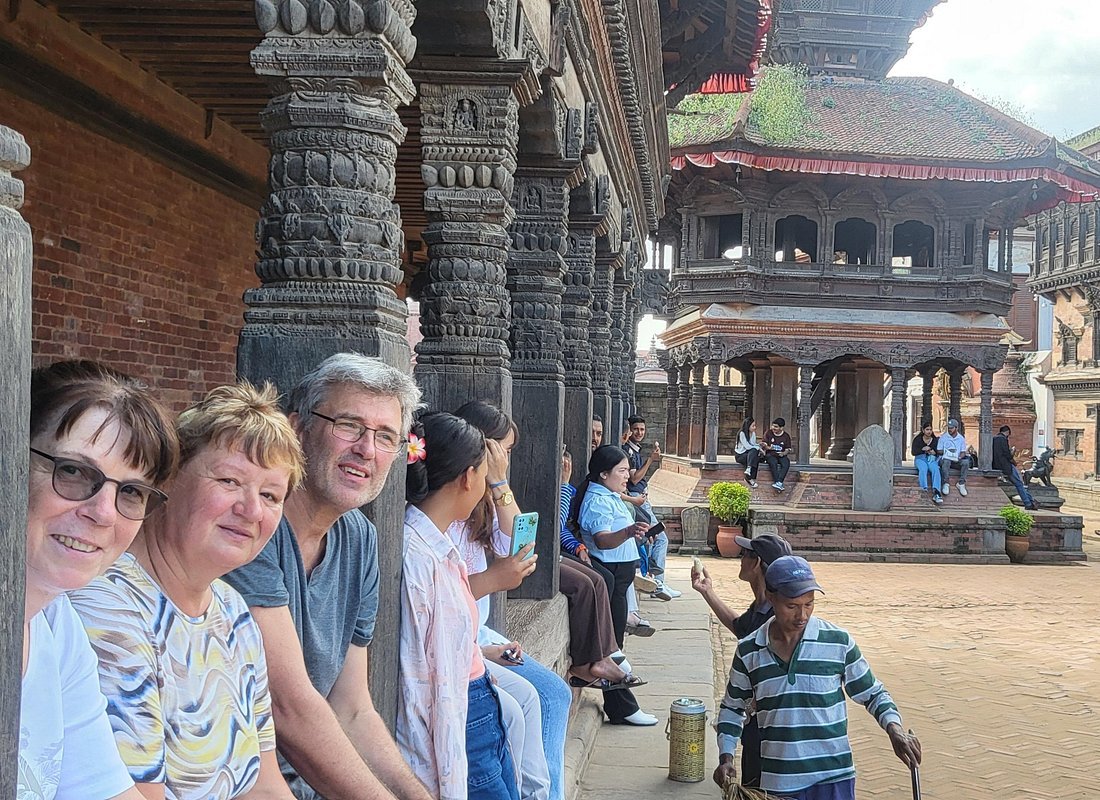
The Kathmandu Valley contains seven UNESCO World Heritage Sites — a concentration of historic architecture unmatched in South Asia outside a handful of major Indian cities. The Durbar Squares of Kathmandu and Bhaktapur are the living centres of these ancient kingdoms: open courtyards surrounded by pagoda temples, royal palaces, and stone shrines that have accumulated over 1,500 years of Newar craftsmanship, where daily life and religious practice continue much as they have for centuries.
Bhaktapur, 13km east of Kathmandu, is the most intact of the medieval valley cities — a car-free historic district where potters' squares, woodcarvers' workshops, and temple courtyards have changed remarkably little. The 55-Window Palace, the Nyatapola Temple (Nepal's tallest pagoda), and the Pottery Square are extraordinary. Kathmandu's own Durbar Square retains the atmospheric weight of centuries despite the tourist traffic, and the Kumari Chowk — home of the Living Goddess — remains one of the most singular cultural institutions in the world.
Bhaktapur is 40 minutes from Kathmandu by taxi or local minibus. Most visitors combine Kathmandu Durbar Square, Bhaktapur, and Patan Durbar Square into a single day with a private driver — approximately $20–30 for a full day's hire. A knowledgeable guide transforms the experience; the iconography and mythology of the valley temple complexes reward context enormously.
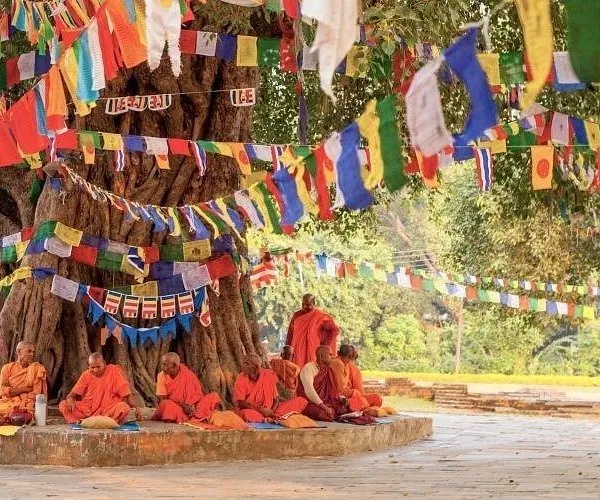
Lumbini, in the Terai lowlands of southern Nepal, is the birthplace of Siddhartha Gautama — the historical Buddha, born in 623 BC. It is one of the holiest sites in Buddhism and one of the most significant sacred sites in Asia: a place of pilgrimage for 2,500 years that draws monks, scholars, and travellers from every Buddhist country on Earth. The Mayadevi Temple marks the precise spot of the birth, the Ashoka Pillar (erected by Emperor Ashoka in 249 BC) bears one of the oldest inscriptions in South Asian history, and the surrounding Sacred Garden contains monasteries built by 25 countries in their own national architectural styles.
The atmosphere of Lumbini is remarkably serene for a site of such religious significance. Monks in saffron robes meditate under the Bodhi trees, prayer flags flutter above the ruins of ancient monasteries, and the Mayadevi Temple is a place of quiet reverence regardless of your own religious background.
Lumbini is 270km southwest of Kathmandu — approximately 6 hours by road, or a 25-minute domestic flight via Bhairahawa airport. Most visitors spend one full day in the Sacred Garden and international monastery zone. A bicycle is the ideal way to navigate the sprawling site. Plan for a full day minimum.
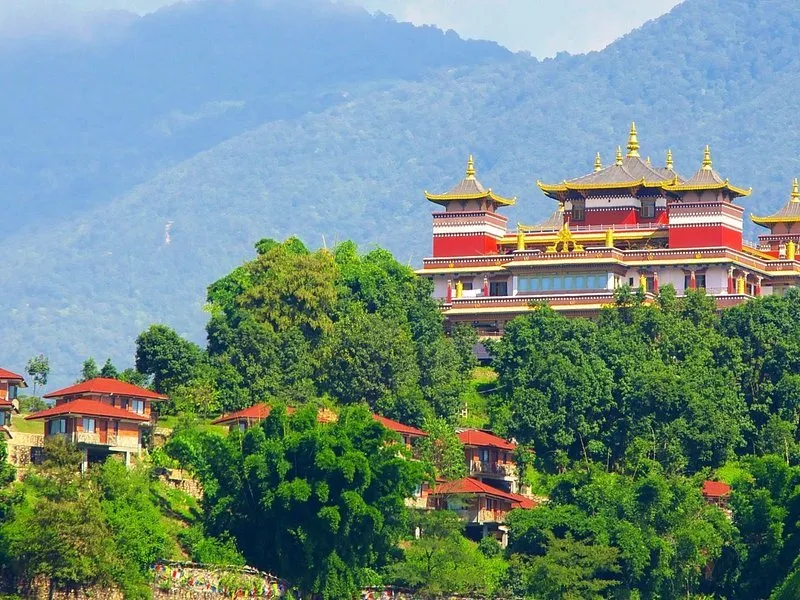
Boudhanath Stupa is the largest stupa in Nepal and one of the holiest Tibetan Buddhist sites outside Tibet — a vast white dome rising 36 metres above the eastern suburbs of Kathmandu, its all-seeing eyes of the Buddha painted on each cardinal-direction tower, surrounded by a circuit of prayer wheels and hundreds of Tibetan butter lamp offerings. Since the Chinese takeover of Tibet, Boudhanath has become the spiritual centre of the Tibetan exile community, ringed by dozens of monasteries and home to hundreds of monks and lamas.
The dawn kora — the circumambulation of the stupa — is one of the most atmospheric morning rituals in Asia. As first light arrives, Buddhist pilgrims, monks, and elderly Tibetan women in traditional dress begin the circuit, spinning brass prayer wheels, murmuring mantras, and counting beads. The smell of incense and yak butter candles drifts through the stone courtyards as the city wakes around the ancient dome.
Boudhanath is 11km northeast of central Kathmandu — 25 minutes by taxi from Thamel. Entry fee approximately $3 for foreigners. The stupa is surrounded by excellent Tibetan restaurants with rooftop views. Combine with Pashupatinath Temple (500m away) for a full morning of Kathmandu's most significant religious sites.
Nepal's Himalayan geography creates dramatic seasonal variation. Trekking season is tightly defined by weather windows; cultural and wildlife activities are more flexible year-round.