Vietnam
The Ultimate Vietnam Itinerary — Hanoi, Ha Long Bay, Da Nang & Hoi An
The north-to-south direction makes geographic and logical sense — Hanoi is Vietnam's capital and cultural heart, Ha Long Bay is a 3-hour drive northeast and best visited as an overnight cruise from Hanoi, then a short flight south brings you to Da Nang for the Marble Mountains and the Hai Van Pass before the final 30km to Hoi An's Ancient Town. It is the itinerary that shows you Vietnam at its most varied: the noise and energy of a great Asian city, one of the world's most extraordinary seascapes, and then the quiet of a UNESCO-protected historic town at night.
Vietnam is significantly cheaper than most travel destinations — a street food lunch in Hanoi costs $1–2, a bowl of pho from a proper pho shop is $2–3, and even midrange hotels run $50–80/night. Budget accordingly and spend on experiences, not accommodation upgrades.
Hanoi
🎫 Hanoi Experiences
Hanoi Street Food Tour — Pho, Bún Chả & Bia Hoi
🍜 Food · The Best Eating City in Vietnam
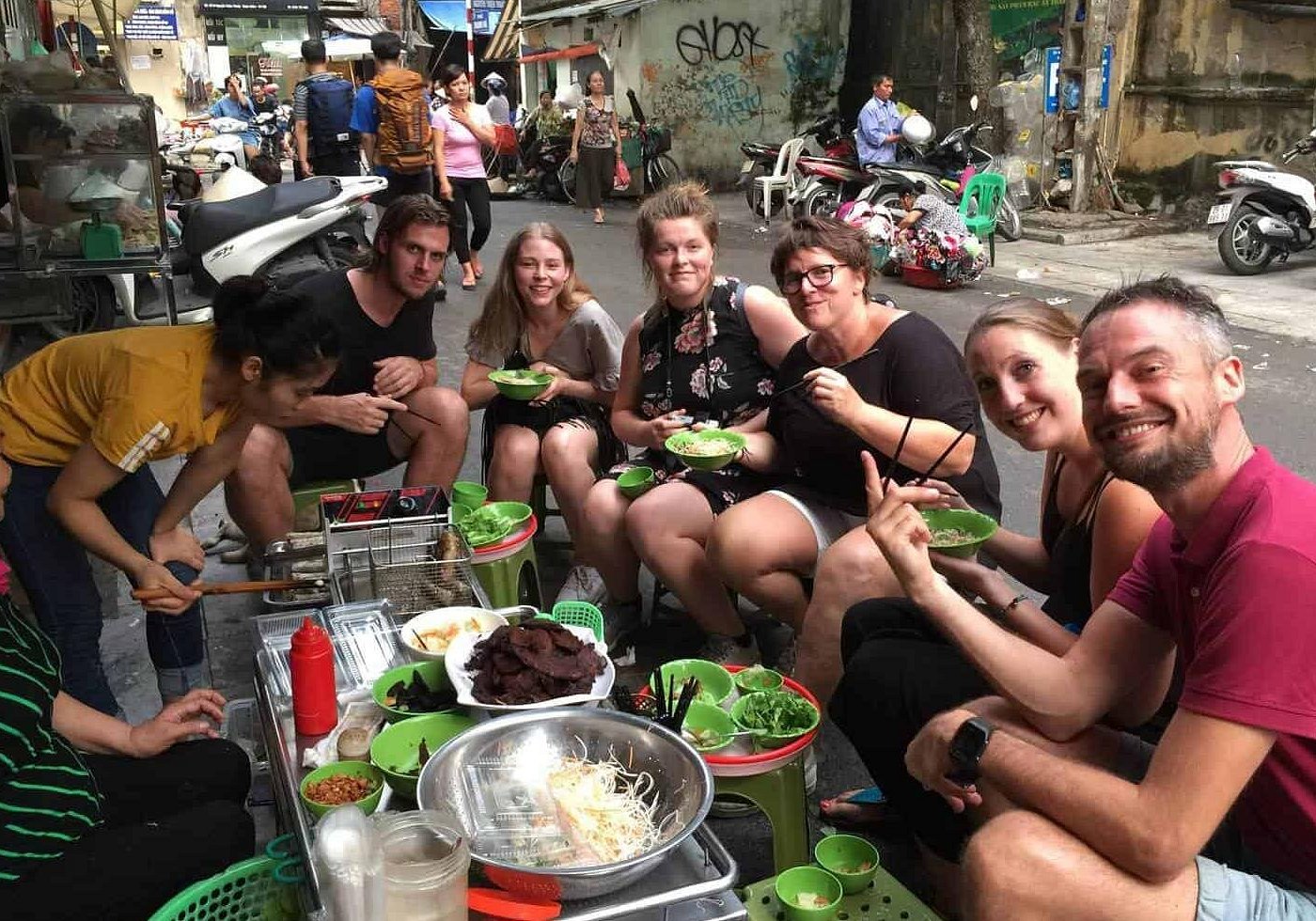
Hanoi has the finest street food culture in Vietnam — and in a country where street food is a serious art form, that is not a small claim. The Old Quarter's 36 guild streets are the centre of it: narrow lanes where vendors have occupied the same pavement positions for decades, each specialising in a single dish perfected over a lifetime. Pho Gia Truyen on Bat Dan Street serves one of the most celebrated bowls of pho bo (beef pho) in the city — thin slices of rare beef, rich bone broth simmered overnight, fresh herbs, and a squeeze of lime, eaten standing or perched on a low plastic stool before 8am when the pot runs out. Bún chả — grilled pork patties in a sweet-salty broth with vermicelli noodles and herbs — is Hanoi's other great dish, served at lunch only.
In the evening, Bia Hoi Corner (the junction of Luong Ngoc Quyen and Ta Hien streets in the Old Quarter) is Vietnam's most famous street drinking spot — fresh-brewed draught beer served in plastic cups for around 5,000 dong (20 US cents), at tables that spill across the pavement into the intersection. Arrive at 7pm, order a bia hoi and whatever snacks the vendor near you is selling, and watch the Old Quarter evening unfold. A guided street food tour covering 6–8 stops over 3 hours is the best way to orient yourself on the first evening.
🏨 Where to Stay — Hanoi
Ha Long Bay
🎫 Ha Long Bay Experiences
Overnight Cruise Through Ha Long Bay — Vietnam's Greatest Landscape
⛵ Cruise · Can't Miss
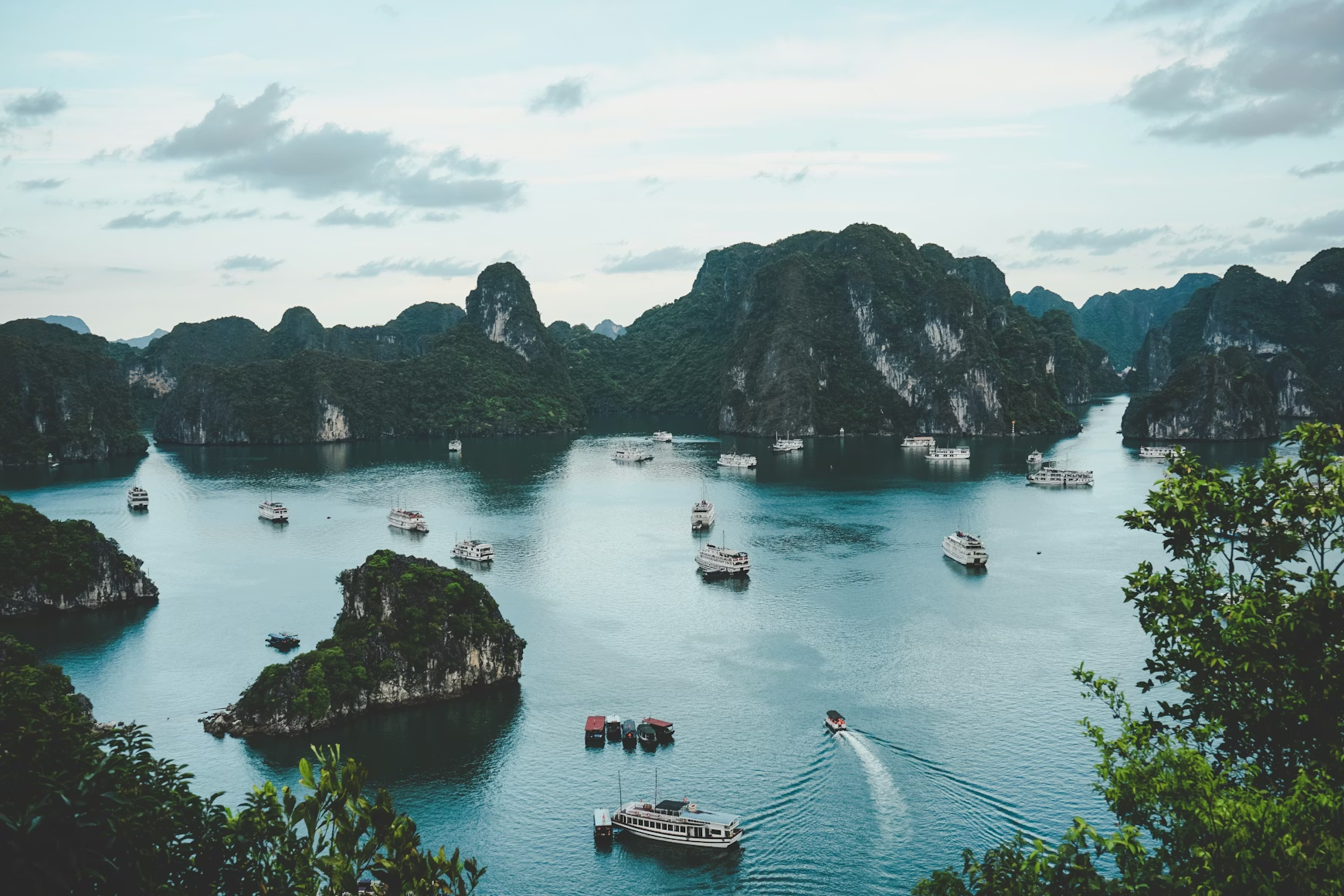
Ha Long Bay — 1,969 limestone karst islands rising from emerald-green water in the Gulf of Tonkin — is one of the most extraordinary natural landscapes in the world and Vietnam's single most unmissable experience. The karsts are the remnants of a limestone plateau gradually dissolved by rainwater over 500 million years, leaving behind pinnacles and islands of rock in an endless variety of shapes and scales, some rising 200 metres straight from the water. UNESCO designated the bay a World Heritage Site in 1994. On an overcast day it looks like a Chinese ink-wash painting. On a clear day, with the water reflecting the islands and a traditional junk sailing between them, it looks like something a travel photographer staged and couldn't quite believe actually existed.
The only way to properly experience Ha Long Bay is on an overnight cruise — a 2-day/1-night or 3-day/2-night trip aboard a traditional wooden junk boat. The overnight stay allows you to be on deck at sunrise when the bay is completely still and the mist hangs between the karsts, and to kayak into sea caves and hidden lagoons accessible only when the tide is right. The best operators anchor away from the main tourist clusters; the difference between a crowded pier anchorage and a quiet hidden lagoon is the difference between a good and a great Ha Long Bay experience. Budget for at least a midrange cruise (Heritage Line, Indochine Cruise, or similar) — the cheapest boats cut corners on food, anchorage position, and kayaking access.
Da Nang & the Marble Mountains
🎫 Da Nang Experiences
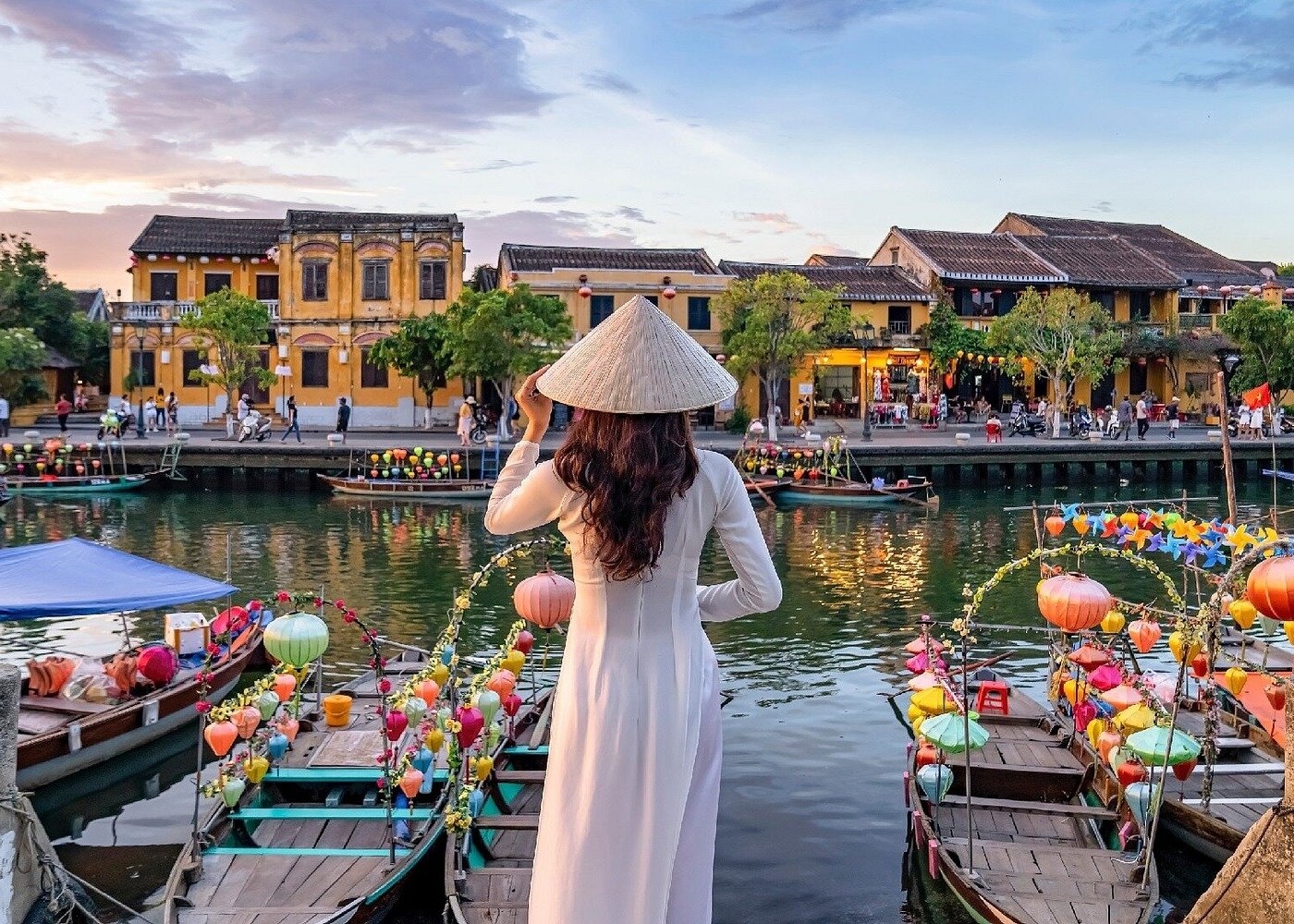
The Marble Mountains — Five Sacred Hills Above the Sea
🗿 Sacred Site · Da Nang's Greatest Experience
The Marble Mountains — Ngũ Hành Sơn — are five marble and limestone hills rising dramatically from the coastal plain between Da Nang and Hoi An, each named after one of the five elements: water, fire, metal, wood, and earth. They have been a sacred site for over a thousand years — first for the Hindu Cham people, then for Vietnamese Buddhist communities — and are riddled with natural caves that have been converted into pagodas, each lit by natural light shafting in through holes in the cave roof. The effect, particularly in the Huyen Khong Cave where shafts of light illuminate Buddhist altars in a cavern large enough to hold hundreds of people, is completely extraordinary.
Thuy Son (Water Mountain) is the most accessible and most spectacular — a lift takes you to the base of the pagoda complex, from where a network of stairs and pathways winds between caves, pagodas, and viewpoints over the Da Nang coastline. Climb to the Am Phu Cave (the Cave of Hell) for its grotesque Buddhist underworld carvings, then to the Vong Hai Dai viewpoint at the summit for the finest view in the area: the South China Sea stretching away to the horizon, My Khe Beach below, and the Hai Van Pass mountains visible to the north. Allow 2–3 hours. Go early — by 10am the tourist buses begin arriving.
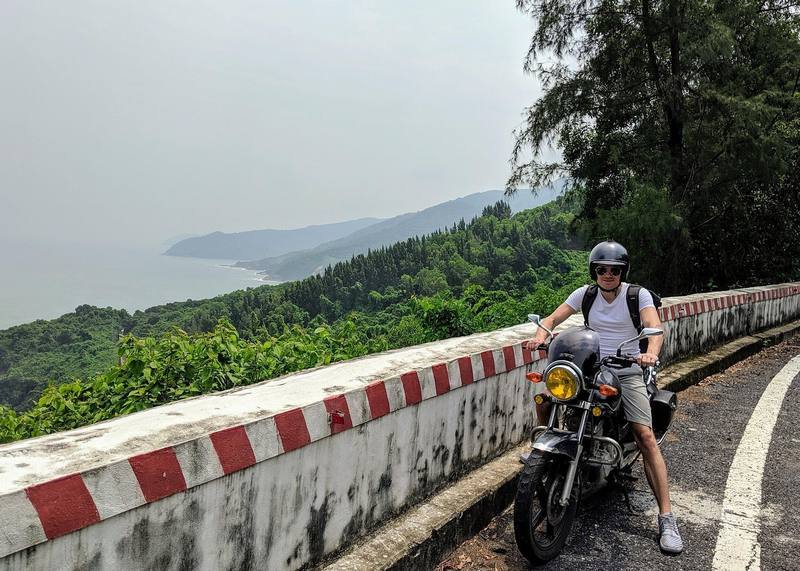
Motorbiking the Hai Van Pass — Vietnam's Greatest Coastal Road
🏍️ Adventure · Most Spectacular Drive in Vietnam
The Hai Van Pass — Ocean Cloud Pass — is a 21km mountain road crossing the Trường Sơn range between Da Nang and Hue, climbing to 496 metres above a coastline that Jeremy Clarkson once called "one of the best coast roads in the world" on Top Gear. He wasn't wrong. The road winds up through dense jungle above a series of switchbacks, with the South China Sea visible hundreds of metres below on one side and the mountains rising sharply on the other. At the summit, French colonial-era fortifications and Vietnam War-era bunkers sit at the highest point, with views in both directions along the coast that stop you completely.
The easiest way to do it is on the back of an Easy Rider motorbike with a guide — experienced local drivers who know the road, the viewpoints, and can narrate the history of the pass (it was the historical boundary between the ancient kingdoms of Dai Viet and Champa, and a strategically critical position during the American War). The round trip from Da Nang takes 3–4 hours. The pass can also be driven one-way from Da Nang to Hue as part of a longer motorbike journey north — an excellent option if you have an extra day.
Hoi An
🎫 Hoi An Experiences
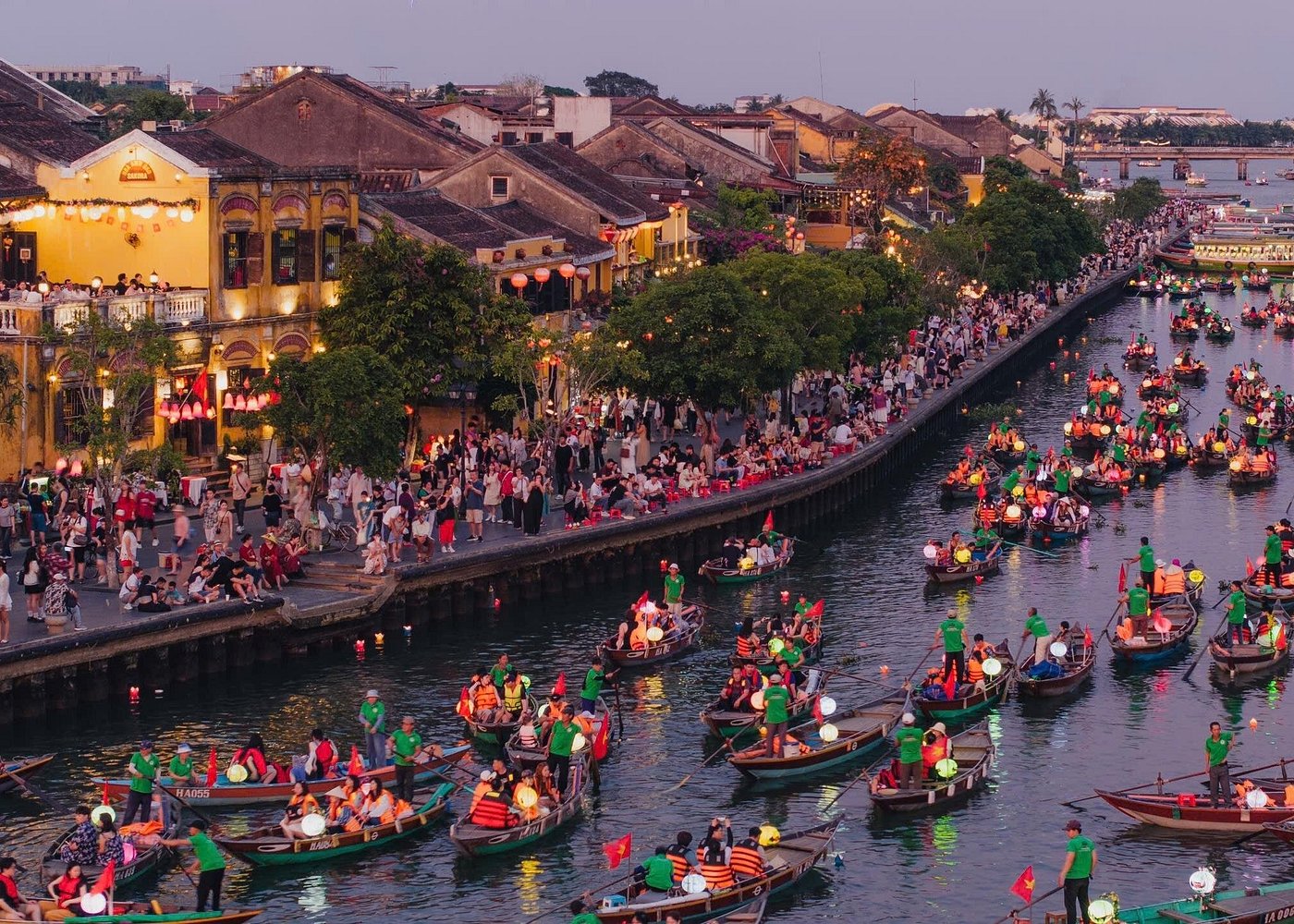
Hoi An Ancient Town & Lantern Night — Vietnam's Most Beautiful Town
🏮 Culture · The Most Beautiful Evening in Vietnam
Hoi An's Ancient Town is a UNESCO World Heritage Site — a trading port frozen in time since the 17th century, when it was one of the most important commercial centres in Southeast Asia. The old town's assembly halls, merchant houses, Japanese-influenced covered bridge, and French colonial facades survive almost completely intact, the building styles reflecting the Chinese, Japanese, and European traders who all left architectural signatures in the streets. During the day, the town is beautiful and busy. At night — particularly during Lantern Night on the 14th of each lunar month when electric lights are switched off and the streets and the Thu Bon River are lit entirely by hundreds of coloured silk lanterns — it becomes something genuinely extraordinary.
On Lantern Night, paper lanterns are floated on the river as offerings, boats carry lanterns along the waterway, and the Ancient Town glows in warm amber and red light that makes even bad photographs look extraordinary. If your dates don't align with the full moon, the town is still beautiful on any evening — the lanterns are always lit, just fewer of them. Walk the length of the Ancient Town after dark, cross the Japanese Covered Bridge, and eat a bowl of Cao Lau (the local noodle dish made with water from a specific ancient well — it genuinely only tastes right here) at one of the street stalls near the river. Three days is the minimum; most visitors wish they had stayed longer.

Basket Boat Ride in the Coconut Forest
🛶 Water · Hoi An's Most Fun Experience
The Rừng Dừa Bảy Mẫu — the Seven Mẫu Coconut Forest — is a 100-hectare water coconut palm forest on the Thu Bon River delta just outside Hoi An. Navigating it in a coracle (a round woven bamboo basket boat known as thúng chai, traditionally used by Vietnamese fishermen) is one of the most entertaining experiences available anywhere in Vietnam. The boats are steered by spinning the oar rather than rowing in the conventional sense — a skill that takes a lifetime to learn and that the local guides demonstrate with casual mastery before performing spins, figure-eights, and full rotations at speed while you grip the sides and try not to fall in.
The forest tour typically takes 1.5–2 hours, including a demonstration of traditional crab and fish trapping in the waterways, a passage through the densest part of the coconut palm forest where the canopy closes overhead, and a boat-spinning performance that most visitors agree is the best photo opportunity in the Hoi An area. Book through a local operator rather than a hotel desk for the most authentic experience — the guides from the local fishing village run the best tours.
🏨 Where to Stay — Hoi An
Vietnam Trip FAQs
What is the best Vietnam itinerary for first-time visitors?
The best 10-night Vietnam itinerary goes north to south: Hanoi (Days 1–3) for street food and the Old Quarter; Ha Long Bay (Days 4–5) for an overnight cruise through the karst landscape; Da Nang & the Marble Mountains (Days 6–7) including the Hai Van Pass motorbike ride; and Hoi An (Days 8–10) for the Ancient Town and Lantern Night. Fly home from Da Nang.
What is the best time to visit Vietnam?
Vietnam's climate varies significantly by region. For this north-to-central itinerary: February–April is ideal — dry season in the north and centre, warm but not brutally hot. August–October works for Da Nang and Hoi An (central Vietnam's dry season) but Ha Long Bay can be misty in August. Avoid central Vietnam November–January — this is typhoon season and Hoi An floods regularly. December–February is peak season with the best weather in the south.
Is an overnight cruise on Ha Long Bay worth it?
Yes — absolutely. A day trip gives you 4–5 hours on the water after 3–4 hours of driving each way, and you miss the sunrise, the hidden lagoons, and the sea cave kayaking that makes Ha Long Bay extraordinary. The overnight cruise lets you be on deck at sunrise when the bay is completely still and the mist hangs between the karsts. Book a midrange operator — budget cruises compromise on anchorage position and food.
When is Hoi An Lantern Night?
Lantern Night falls on the 14th day of each lunar month — approximately once a month, always corresponding to the full moon. Electric lights are switched off in the Ancient Town and the streets are lit entirely by silk lanterns; paper lanterns are floated on the Thu Bon River. Check the lunar calendar before booking — timing your visit to coincide with Lantern Night is worth it, but Hoi An is beautiful on any evening.
Visa: Many nationalities can enter Vietnam visa-free for 45 days (US, UK, EU, Australia). Check the current rules before travelling — Vietnam's visa policy changes periodically. An e-visa ($25, apply online) covers 90 days and multiple entries.
Money: Vietnam uses the Dong (VND). ATMs are widely available. Carry some cash for street food and markets — many vendors don't accept cards. $100 USD goes a long way: a street food lunch is $1–2, a bia hoi is $0.20, a decent restaurant dinner is $8–15.
Getting around: Grab (the regional Uber) works well in all cities. Domestic flights are cheap and frequent — book VietJet or Bamboo Airways online. Overnight trains are a good option for the Hanoi–Da Nang route (16 hours, sleeper berths from $25).
Ha Long Bay: Book your cruise 2–4 weeks ahead in peak season. Ask operators specifically where they anchor overnight — the difference between a busy pier and a quiet lagoon is the difference between a good and a great trip.
Hoi An tailoring: Hoi An is famous for made-to-measure clothing — suits, dresses, and shoes produced in 24–48 hours. Allow 2–3 fittings and build in enough days to get alterations done before you leave.