🌏 Asia · East Asia
🇨🇳
Best Things to Do in China
Sleep on a forbidden section of the Great Wall, ride camels on the Silk Road, scale the Avatar mountains, and watch the world's greatest skyline light up across the Huangpu River.
Sleep on a forbidden section of the Great Wall, ride camels on the Silk Road, scale the Avatar mountains, and watch the world's greatest skyline light up across the Huangpu River.
China is one of the most extraordinary countries on Earth — a civilisation 5,000 years old that contains within it some of the most dramatic landscapes, most staggering archaeological sites, most extraordinary feats of engineering, and most diverse food cultures imaginable. From the wild, unrestored sections of the Great Wall stretching into mountain mist to the bullet trains that blur the countryside at 350km/h to the Avatar pillar mountains of Zhangjiajie, China operates at a scale and depth that rewards the traveller willing to go beyond the standard tourist circuit.
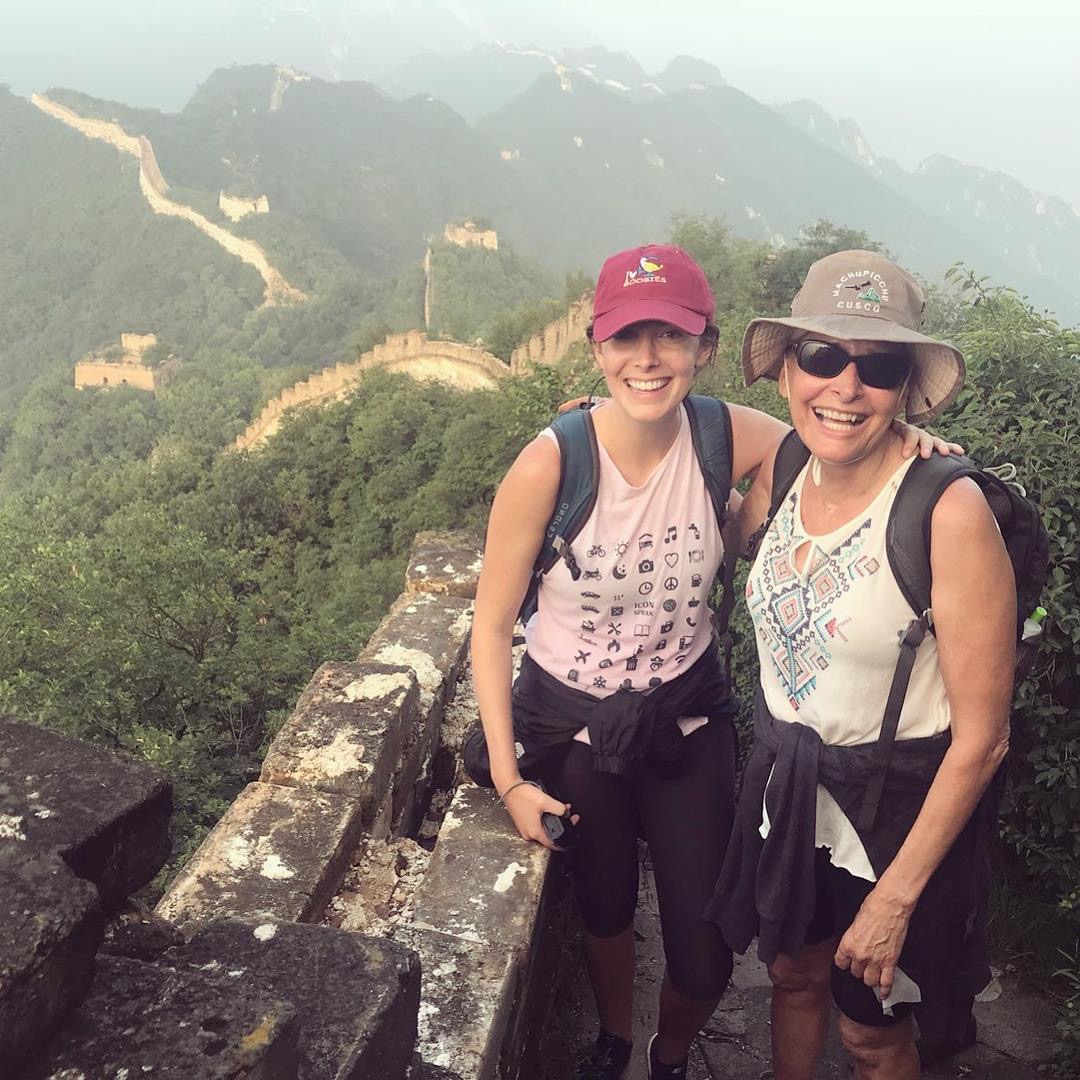
The Great Wall of China stretches over 21,000 kilometres across mountains, deserts, and plains — and most visitors see the same heavily restored sections at Badaling or Mutianyu. But away from the tourist sites, wild and unrestored sections of the wall crumble dramatically across remote mountain ridges where no crowds reach and no restoration has softened the ancient stonework. Camping overnight on these forbidden sections is the experience that separates those who have truly encountered the Great Wall from those who visited it.
Watching the sun set from ancient battlements with the wall disappearing into mist-covered mountains in every direction, in complete silence, with no other humans visible — it is an experience that is difficult to articulate and impossible to forget. The wall at dawn, when the mist fills the valleys below and the ancient stones glow in early light, is one of those moments that recalibrate your sense of history. This is what the Great Wall actually is: not a tourist attraction, but one of the most extraordinary things human beings have ever built.
Great Wall Adventure Club organises overnight camping trips on wild, unrestored sections of the wall near Beijing — typically the Jiankou and Gubeikou sections which are among the most dramatically ruined and most beautiful. Small groups, experienced local guides, and all equipment provided. Book well in advance as places are limited.
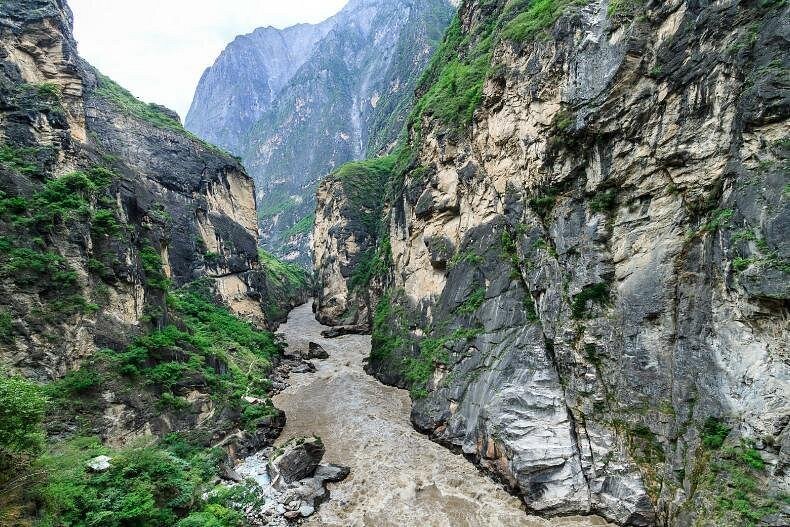
Tiger Leaping Gorge is one of the deepest river gorges in the world — the Yangtze (Jinsha River) cuts between Jade Dragon Snow Mountain (5,596m) and Haba Snow Mountain (5,396m) in a chasm that drops nearly 3,900 metres from peak to river. The two-day high trail hike above the gorge is one of China's great trekking experiences, passing through dramatic mountain scenery above villages of the Naxi people with views that open and close as the trail winds around each ridge.
The gorge itself is named for a legendary tiger that crossed the river at its narrowest point — about 30 metres across — by jumping from a mid-river rock. At the base, the compressed Yangtze thunders through the narrow channel with a force that is audible from the trail above. The trail is steep in places, particularly the famous 28 Bends near the start, but the reward — views of the snow-capped peaks above, the river below, and the scale of the gorge walls stretching ahead — is among the finest in China.
Tiger Leaping Gorge is near Lijiang in Yunnan province — about 90 minutes by bus from Lijiang old town to Qiaotou (the trailhead). Lijiang is connected by high-speed train and flights from Kunming, Chengdu, and Guangzhou. Most hikers complete the high trail in two days, staying at one of several guesthouses in the middle section. The low road along the gorge bottom is a separate, less-recommended experience.
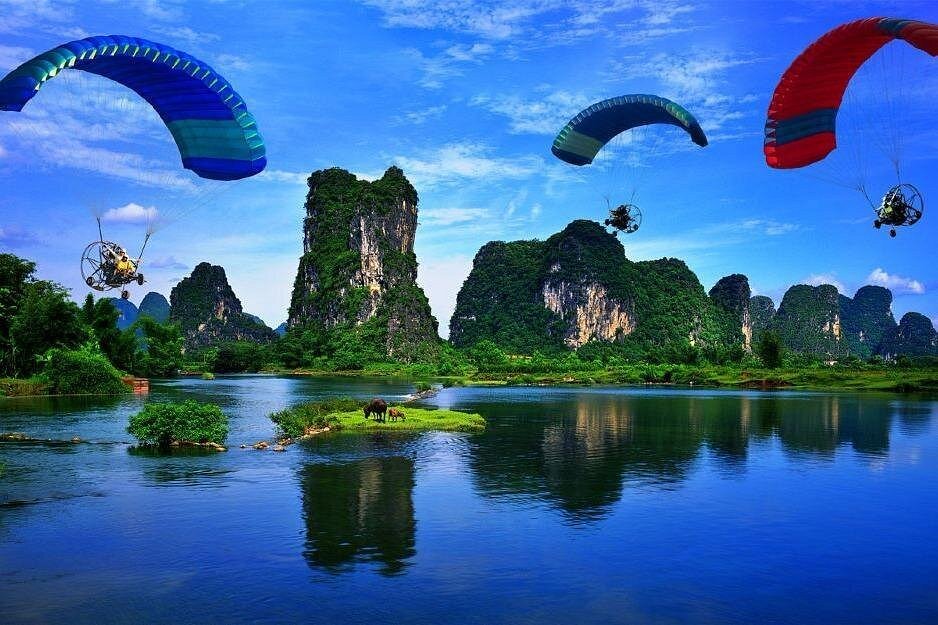
The karst landscape of Yangshuo and Guilin is one of the most visually distinctive on Earth — hundreds of steep limestone pillars rising from flat paddy fields and mirror-flat rivers in a panorama that has inspired Chinese ink paintings for a thousand years. From ground level it is extraordinary. From the air, on a paramotor or parasail above the towers, the landscape takes on a completely different dimension: the geometry of the peaks, the silver curves of the Li River, the emerald green of the paddy fields between them.
The Yangshuo parasailing experience takes you up above the valley in a harness attached to a paramotor, reaching heights where you can see the full pattern of the landscape — dozens of karst towers disappearing into the distance, the river winding between them, and the ancient villages at their bases. The flight lasts 15–30 minutes and is operated by experienced pilots who know the local air conditions well. No previous experience is required.
Yangshuo is 70km south of Guilin — about 1.5 hours by bus or 4 hours by Li River cruise (which is an experience in itself, drifting through the karst landscape by boat). Guilin has a major airport with direct connections from Beijing, Shanghai, and Chengdu. Yangshuo itself is a lively small town with excellent restaurants, cycling routes between the karst towers, and some of the most beautiful river scenery in China.
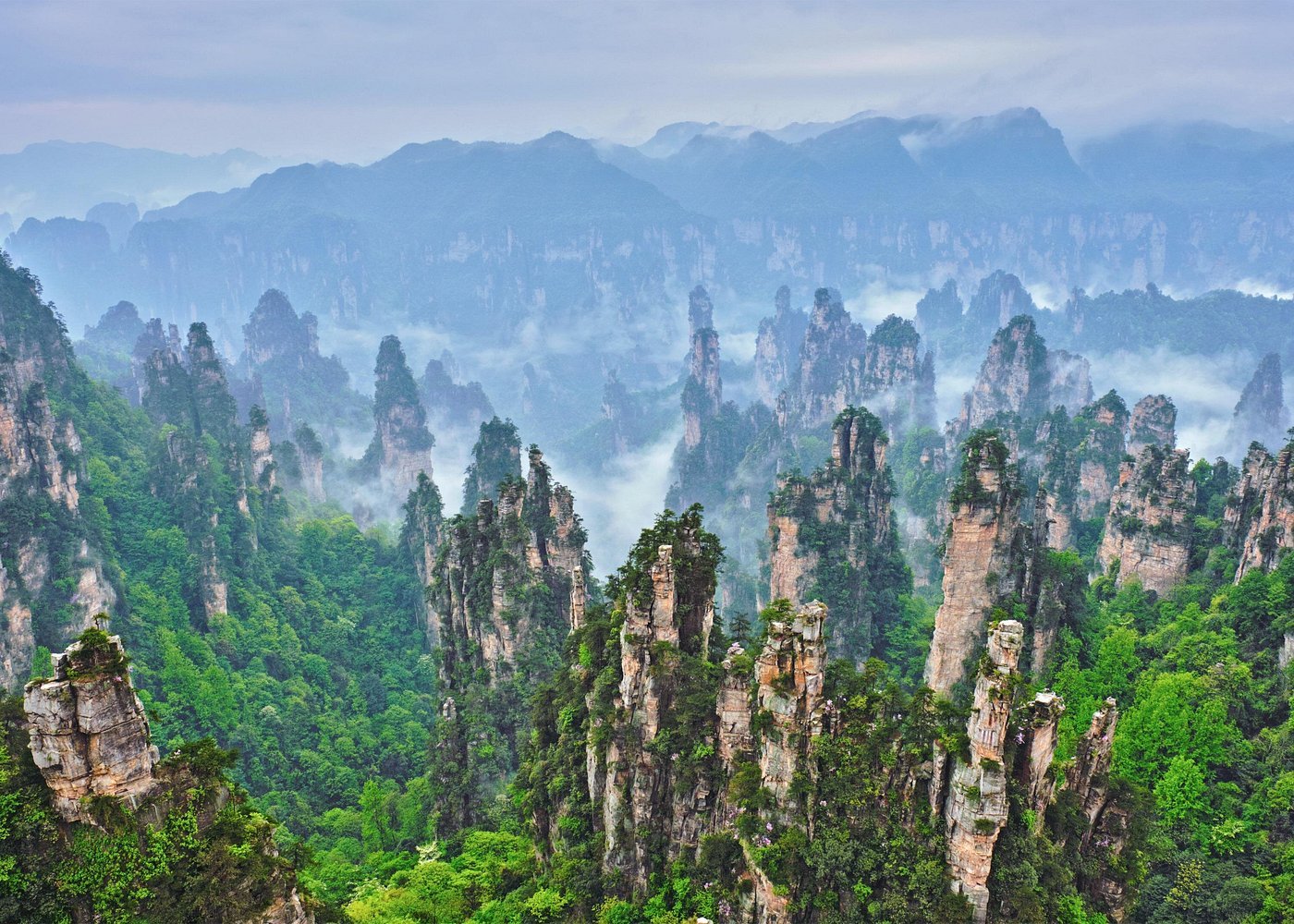
Zhangjiajie National Forest Park in Hunan province contains over 3,000 quartzite sandstone pillar mountains rising from a forested plateau — some reaching over 200 metres in height, many narrow enough at the top that trees grow from their flat summits. The landscape directly inspired the floating Hallelujah Mountains in James Cameron's Avatar, and in person the resemblance is uncanny: mist drifts through the pillars, the forest below is a deep unbroken green, and the scale of the formations is completely outside ordinary experience.
The via ferrata routes on Zhangjiajie's pillar walls are among the most dramatic in the world — iron rungs bolted into sheer quartzite faces, with the forest canopy hundreds of metres below and other pillars at eye level. The park also features the world's highest glass-bottomed bridge (430m above a canyon) and the world's longest cable car. But the via ferrata, where you are clipped onto the mountain itself and hauling your body up rungs while the forest falls away beneath you, is the experience that most viscerally rewards the vertigo.
Zhangjiajie has its own airport with direct flights from Beijing, Shanghai, Guangzhou, and Chengdu. The park entrance is 30km from the city. Allow at least 2 full days to explore properly — the park is large enough that a single day only scratches the surface. Via ferrata equipment and guided routes are available through operators inside the park.
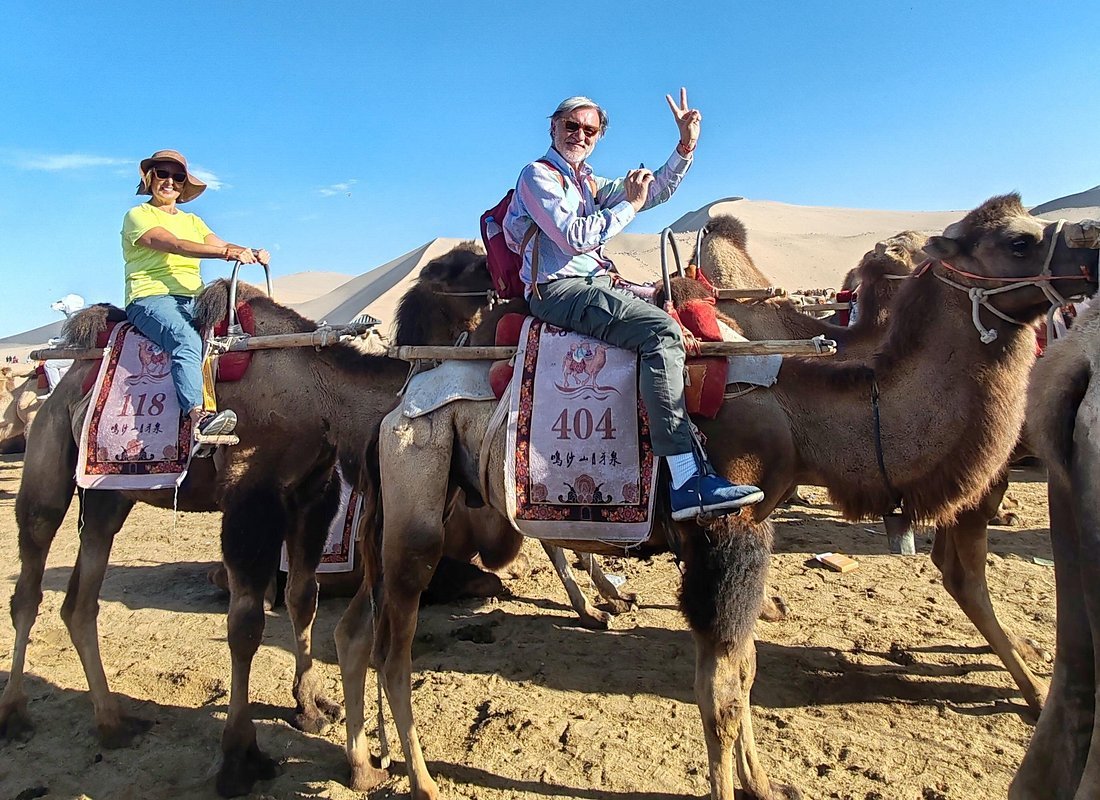
Dunhuang sits at the junction of the northern and southern routes of the ancient Silk Road in the Gobi Desert of Gansu province — for 2,000 years the last major oasis before the desert crossing into Central Asia, and the last stop on the road back from it. Every major caravan that crossed between China and the Mediterranean passed through Dunhuang. The Singing Sand Dunes (Mingsha Shan) that flank the oasis — rising to 250 metres and stretching for 40km — are named for the sound the sand makes when the wind moves across it.
Riding a Bactrian camel across these dunes, with the crescent-shaped Crescent Lake (Yueyaquan) glittering impossibly at the base of the dunes and the desert stretching to the horizon, is the most direct connection available to the Silk Road experience. The same landscape, the same mode of transport, the same sound of sand moving in the wind — 2,000 years of continuity available to any visitor willing to make the journey to one of China's most remote and most rewarding destinations.
Combine the camel ride with a visit to the Mogao Grottoes — 735 Buddhist cave temples carved into a cliff face over a period of 1,000 years, containing some of the finest Buddhist art in existence. The grottoes require advance booking through the official Dunhuang website; visits are strictly controlled. Together, the dunes and the grottoes make Dunhuang one of the most extraordinary day programmes in China.
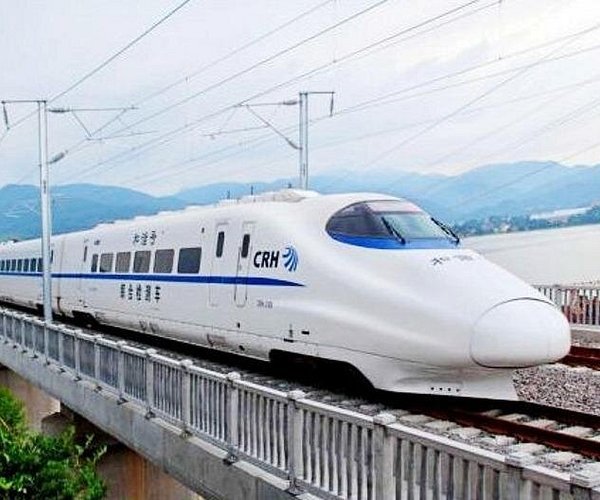
China operates the world's largest and fastest high-speed rail network — over 45,000 kilometres of dedicated high-speed track with trains operating at up to 350km/h. The Beijing–Shanghai route (1,318km) takes 4.5 hours by the fastest service; a flight between the same cities takes the same total time once you factor in airport procedures. The Beijing–Xi'an route, covering 1,000km through mountains and loess plateau, takes about 4.5 hours. The experience of watching China's landscape blur past at 350km/h — plains, river valleys, mountain tunnels, city skylines — is genuinely exhilarating in a way that air travel simply isn't.
The trains themselves are clean, comfortable, and punctual — China's high-speed rail has one of the world's best on-time records. First class seats are wide and spacious with good legroom; second class is entirely adequate for journeys of a few hours. The station architecture is typically spectacular — many of China's high-speed rail stations are among the largest buildings in the world. Using the train to move between cities on a China itinerary is both the most practical and the most experiential way to travel.
Beijing–Shanghai (4.5h), Beijing–Xi'an (4.5h), Shanghai–Hangzhou (45min), Xi'an–Chengdu (3.5h), Guangzhou–Hong Kong (47min). Tickets are bookable through Trip.com, the official 12306 app, or through tour operators. Book in advance for peak travel dates — national holidays see extreme demand.
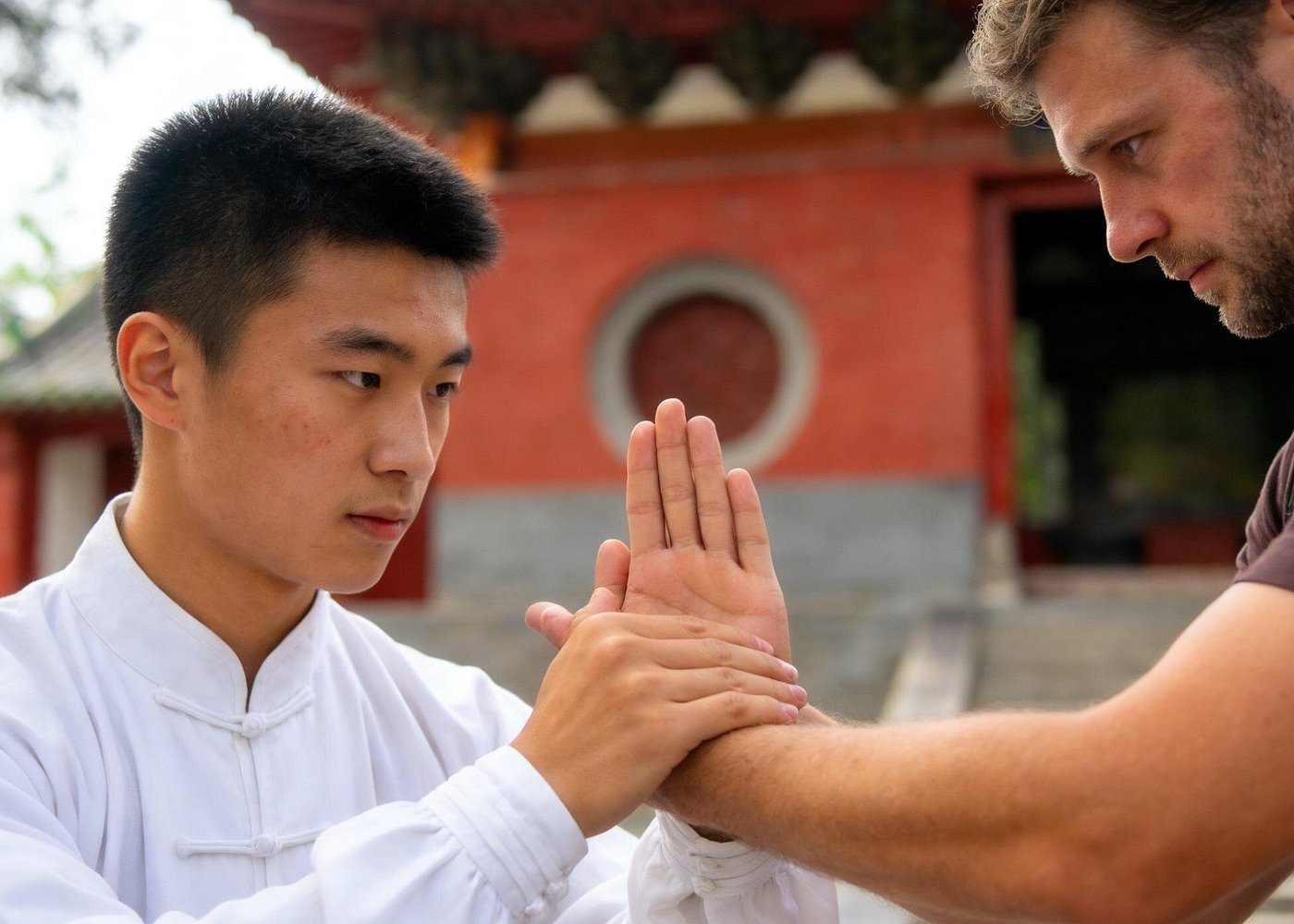
The Shaolin Monastery in the Song Mountains of Henan province is the birthplace of Chinese martial arts — founded in 495 AD, and the place where the monk Bodhidharma (Da Mo) is said to have developed the physical exercises that became kung fu as a way of strengthening the monks' bodies for meditation. For 1,500 years the monastery has trained warrior monks in a tradition of physical and spiritual discipline that produced the most famous martial arts school in history. It is still functioning today — young students train in the courtyards every morning.
A private tour from Zhengzhou (the nearest major city) combines the monastery visit — including the ancient stone pagoda forest where abbots are buried, the sacred cypress trees, and the training courtyards where monks still practise — with a hands-on kung fu lesson taught by an actual Shaolin master. The instruction is genuine: your teacher is someone who has spent years in the tradition, and the basics of stance, movement, and focus that they impart in an hour give you a felt understanding of the art that watching demonstrations cannot.
Shaolin Monastery is 80km southwest of Zhengzhou — about 1.5 hours by car. Zhengzhou is a major high-speed rail hub with connections from Beijing (2h), Xi'an (2h), and Shanghai (4h). The Viator tour includes private transport from Zhengzhou, entry tickets, and the kung fu lesson with a master — the most complete way to experience Shaolin without navigating the logistics independently.
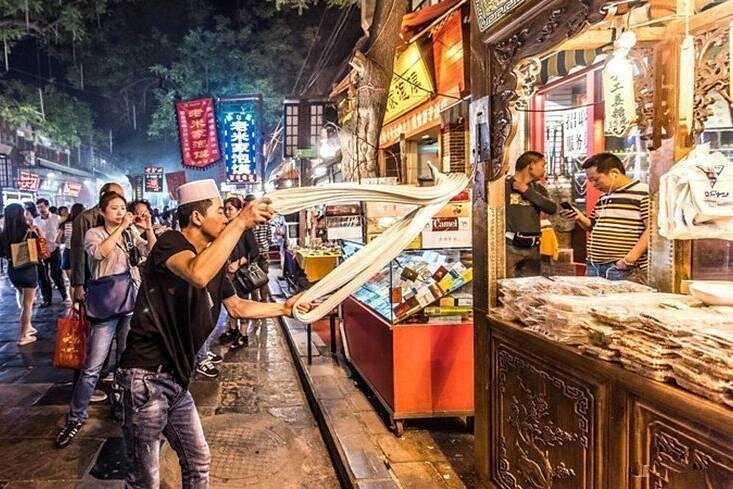
Xi'an's Muslim Quarter (Huimin Jie) is one of the most extraordinary food destinations in China — a dense network of lantern-lit alleyways in the old walled city where the Hui Muslim community has lived and cooked for over a thousand years. The food here reflects Xi'an's position as the eastern terminus of the Silk Road: hand-pulled noodles (biangbiang mian), cumin-spiced lamb skewers, pomegranate juice, persimmon cakes, and roujiamo (Chinese-style "hamburger" of braised pork in flatbread) sold from stalls that crowd both sides of every narrow street.
Walking through the Muslim Quarter at night, when the lanterns are lit and the stalls are at maximum activity and the sound of noodle-pulling and the smell of cumin fills the air, is one of the most immersive food experiences available in Asia. A guided food tour takes you to the best stalls — including the vendors who have been pulling noodles in the same spot for decades — and provides the historical context that makes the Quarter's food culture even more fascinating.
The evening Viator tour combines the Muslim Street food walk with the North Square of the Big Wild Goose Pagoda, where a spectacular musical fountain show lights up the square after dark — one of the largest musical fountain displays in Asia. Xi'an is easily reached by high-speed train from Beijing (4.5h), Shanghai (6h), or Chengdu (3.5h).
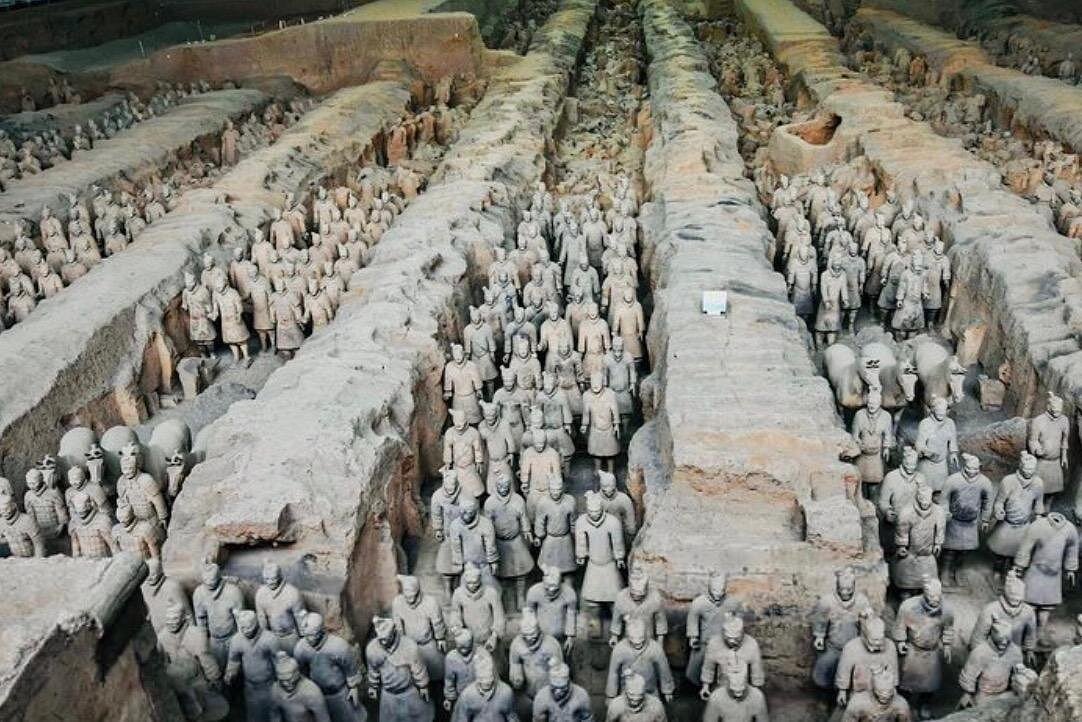
The Terracotta Army is one of the greatest archaeological discoveries in human history — approximately 8,000 life-size clay soldiers, horses, chariots, and officials buried in three large underground pits near the tomb of Qin Shi Huang, the First Emperor of China, around 210 BC. Each figure is unique: different facial features, hairstyles, rank insignia, and expressions distinguish soldiers from officers from kneeling archers from chariot drivers. The craftsmen who made them — an estimated 700,000 workers over 38 years — created individual portraits in clay at a scale never seen before or since.
The scale of Pit 1 — the largest excavated pit, 230 metres long, containing over 6,000 figures in precise military formation — is genuinely overwhelming in person. Photographs cannot convey the experience of standing at the edge and looking across row after row of soldiers stretching to the far wall. Pit 2 and Pit 3 contain cavalry, command units, and officials. An estimated 80% of the buried army remains unexcavated — archaeologists continue to work on the site today.
The site is 37km east of Xi'an city centre — about 1 hour by bus (tourist bus number 5 from Xi'an Railway Station) or 45 minutes by taxi. The Viator tour includes skip-the-line entry tickets and a guide who explains the history and ongoing excavations in detail — essential context for understanding what you're seeing. Allow 3 hours minimum for a proper visit.
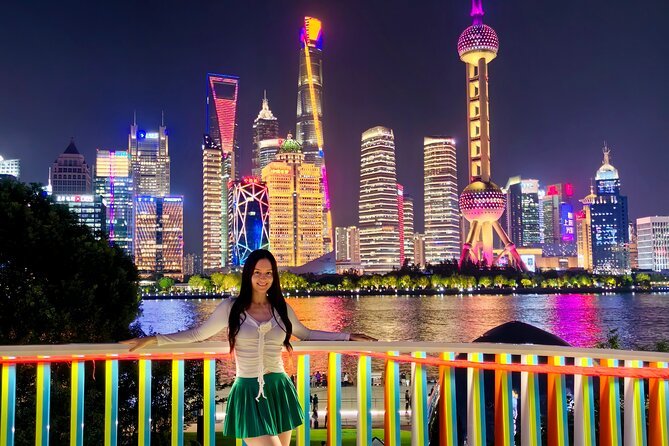
The Shanghai skyline at night is one of the great urban spectacles in the world — the Pudong financial district's cluster of illuminated towers, viewed across the Huangpu River from the Bund, combines architectural ambition, neon scale, and the specific beauty of reflected light on dark water in a panorama that has no equal in Asia. The Oriental Pearl Tower's spheres, the Shanghai Tower's twisted glass form (the world's second-tallest building at 632 metres), the Jin Mao Tower's pagoda silhouette, and the Shanghai World Financial Center's distinctive trapezoid void all contribute to a skyline that was almost entirely built in the past 30 years.
The Bund itself — the 1.5km waterfront promenade of colonial-era European buildings on the western bank — provides the foreground for the best views of Pudong across the river. At night the buildings are fully lit, and the photography light is extraordinary from about 8pm onwards. A guided photography tour takes you to the best vantage points, manages the logistics of moving between locations as the light changes, and ensures you capture both the skyline as a whole and the architectural details that make it distinctive.
Shanghai is a world-class city that rewards extended exploration — the French Concession's tree-lined streets and independent restaurants, the Yu Garden and the Old City, the contemporary art districts of M50 and the Bund's gallery floors, and a food scene that spans Shanghainese xiaolongbao to every international cuisine imaginable. Allow at least 3 days.

The Chengdu Research Base of Giant Panda Breeding is the world's most successful giant panda conservation programme — housing over 200 pandas in large naturalistic enclosures across a bamboo forest park on the northern edge of Chengdu. The base has been instrumental in raising the giant panda's conservation status from Endangered to Vulnerable, with a breeding programme that produces cubs for reintroduction to wild habitats. Visiting is genuinely one of the most joyful experiences in China.
Giant pandas in person are larger than expected, more mobile than their reputation suggests, and completely unbothered by the presence of visitors observing them through glass and from viewing platforms. The nursery enclosures, where cubs from the latest breeding season tumble and play while their mother lounges in bamboo, are the highlight — watching a two-kilogram panda cub attempt to climb a wooden structure and failing repeatedly while its mother ignores it entirely is pure joy. Red pandas — the smaller, fox-like relative — roam the same grounds and are equally charming.
The base is 10km north of central Chengdu — 30 minutes by taxi or public bus. Open daily; pandas are most active in the morning before 10am when temperatures are cooler. A guided tour provides context about the breeding programme and conservation science. Chengdu itself is an excellent city with outstanding Sichuan cuisine, a relaxed teahouse culture, and easy high-speed rail connections to Xi'an (3.5h) and other major cities.
China is enormous and the best time varies by region. Here's a general seasonal guide: