🇪🇺 Europe · Central Europe
🇸🇰
Best Things to Do in Slovakia
Wild brown bears in the High Tatras, UNESCO castle ruins, medieval Bratislava, fairy-tale castles to sleep in, and wine tasted in complete darkness.
Wild brown bears in the High Tatras, UNESCO castle ruins, medieval Bratislava, fairy-tale castles to sleep in, and wine tasted in complete darkness.
Slovakia is Central Europe's best-kept secret — a country with more castles per square kilometre than almost anywhere else on Earth, a mountain range that rivals the Alps without the queues, a capital city of genuine medieval charm at a fraction of Prague's prices, and a wilderness where wild brown bears still roam the forest edges at dusk. It sits between Austria, Hungary, Poland, and the Czech Republic and is visited by a fraction of the tourists those countries receive. These seven experiences are why that is about to change.
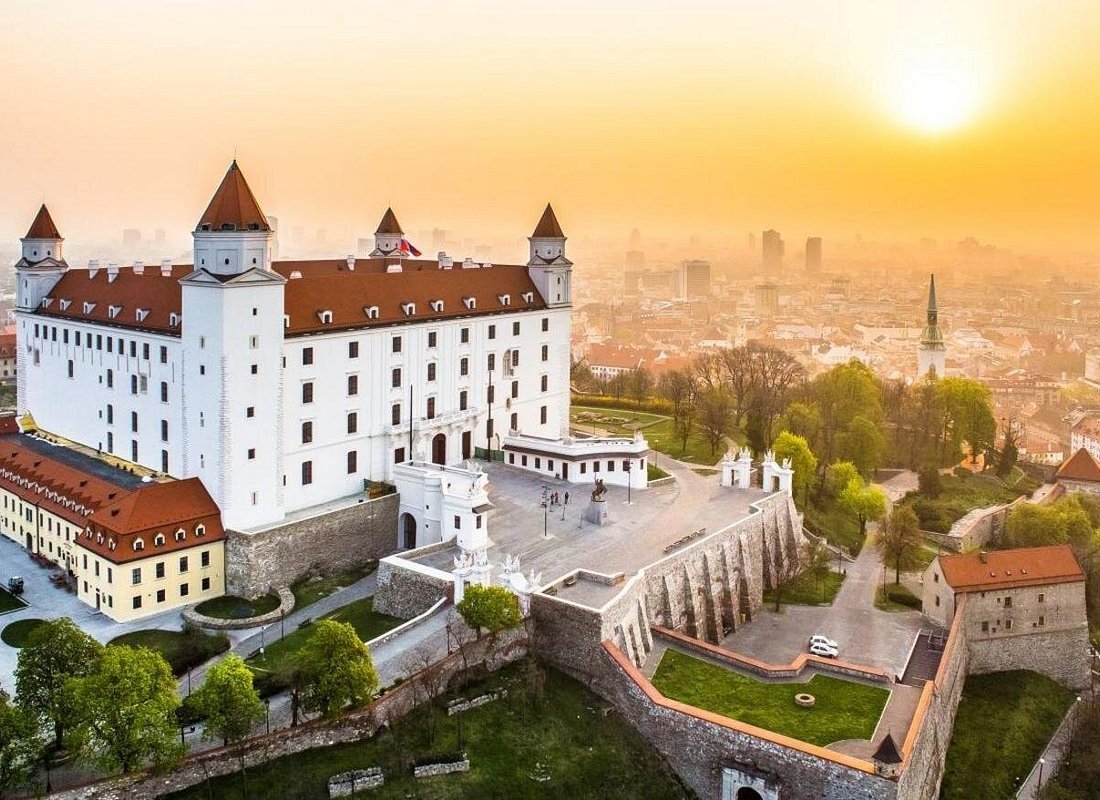
Bratislava is one of Europe's most underrated capital cities — compact enough to walk end-to-end in an afternoon, genuinely beautiful in its preserved medieval core, and completely free of the industrial tourism that has made Prague and Budapest increasingly exhausting. The white hilltop castle, rebuilt in its current form in the 18th century after a fire and looking down over the Danube from four corners, is the city's defining image: dramatic at sunset, floodlit at night, and easily reached on foot from the Old Town below.
The Old Town itself is a dense network of cobbled streets, Baroque palaces, Gothic churches, and the kind of quirky street sculptures — the man emerging from a manhole, the Napoleonic soldier leaning against a bench — that give Bratislava a playfulness that most Central European capitals lack. Hlavné námestie (Main Square) and Michalská Street form the core, surrounded by excellent cafés and restaurants at prices that make Vienna feel extravagant by comparison. Bratislava sits 60km from Vienna and 200km from Budapest — it fits naturally into any Central European itinerary.
The Old Town is entirely walkable. The castle is a 15-minute uphill walk from the Main Square or a short taxi ride. A guided walking tour covers the city's layered history — from Celtic settlement to Great Moravian Empire to Habsburg coronation capital — in 2 hours and gives the architecture a meaning that self-guided wandering doesn't. The Danube riverfront is worth a walk in the evening when the city is lit up.
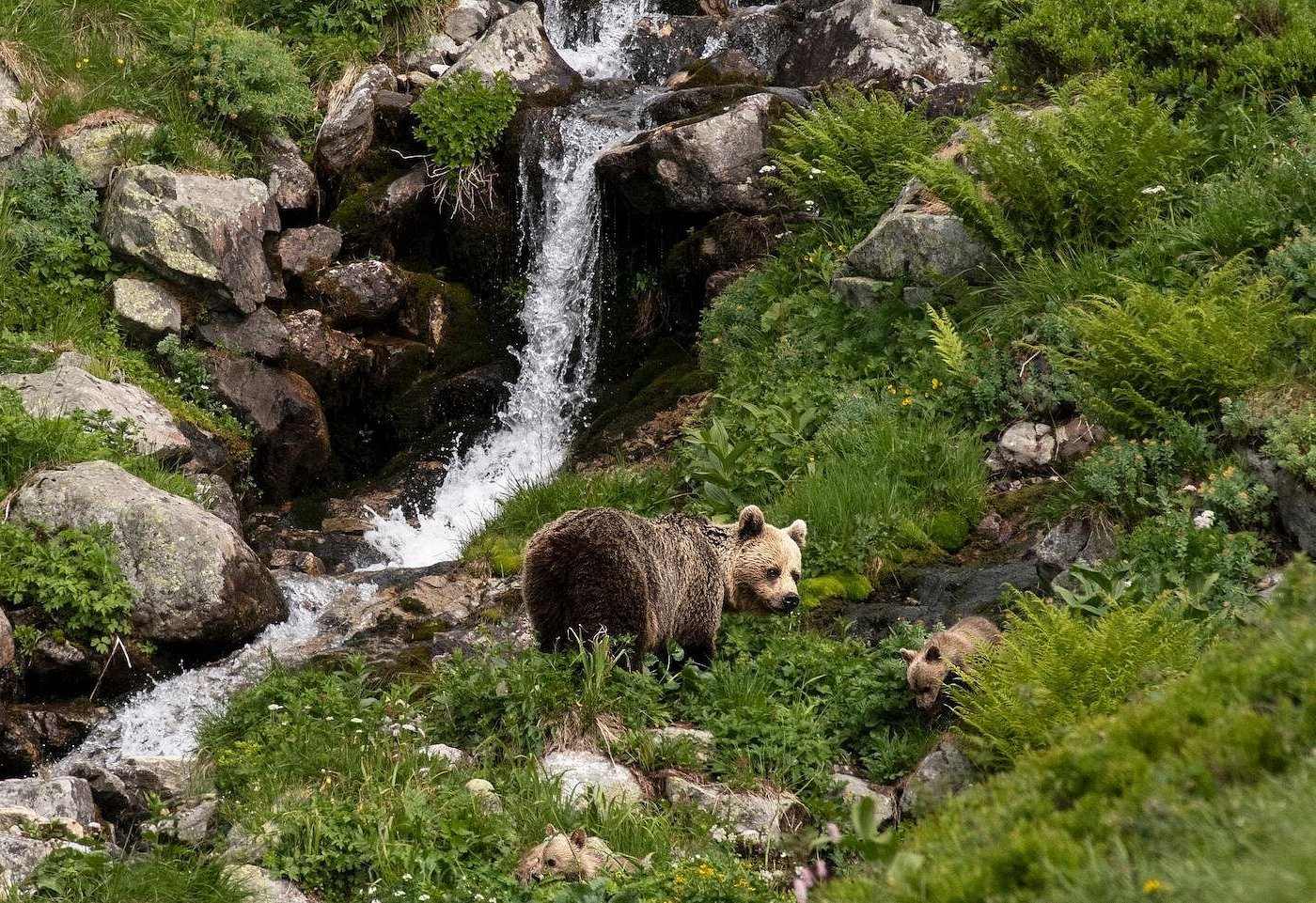
Slovakia has one of the highest concentrations of wild brown bears in Central Europe — the Carpathian mountain ranges, including the High and Low Tatras, support a thriving bear population that has never been as comprehensively hunted out as in Western Europe. Walking the alpine meadows and forest edges of the High Tatras with a knowledgeable local guide who reads the terrain — fresh tracks, overturned stones, claw marks on old trees — transforms a mountain hike into a genuine wildlife expedition.
The High Tatras themselves are worth the trip independently of the bears. This is a genuinely dramatic mountain range — granite peaks rising to over 2,600 metres, glacial lakes of startling blue-green colour, waterfalls dropping from hanging valleys, and a network of marked trails that can accommodate everything from a gentle valley walk to a demanding ridge traverse. In summer the meadows fill with wildflowers; in autumn the beech forest turns copper and gold. The bear encounter is the bonus that makes an already outstanding mountain day unforgettable.
Starý Smokovec and Štrbské Pleso are the main resort villages — served by the narrow-gauge Tatranská Elektrická Železnica from Poprad, which itself has rail connections from Bratislava (3.5 hours) and Košice (1.5 hours). The Tatra National Park (TANAP) is Slovakia's oldest and most protected national park. A car provides the most flexibility for reaching trailheads early before day-visitors arrive.
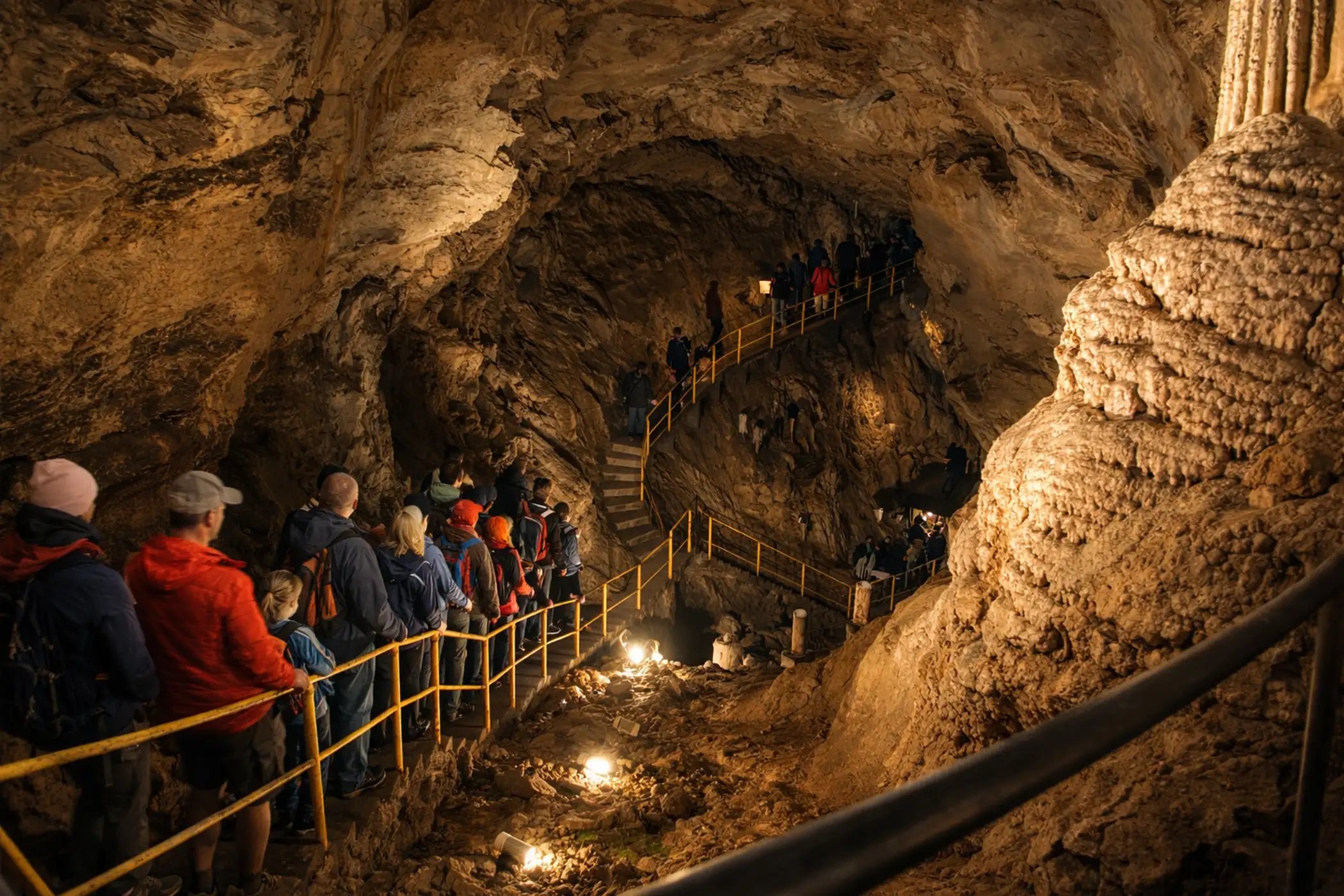
Belianska Cave (Belianska jaskyňa) is the only publicly accessible cave in the Slovak Tatras — and it is extraordinary. Located in the Belianske Tatry (Biele Tatry sub-range), the cave extends 1,370 metres in total length through chambers decorated with stalactites and stalagmites that have been forming since the Pleistocene. The main show cave route passes through chambers named for their formations — the Concert Hall, the Fairy Tale, the Pagoda — each with a distinct character and geological story that the guides explain in detail.
The scale of the largest chambers is the biggest surprise: the Concert Hall, named for its acoustic properties, is large enough to host actual concerts, with a vaulted ceiling of white aragonite crystals and a centrepiece stalagmite that rises over seven metres from the cave floor. The cave maintains a constant temperature of 5.5°C year-round, making it genuinely cold — bring a warm layer regardless of the outside temperature. A tour combined with a hike to the nearby Belianske waterfalls makes a full day of genuinely spectacular geology and landscape.
The cave is near the village of Tatranská Kotlina on the eastern side of the High Tatras — approximately 20km from Starý Smokovec by car or reachable by the Tatranská Elektrická Železnica. Guided tours run throughout the day in multiple languages. The GetYourGuide day trip combines the cave with the waterfalls in a single guided excursion from the Tatra region.
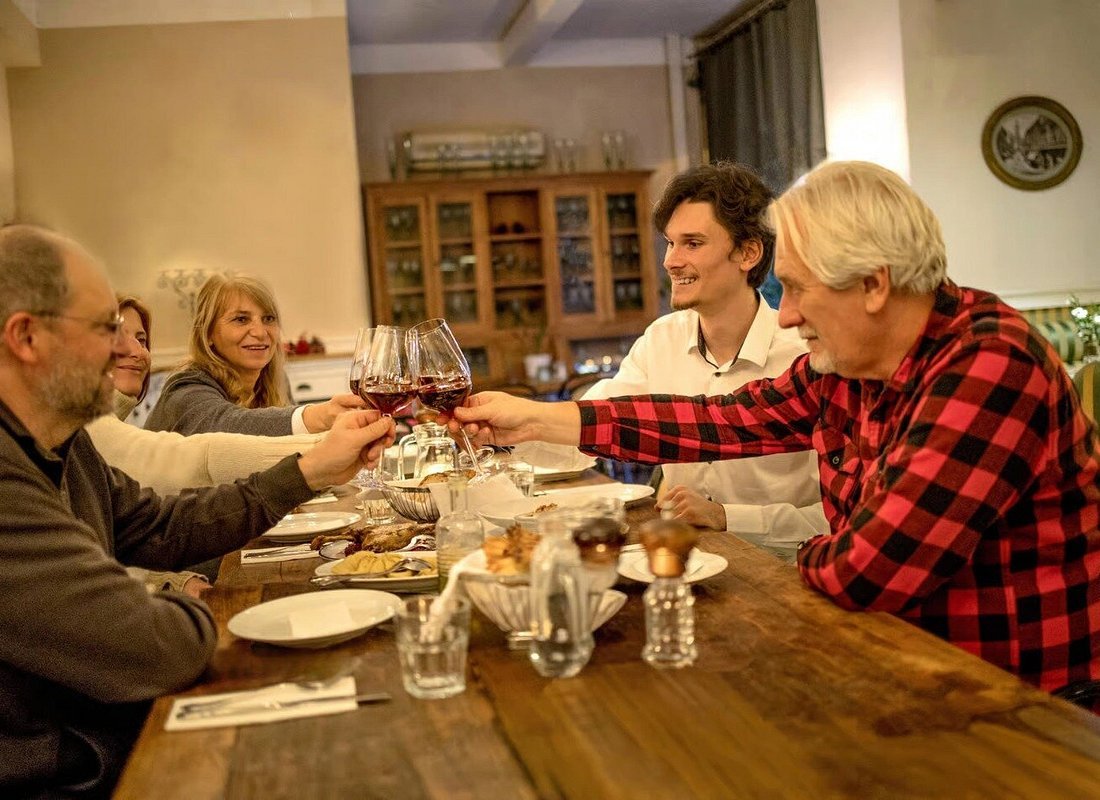
Slovak cuisine is one of Central Europe's most underrated food cultures — a hearty, honest tradition built around sheep's cheese (bryndza), slow-cooked meats, root vegetables, and fermented flavours, updated in Bratislava by a generation of chefs who have absorbed techniques from Vienna, Budapest, and Prague without losing the essential Slovak character. A guided food tour of Bratislava Old Town takes you through this evolution in real time: from the traditional vinotéka (wine cellar) where you taste authentic Malá Karpaty white wines to the new-wave Slovak bistro where bryndzové halušky (potato dumplings with sheep cheese) gets a modern presentation.
The must-taste experiences on a Bratislava food tour include bryndzové halušky (Slovakia's national dish), lokše (thin potato pancakes with poppy seed or duck fat), kapustnica (sauerkraut soup, particularly in winter), and the extraordinary range of Slovak wines from the Small Carpathians wine region just north of the city. Slovak craft beer has also exploded in Bratislava in recent years, with a number of excellent microbreweries operating in the Old Town. A good guide knows all of them.
The best food in Bratislava is found in the cellars and courtyards off the main tourist street. Guided food tours connect you with the spots that locals actually use — the family-run vinotéka, the traditional slovak restaurant with no English menu, the street food stand that's been selling lokše to locals for 30 years. Viator lists several excellent options ranging from 2 to 4 hours.
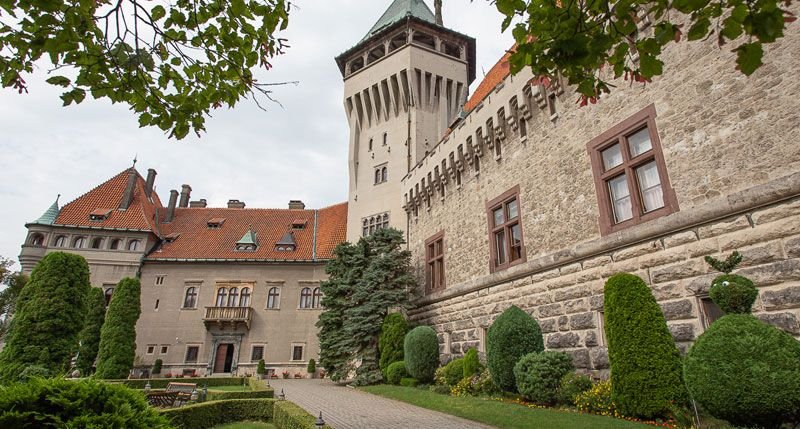
Slovakia has over 180 castles and castle ruins — more per square kilometre than almost any country in Europe. Smolenice Castle (Smolenický zámok), built on the foundations of a medieval stronghold in the Small Carpathians mountains 60km northeast of Bratislava, is the most accessible and arguably the most beautiful place to sleep in the country. The current neo-Gothic building was constructed in the early 20th century by the Pálffy noble family and is today operated as a conference and accommodation facility by the Slovak Academy of Sciences — meaning you can book a room in an actual castle at remarkably reasonable rates.
The castle is set in 40 hectares of English-style parkland at the foot of the Small Carpathians, surrounded by forest trails that wind through the hills above the castle grounds. The interiors are furnished with period pieces; the tower rooms have views across the valleys below. The nearest village of Smolenice is a short walk away. There is something specifically memorable about waking up in a castle whose history predates most nations — having breakfast in a room with stone walls that have stood for centuries, surrounded by forest, with no obligations and no alarm clock.
Smolenice is approximately 60km from Bratislava — about 45 minutes by car. It can also be reached by regional train to Trnava followed by a bus or taxi to Smolenice. The castle is managed by the Slovak Academy of Sciences and bookings can be made directly through their website. Combine with a day exploring the Small Carpathians wine trail for a perfect overnight escape from the city.
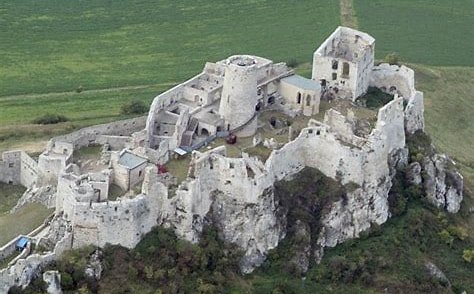
Spis Castle (Spišský hrad) is one of the largest castle complexes in Central Europe — a UNESCO World Heritage site since 1993, sitting on a volcanic tuff ridge 634 metres above sea level above the Spis region of eastern Slovakia. The castle occupies over four hectares of rocky hilltop, with walls enclosing three distinct courtyards developed across different centuries of the castle's history from the 12th to the 18th. It was abandoned in 1780 after a fire and has been a ruin since — which, paradoxically, is what makes it so spectacular.
Ruins read differently from restored castles: you can see the layers of construction and destruction, understand how the space was used, and feel the scale without the interpolation of modern restoration. Spis Castle's setting amplifies everything — the rocky ridge drops away sharply on all sides, and from the upper courtyard the view sweeps across the Slovak lowlands to the High Tatras on the northern horizon, with the white towers of Spišská Kapitula (a beautifully preserved medieval ecclesiastical town) visible below. On a clear day, the Tatra peaks are snow-capped above the farmland. It is one of the most dramatic views in Slovakia.
The castle is near the town of Spišské Podhradie in eastern Slovakia — approximately 25km from Poprad (the main Tatras gateway) and reachable by regional bus from Poprad or by car. The walk from the car park to the castle entrance takes about 15 minutes uphill on a well-maintained path. Entry costs around €10. The castle is open April to October; in winter the ruins are accessible but the interiors are closed. Allow 2 hours minimum for a proper visit.
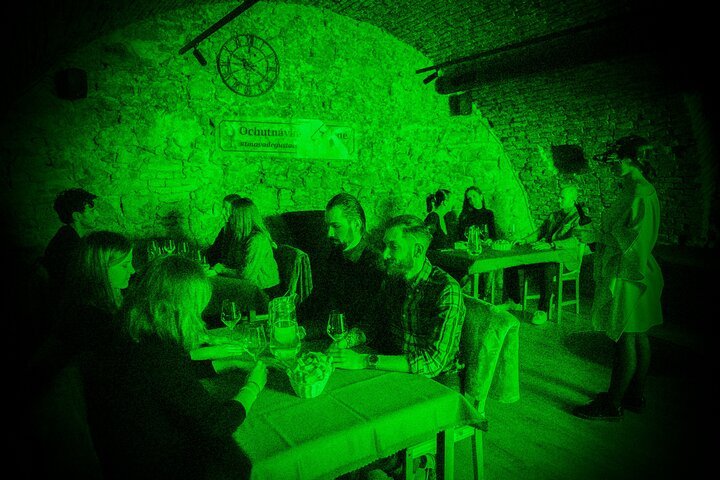
In a medieval cellar beneath Bratislava's Old Town, a unique sensory experience awaits: wine tasting conducted in complete darkness, guided only by sound and taste. The concept is simple and the effect is profound — stripped of colour, label, bottle shape, and all the visual cues that normally shape your wine expectations, you encounter the wine purely through smell, taste, and texture. The results are consistently surprising: wines you'd confidently name by sight become mysteries; wines you'd dismiss become revelations.
The Bratislava wine tasting in the dark uses exclusively Slovak wines — from the Malá Karpaty (Small Carpathians), Tokaj, and Nitra wine regions — many of which are completely unknown to international visitors. The darkness removes the prejudice of unfamiliarity and forces genuine engagement with the wine itself. The cellar setting, the darkness, and the challenge of identifying wines that you've never tasted before in conditions you can't prepare for creates an evening that is genuinely memorable long after most restaurant meals have blurred together.
The experience lasts approximately 2 hours and includes tasting 4–6 Slovak wines with food pairings. The group size is small — the cellar limits numbers to maintain the atmosphere. No wine knowledge is required or expected; the darkness equalises everyone's expertise. Book in advance through TripAdvisor as this is one of the most popular and distinctive experiences in Bratislava.
Slovakia is a year-round destination with distinct seasonal highlights across its regions.