🇵🇱 Poland · Complete Activity Guide
🇵🇱
Things to Do in Poland
Medieval squares, alpine mountains, underground cathedrals, and history that demands to be witnessed
Medieval squares, alpine mountains, underground cathedrals, and history that demands to be witnessed
Poland is one of the most underrated travel destinations in Europe — a country with one of the continent's most beautiful medieval cities, a dramatic alpine mountain range, an underground world of extraordinary scale, and a 20th-century history that demands to be witnessed and understood. Kraków alone could sustain four or five days of genuinely exceptional travel.
This guide covers the best things to do in Poland in 2026 — six experiences that between them capture everything that makes this country worth more of your time than most travellers give it.
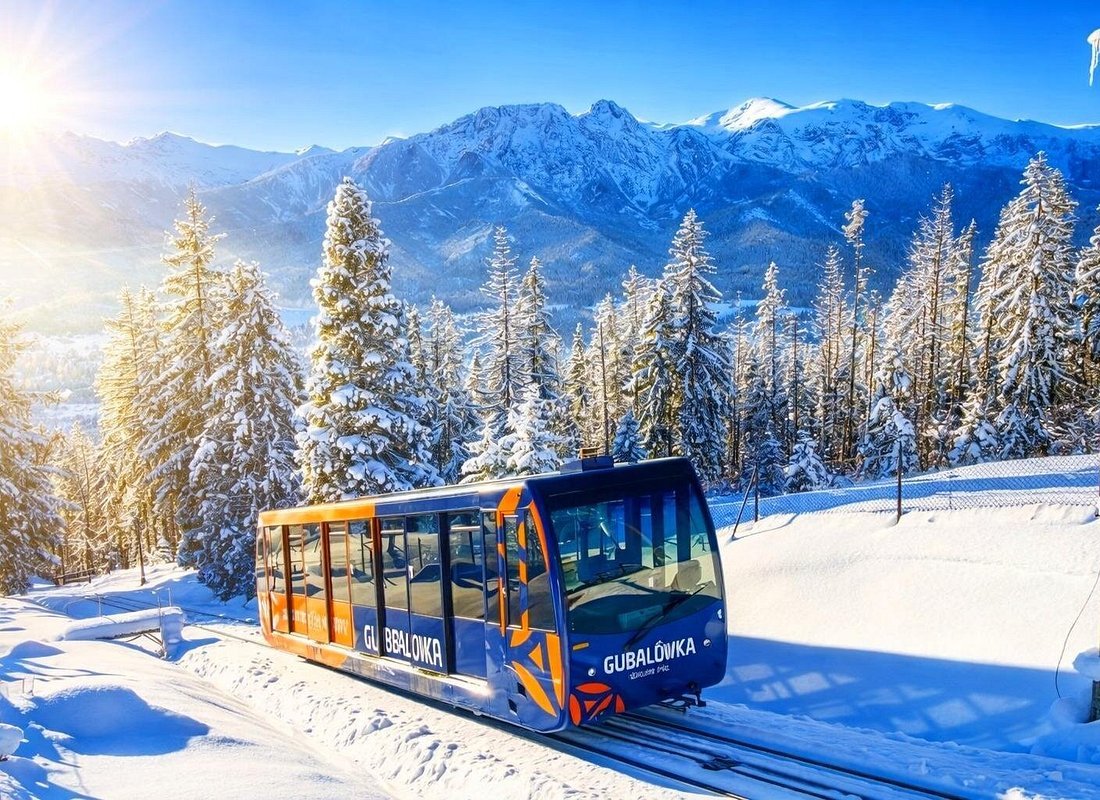
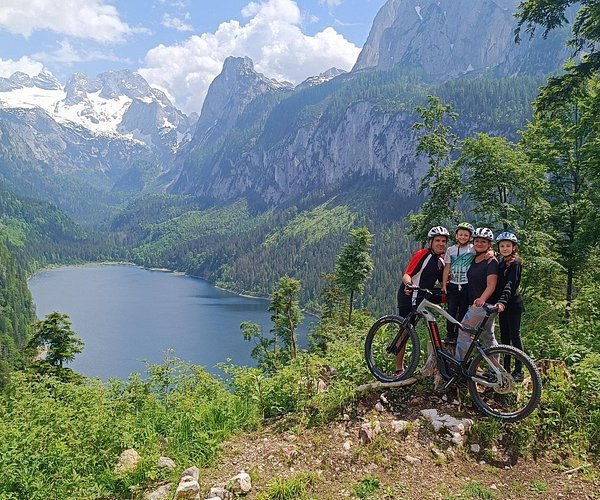
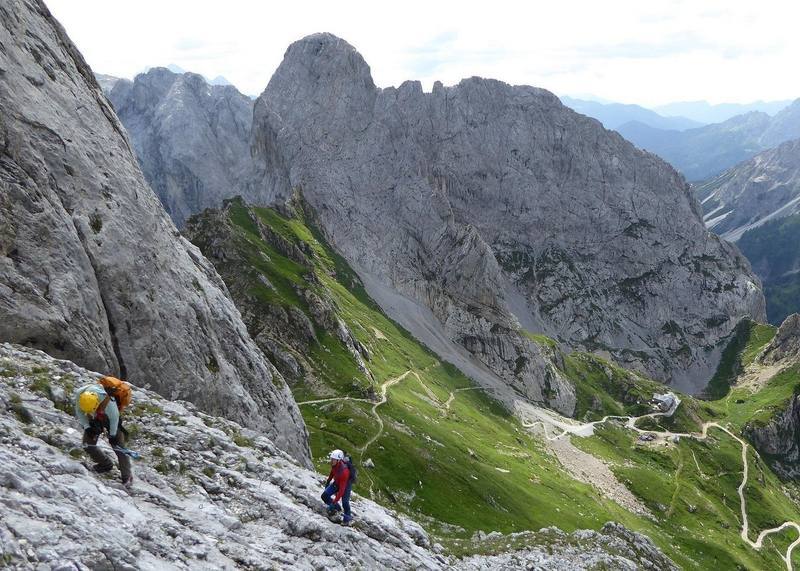
The Tatra Mountains on Poland's southern border with Slovakia are the highest range in the Carpathians and the only truly alpine mountains in Poland — granite peaks, glacial lakes, deep valleys, and trails ranging from gentle family walks to the demanding Orla Perć ridge route, Poland's most exposed and technical mountain path. The gateway town of Zakopane, with its distinctive wooden highland architecture, is one of the most characterful mountain towns in Central Europe.
The range is compact but dramatic — in a single day you can walk from Zakopane through pine forest, emerge above the treeline, and stand on a ridge with Slovakia on one side and the Polish highlands stretching north below you. The Morskie Oko glacial lake — reached by a 9km trail from the road — is one of the most beautiful spots in Poland. In winter, the Gubalówka funicular provides panoramic views without hiking.
Zakopane is approximately 100km south of Kraków — around 2 hours by minibus (departing frequently from Kraków's main bus station) or organised tour. The hiking season runs June through October — trails can be snow-covered outside these months. Guided mountain tours are available through Viator and provide expert knowledge of the best routes for your fitness level.
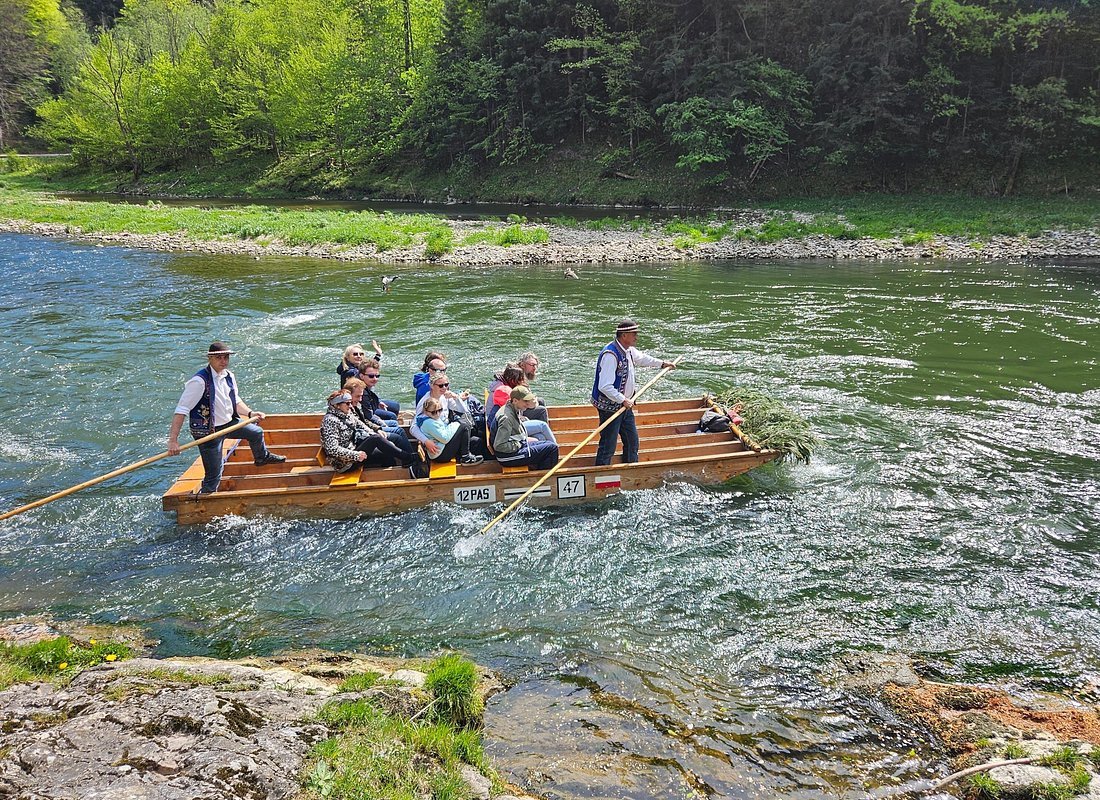
The Dunajec River gorge cuts through the Pieniny Mountains along the Polish-Slovak border in a series of dramatic limestone cliffs rising up to 300 metres above the river. The traditional way to experience it is on a wooden raft — flat-bottomed wooden boats poled by gorals (highland men) in traditional embroidered costumes, navigating the curves of the river through the gorge at water level. The rafting tradition dates from the 18th century and is still operated by a cooperative of local guides.
The descent takes approximately 2–2.5 hours over 18 kilometres, from Sromowce Niżne to Szczawnica. The gorge is spectacular at water level — sheer limestone walls, overhanging rock faces, pine forest above, and the river moving fast through the narrower sections. The gorals pole and steer with extraordinary skill, navigating sections that look unpassable with complete calm.
The Dunajec is about 120km from Kraków — approximately 2 hours by car. Organised day tours from Kraków are the most convenient option and often combine the rafting with a stop in Zakopane. The rafting season runs May through October. Book in advance in summer — the rafting is extremely popular with Polish tourists and slots fill up on weekends.
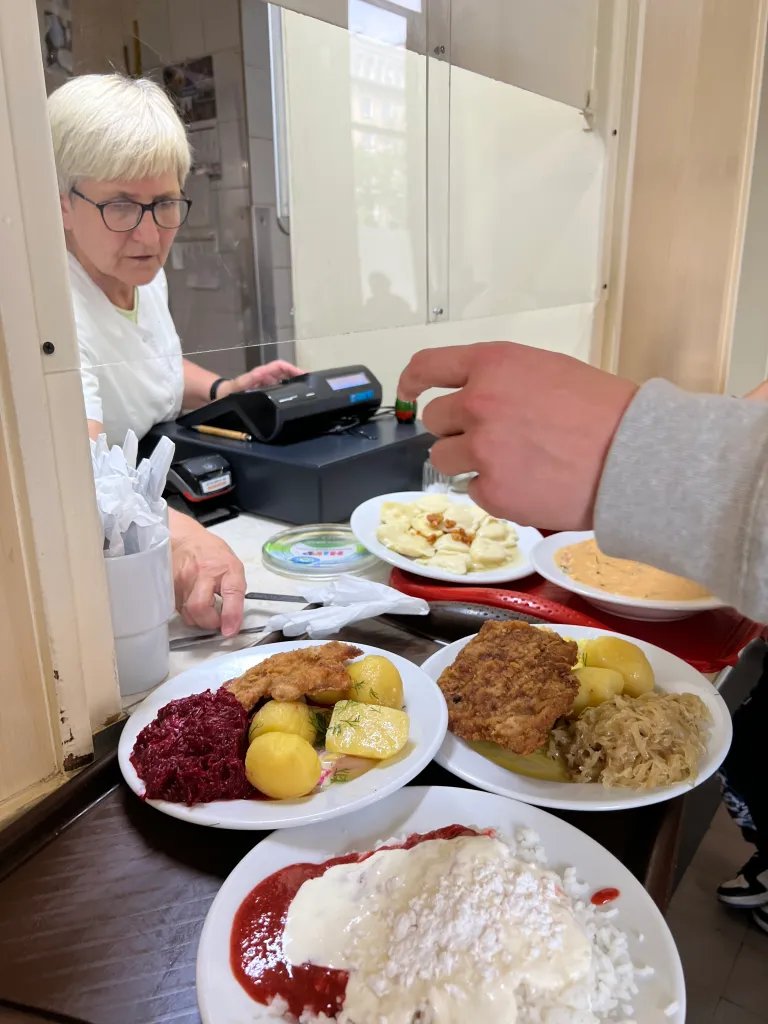
Bar mleczny (milk bars) are communist-era self-service canteens that have operated in Polish cities since the 1950s, heavily subsidised to provide affordable hot meals for workers and students. They serve traditional Polish food at prices that are astonishing by any standard — a full meal of pierogi, żurek, and a compote costs under $3. The food is made fresh in open kitchens. The atmosphere is completely authentic — no concessions to tourism, no English menus, just Poles eating lunch the way they have for 70 years.
Pierogi are Poland's most famous dish — boiled or fried dumplings filled with potato and cheese (ruskie), meat, sauerkraut and mushroom, or sweet fillings like blueberry. Żurek is a sour rye soup served in a bread bowl with a hard-boiled egg and sausage — one of the great soups of Eastern European cuisine. Eating both at a milk bar counter, collected on a tray, is one of the most authentically Polish experiences available anywhere.
Bar Mleczny Centralny on ul. Jagiellońska is one of Kraków's most celebrated milk bars — busy, efficient, and producing genuinely excellent traditional food at extraordinary prices. Order at the counter, collect your tray, and find a seat in the communal dining room. No English menu — point at what looks good or use a translation app. Cash preferred. For a guided food tour context, the Warsaw Traditional Food Tour through Viator provides the cultural background alongside the eating.
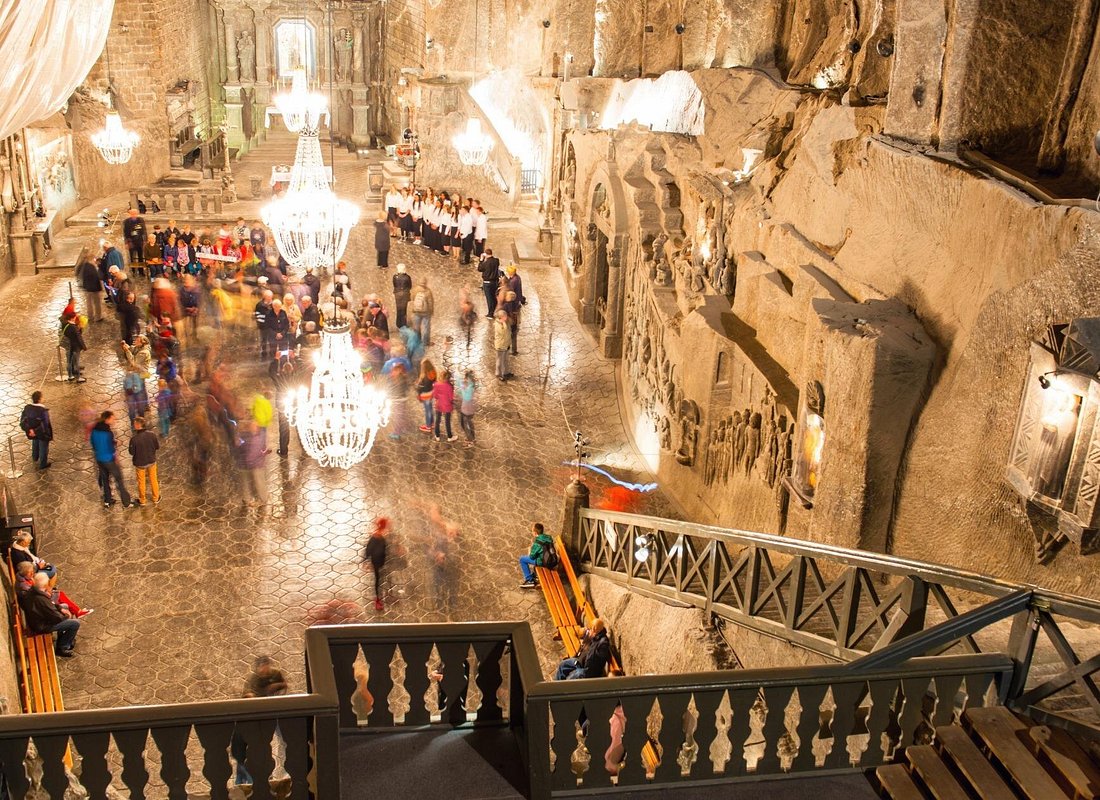
The Wieliczka Salt Mine, 14km southeast of Kraków, has been in continuous operation since the 13th century — making it one of the oldest industrial enterprises in the world. Listed as a UNESCO World Heritage Site in 1978, the mine contains 300km of underground tunnels across nine levels, descending to 327 metres. The tourist route covers the upper three levels, descending 135 metres to reveal one of the most extraordinary underground environments in the world.
The centrepiece is the Chapel of St. Kinga — a cathedral-scale underground church carved entirely from halite salt by miners over three generations, complete with salt chandeliers, bas-relief sculptures of biblical scenes, and a salt-crystal floor. Everything in the chapel — the altarpieces, the statues, the decorative elements — is carved from the surrounding salt. The effect under the chandeliers is otherworldly. Beyond the chapel, the route passes underground lakes, enormous excavated chambers, and sculptures carved by miners over centuries.
The mine is 30 minutes from Kraków by minibus (from ul. Pawia near the main train station) or 20 minutes by organised tour transport. Book tickets well in advance at wieliczka-saltmine.pl — the mine is one of the most visited attractions in Poland and sells out on peak summer days. Guided tours take approximately 2–3 hours. The temperature underground is a constant 14°C — bring a layer.
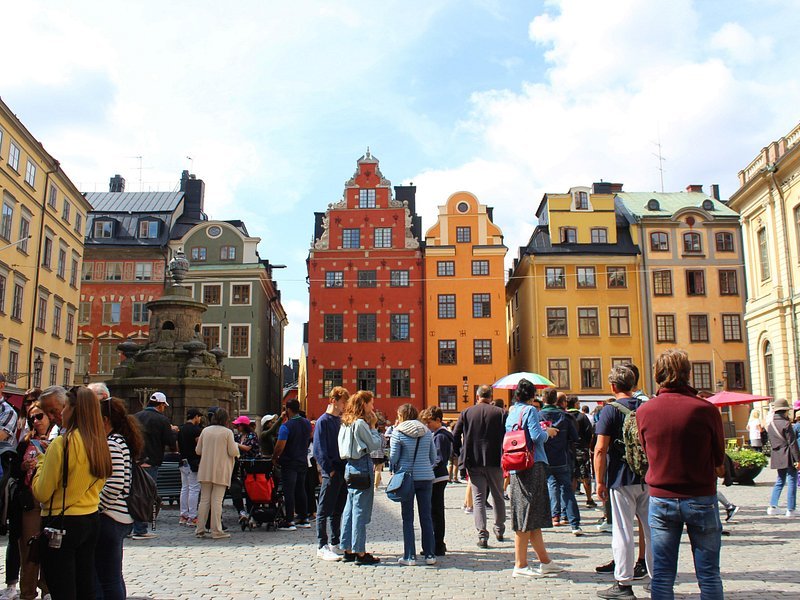
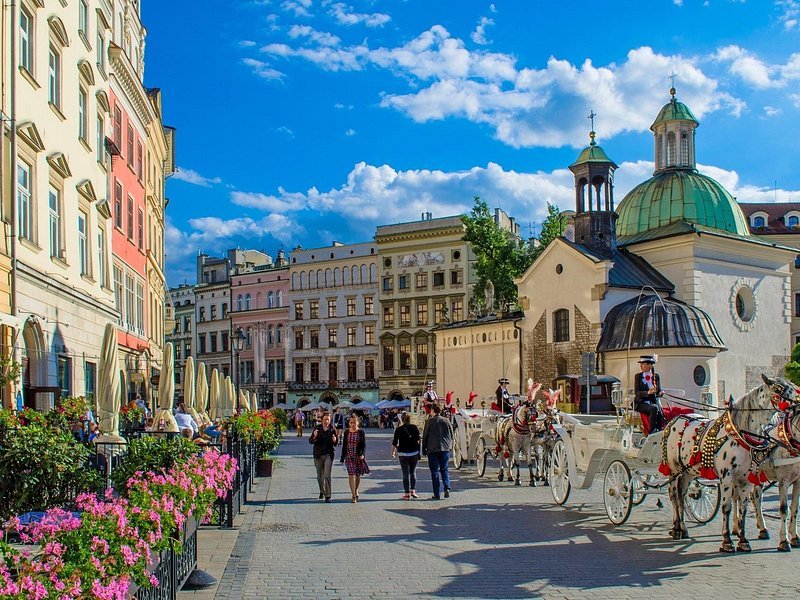
Kraków's Rynek Główny — the Main Market Square — is the largest medieval market square in Europe: 200 metres on each side, ringed by Renaissance and Gothic townhouses, presided over by the Cloth Hall (Sukiennice) in the centre, and dominated at one corner by St. Mary's Basilica, from whose higher tower a trumpeter plays the Hejnał mariacki every hour on the hour (and breaks off mid-phrase, in memory of a 13th-century trumpeter shot by a Mongol arrow while sounding the alarm). It has been the heart of Polish civic life since the 13th century.
The square works at every level — architecturally extraordinary, historically dense, and genuinely alive with the energy of a city that takes enormous pride in its centre. The Cloth Hall is now a craft market selling amber, folk art, and Polish textiles. Beneath the square, the Underground Museum reveals the medieval city layer by layer through excavations. The churches, palaces, and historic cafés around the perimeter take days to properly explore.
A guided walking tour of the square and old town provides context that transforms what you're seeing — the history of Kraków as Poland's royal capital, the Jewish history of Kazimierz, and the remarkable survival of the city largely intact through the Second World War. The best time to visit the square is early morning (before 9am) or in the evening when the tour groups have left and locals reclaim it.
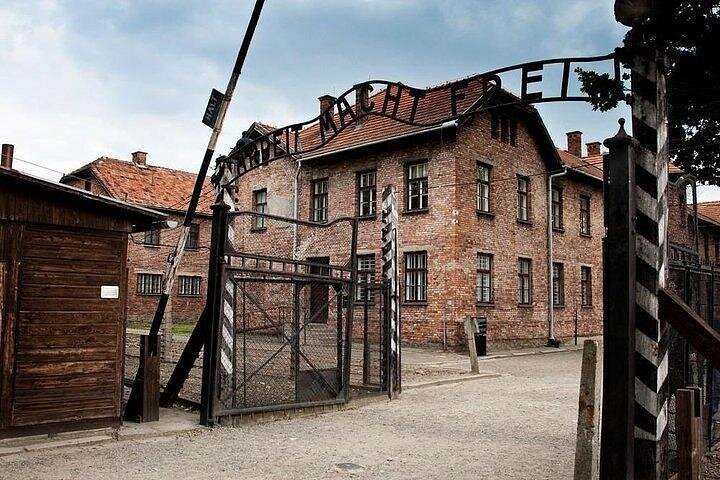
Auschwitz-Birkenau is the most important site of the Holocaust — the largest Nazi German concentration and extermination camp, where approximately 1.1 million people, the vast majority of them Jewish, were killed between 1940 and 1945. It is now a UNESCO World Heritage Site and the Auschwitz-Birkenau State Museum, preserved as a place of memory and education. A visit is one of the most profound and sobering experiences available anywhere in the world.
The Auschwitz I site (the original camp) contains the preserved barracks, the gas chamber and crematorium, the infamous Arbeit Macht Frei gate, and exhibition blocks documenting the history of the camp and the lives of those murdered there. Birkenau (Auschwitz II), 3km away, is the larger extermination camp — the scale is incomprehensible on approach. The train tracks, the ruins of the destroyed crematoria, and the vastness of the site leave a lasting impression that no book or documentary can prepare you for.
Auschwitz is located in Oświęcim, approximately 70km west of Kraków. A guided tour from Kraków (approximately 4.5 hours including transport) is the most practical option. Entry to the museum is free but timed-entry tickets are required — book well in advance at auschwitz.org, especially in summer. Guided tours in English run throughout the day. Allow at least 3.5 hours on site to visit both Auschwitz I and Birkenau.
Poland is a year-round destination — but the outdoor activities are seasonal and the cities vary significantly by season.