Spain
The Ultimate Spain Itinerary — Seville & Barcelona
This is the best Spain itinerary for first-time visitors who want to experience both faces of the country — four nights in Seville for Andalucía's flamenco, Moorish architecture, and tapas culture; four nights in Barcelona for Gaudí's masterworks, the Gothic Quarter, and the Mediterranean waterfront. The two cities are connected by a 2.5-hour AVE high-speed train, making this one of the most efficient and rewarding itineraries in Europe.
Spain operates on its own schedule — lunch is at 2pm, dinner starts at 9pm, and the nightlife doesn't peak until well after midnight. Lean into it. The best tapas bars fill up at 1:30pm, the best restaurants take reservations at 9:30pm, and the streets of Seville are most beautiful after 10pm when the heat breaks and the city comes back to life.
Seville
🎫 Seville Experiences
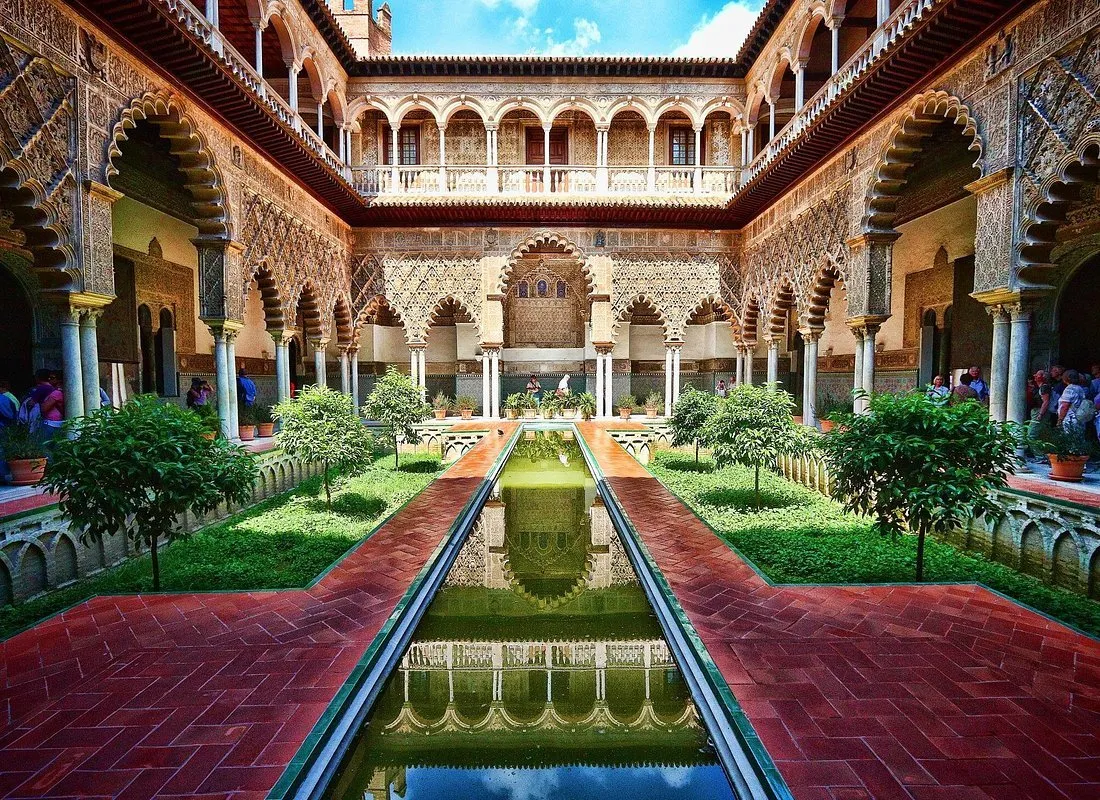
The Real Alcázar — Spain's Most Beautiful Palace
🏰 Architecture · Can't Miss
The Real Alcázar of Seville is one of the most extraordinary buildings in the world — a royal palace complex begun by Moorish rulers in the 10th century and continuously expanded and modified by every subsequent dynasty, producing a layered architectural marvel where Moorish muqarnas, Renaissance courtyards, Gothic chapels, and Baroque gardens exist side by side in a coherent whole. The Palacio de Don Pedro (1364) is the centrepiece: its interior is a masterwork of Mudéjar decoration — geometric tilework, carved stucco arabesques, horseshoe arches, and a throne room ceiling of interlocking cedar that took craftsmen from Granada and Toledo years to complete.
The gardens are equally extraordinary — 11 hectares of fountains, orange trees, pavilions, and mazes connecting a series of garden rooms that feel like outdoor palace chambers. The complex is still a working royal residence (the Spanish royal family uses the upper floors when visiting Seville), which means it has been maintained continuously for over a thousand years rather than left to institutional preservation.
Book tickets in advance online — the Alcázar sells out days ahead, particularly in spring. The first entry slot (9:30am) is the best: cooler, quieter, and the light in the Patio de las Doncellas is extraordinary before 11am.
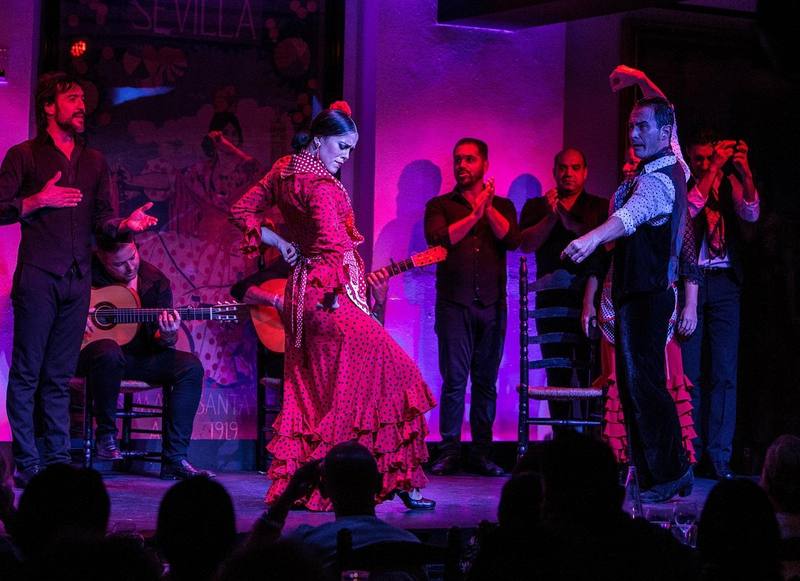
Live Flamenco in Triana — The Birthplace of the Art Form
💃 Culture · Seville's Greatest Experience
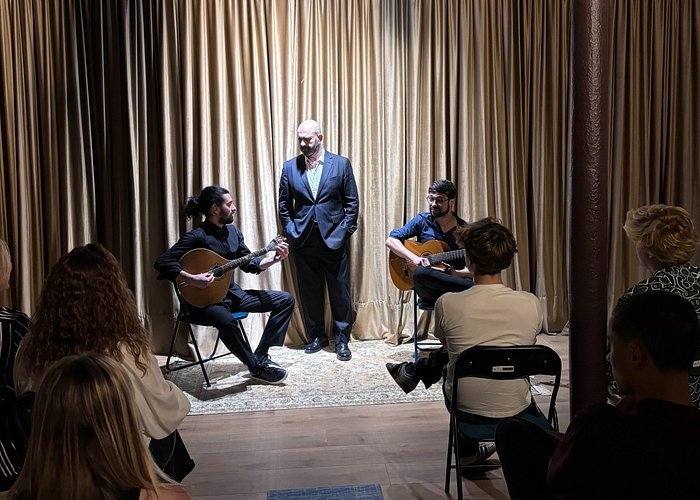
Flamenco is not a tourist attraction — it is a living art form born in the gypsy communities of Andalucía, and Seville's Triana neighbourhood is where it originated. Watching live flamenco performed by genuine artists in a small tablao (flamenco venue) is one of the most emotionally powerful cultural experiences available anywhere in the world. The combination of the cante (singing), the guitar, the percussive footwork (zapateado), and the arm movement creates something that is simultaneously athletic, musical, theatrical, and deeply felt — duende, in Spanish, which translates roughly as "spirit" or "soul" but means something more specific than either.
The difference between a tourist tablao and a genuine performance is significant. In Triana and the Barrio Santa Cruz, smaller venues run shows for 20–40 people with professional artists who actually do this for a living rather than for tourists specifically. El Palacio Andaluz, Casa de la Memoria, and Tablao Álvarez Quintero all have reputations for authenticity. Arrive 20 minutes before the show for a good position. Most shows run 60–75 minutes without interval — the right length.
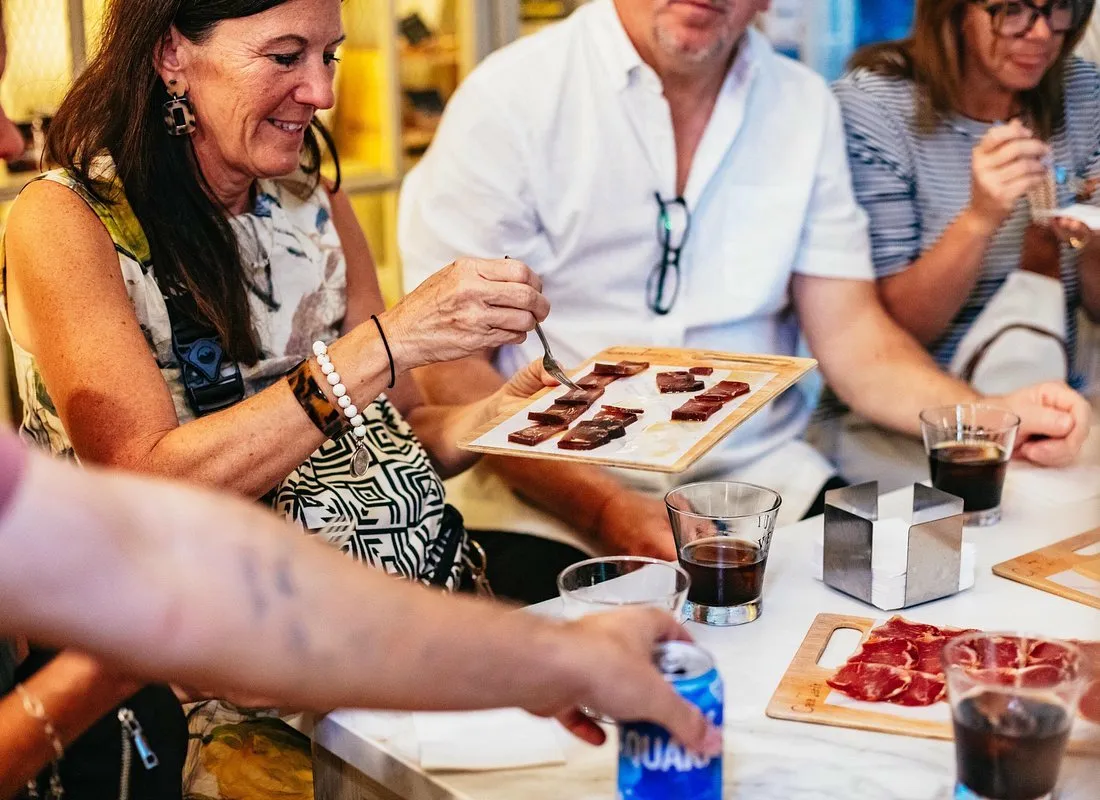
Tapas in Seville — The Best Eating City in Spain
🍷 Food · Spain's Greatest Tapas Culture
Seville has the finest tapas culture in Spain — and that is a significant claim in a country where every city takes food seriously. The key difference is price and generosity: in Seville, a glass of cold fino sherry costs €1.50–2.50, a tapa of jamón ibérico or boquerones comes with it or costs €2–3 alongside, and standing at the bar is the correct way to eat. Restaurants with seated service and printed menus are for the tourists. The locals eat standing up, glass in one hand, tapas on a small plate on the bar, talking to the person next to them.
The Alfalfa neighbourhood and the streets around Plaza de la Alfalfa are the best hunting ground — a concentration of authentic tapas bars within a few blocks where the locals actually eat. Bar La Alicantina (for seafood), Bodega Santa Cruz (for cheap, generous portions), and El Rinconcillo (operating since 1670, the oldest bar in Seville) are the essential stops. A dedicated tapas tour with a guide who knows which bars open when takes the guesswork out and typically covers 5–6 bars over 3 hours for around €70–90.
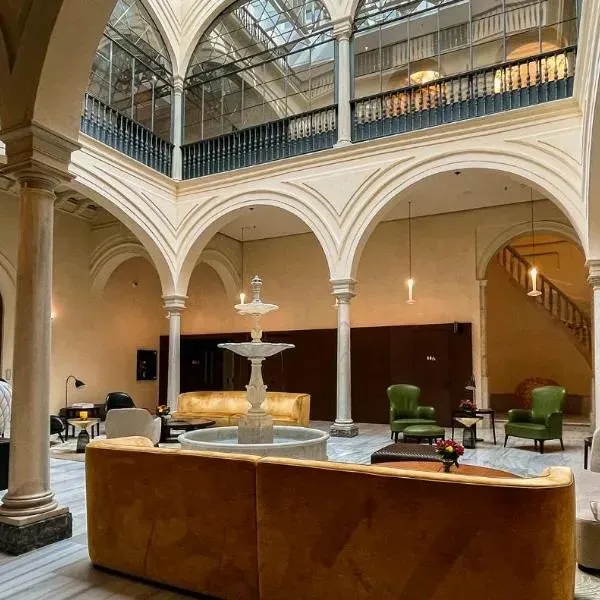
🏨 Where to Stay — Seville
Barcelona
🎫 Barcelona Experiences
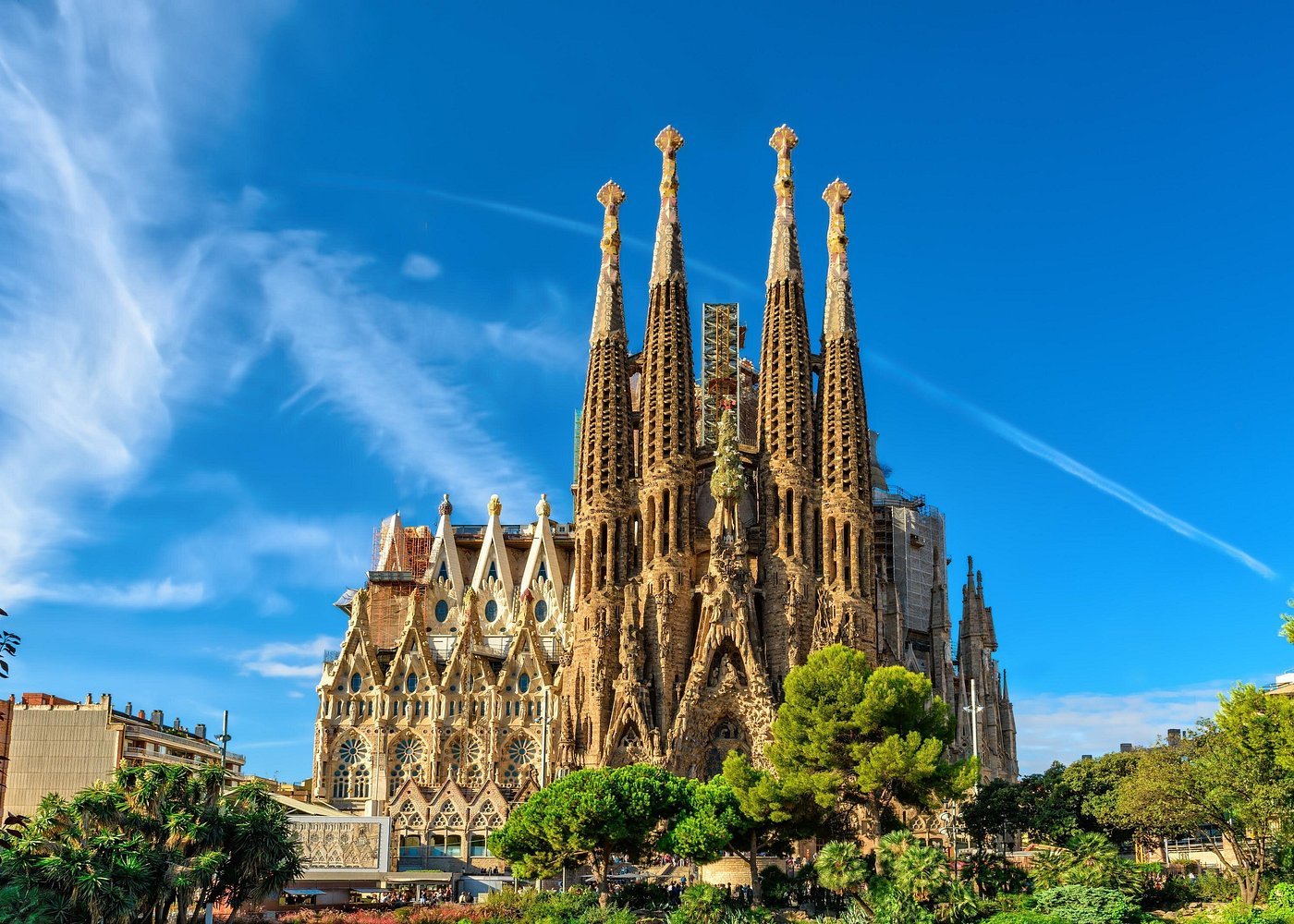
Sagrada Família, Gaudí's Barcelona & the Gothic Quarter
🏛️ Architecture & Food · The Full Barcelona Experience
Barcelona's greatest hits fall into two categories — Gaudí's impossible architecture and the Gothic Quarter's medieval food and bar scene — and the best way to experience both is in a single day. Start at the Sagrada Família at 9am (book tickets online in advance, they sell out). The basilica has been under construction since 1882 and is unlike anything else built by human beings: the nave's tree-like columns branch into the vaulted ceiling, filtering coloured light from the stained glass windows into a space that feels simultaneously like a forest, a cathedral, and something from a dream. Book the Nativity Tower lift for views over the city towards the sea.
From there, Gaudí's other masterworks are within easy reach. Park Güell (book the 8am slot — the earliest and least crowded) gives you the famous mosaic terrace with its serpentine bench and views across Barcelona to the Mediterranean. Casa Batlló on the Passeig de Gràcia looks like a dragon's skin from the outside and like nothing else from the inside. La Pedrera next door has the most extraordinary rooftop terrace in the city — warrior-like chimneys that look like science fiction from 1906.
End the day in the Gothic Quarter. The Barri Gòtic is the oldest part of Barcelona — a medieval labyrinth of narrow streets and Roman foundations where the best pintxos bars and Cava counters in the city are hidden. El Born, the neighbourhood adjacent to the Gothic Quarter, has the best bar density: streets lined with standing bars where locals eat pintxos with Catalan Cava at 8pm before dinner. A guided evening pintxos crawl covers 5–6 bars over 3 hours and is the most enjoyable way to eat in Barcelona.
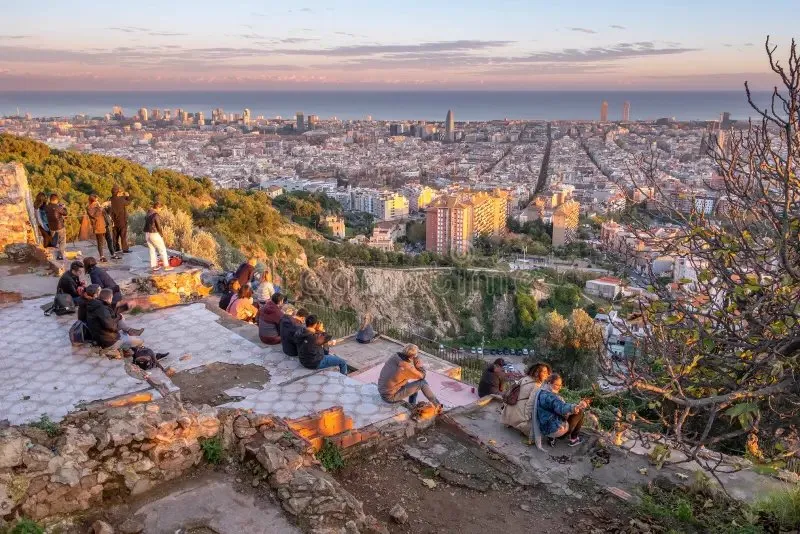
Sunset at Bunkers del Carmel — Barcelona's Best View
🌅 Views · Barcelona's Secret Spot
The Bunkers del Carmel — the ruins of a Civil War anti-aircraft battery on the hill of El Carmel in the northern part of the city — offer the best panoramic view of Barcelona available from anywhere. The 360-degree view from the hilltop takes in the entire city: the Eixample grid stretching to the sea, the Sagrada Família in the middle distance, Montjuïc to the southwest, Tibidabo behind you, and the Mediterranean horizon ahead. At sunset, with the city turning gold below and the first lights coming on as the sky darkens, it is one of the finest urban views in Europe.
This is not a tourist trap or a managed attraction — it's a free public space where locals bring wine, friends, and good company to watch the sun go down over their city. Arrive an hour before sunset to claim a spot on the concrete circular platform at the top. Bring a bottle of cava and something from the market. The sunset takes about 20 minutes from first colour to full dark, and the view during that 20 minutes is extraordinary.
🏨 Where to Stay — Barcelona
Spain Trip FAQs
What is the best Spain itinerary for first-time visitors? +
The best 8-night Spain itinerary covers two cities: Seville (Days 1–4) for the Real Alcázar, live flamenco in Triana, the Cathedral and Giralda, and tapas in the Alfalfa neighbourhood; and Barcelona (Days 5–8) for the Sagrada Família, Gaudí's Park Güell and Casa Batlló, a Gothic Quarter food tour, and sunset from the Bunkers del Carmel. Connect by AVE high-speed train (5.5 hours).
What is the best time to visit Spain? +
March–May and September–November are the best windows. Seville in July and August is brutally hot (40°C+) and very crowded. Spring (April–May) is ideal for Seville — the Feria de Abril happens in late April. Barcelona is excellent year-round but best in May–June and September–October when beach weather meets manageable crowds.
How do you get from Seville to Barcelona? +
The AVE high-speed train from Seville Santa Justa to Barcelona Sants takes approximately 5.5 hours and is the best option — it runs through the heart of Spain with extraordinary scenery. Book via renfe.com 4–6 weeks ahead for Promo fares (€30–50 one way). Flying takes 1.5 hours but costs more when you add airport time.
Do you need to book the Sagrada Família in advance? +
Yes — book the Sagrada Família at least 2–3 weeks ahead (longer in peak season). It sells out. Book the 9am slot on a weekday for the best morning light and smallest crowds. Tower lift tickets (Nativity or Passion Tower) are separate and also require advance booking. Buy everything at sagradafamilia.org — never from resellers.
Is Seville or Barcelona better? +
They're genuinely different and both essential. Seville is the soul of Andalucía — Moorish architecture, flamenco, extraordinary tapas, and a pace that feels genuinely Spanish. Barcelona is one of the great European cities — Gaudí's architecture, a Mediterranean waterfront, and a food and nightlife scene that's world-class. The 8-night itinerary covering both is the answer; neither alone tells the whole story of Spain.
Meal times: Spain operates late — lunch 2–4pm, dinner 9–11pm. Eating before 8:30pm in most Spanish restaurants means you'll be eating alone while staff set tables. Embrace it. The best tapas bars are fullest at 1:30pm and 8:30pm.
Booking ahead: Book the Alcázar and Sagrada Família as far in advance as possible — both sell out. The Alcázar in spring can be booked out a week ahead. Sagrada Família 2–3 weeks minimum.
Trains: Spain's AVE high-speed network is excellent. Book via renfe.com. Promo fares (booked 4–6 weeks ahead) can be 50–70% cheaper than walk-up prices.
Money: Spain uses the Euro. Seville is significantly cheaper than Barcelona — budget €60–80/day in Seville for food and activities, €90–130 in Barcelona, excluding accommodation.
Language: Spanish (Castilian) everywhere; Catalan in Barcelona (though everyone also speaks Spanish). A few words of Spanish are warmly received, particularly outside Barcelona.