Christ the Redeemer Rio de Janeiro Brazil aerial view Sugarloaf Bay
🇧🇷 Brazil · Complete Activity Guide
🇧🇷

Things to Do in Brazil

The Amazon, Rio de Janeiro, Iguazu Falls, and a country that does everything at maximum volume

Share Facebook Pinterest WhatsApp

Brazil is the fifth-largest country on Earth — a place of such staggering scale and diversity that picking eight things to do feels almost inadequate. The Amazon alone covers 60% of the country. Rio de Janeiro is one of the most visually spectacular cities in the world. Iguazu Falls makes Niagara look modest. And then there's the Carnival, the football, the beaches, the food, and the Brazilians themselves — whose warmth and appetite for life is the most consistent impression every visitor takes home.

This guide covers the best things to do in Brazil in 2026 — eight experiences that between them capture the full extraordinary range of this country.
1

Amazon River Expedition

🌿 Wildlife · Year-Round
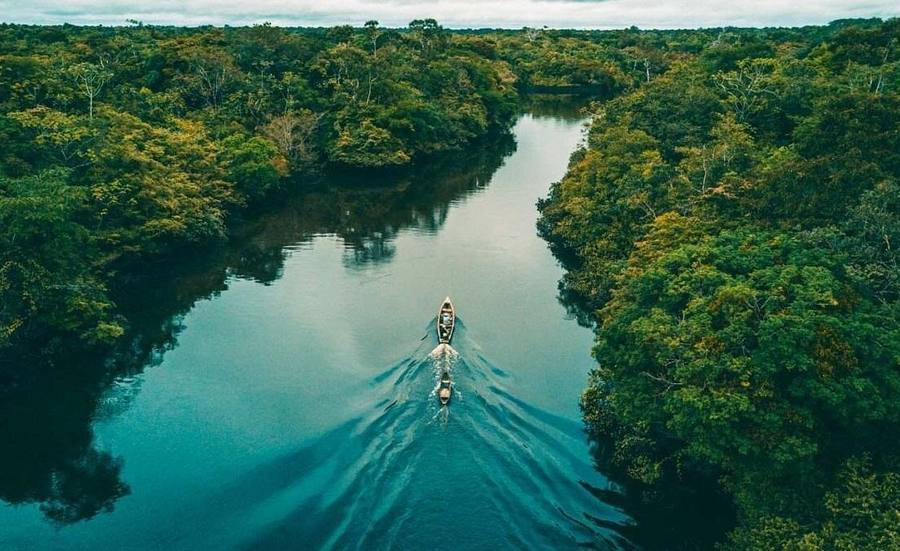
Amazon River expedition Brazil jungle wildlife monkey boat canoe

The Brazilian Amazon is the largest tropical rainforest on Earth — 3.3 million square kilometres of jungle, river systems, and biodiversity that contains approximately 10% of all species on the planet. The Amazon River itself carries 20% of all the fresh water that flows into the world's oceans. To travel into it by river boat is to enter a world operating at a completely different scale and pace from anything most people have experienced.

A multi-day river expedition from Manaus — the city at the confluence of the Amazon and Negro rivers — takes you deep into the jungle on smaller boats and on foot: spotting piranhas, pink river dolphins, anacondas, caimans, sloths, and hundreds of bird species with guides who grew up in the forest. Night canoe trips with headlamps reveal caimans glowing orange-eyed in the water. Shaman ceremonies with riverside communities give access to knowledge systems that have sustained human life in this ecosystem for thousands of years.

Planning an Amazon expedition in Brazil

Manaus is the main gateway, served by direct flights from São Paulo and Rio de Janeiro. Most expeditions last 4–7 days — shorter stays don't give the forest time to open up. Book through Viator for packaged expeditions with licensed guides, or choose a specialist Amazon lodge operator. The dry season (June–November) is easier for wildlife viewing; the wet season (December–May) allows boat access into the flooded forest.
Gateway City
Manaus, Amazonas
Recommended Stay
4–7 days minimum
Best Season
June – November (dry)
Wildlife
10% of Earth's species
From São Paulo
~4 hrs by air
Difficulty
Moderate
📋 Planning Tips
Book 4+ nights — 2-night stays don't give enough time. Bring lightweight long-sleeve clothing, waterproof boots (often provided), DEET repellent, and a headlamp. Yellow fever vaccination is required for the Amazon region. The meeting of the waters (where the black Rio Negro meets the brown Amazon) is free to visit by local boat and is one of the most extraordinary natural phenomena in South America — two rivers flowing side by side without mixing for 6km.
⭐ Why It's Worth It
The Amazon is one of those places that changes your understanding of what "big" means. Being in a small boat on the river at night, listening to the jungle — the volume of it, the layers of sound — and then paddling into flooded forest where the trees rise out of the water all around you, is genuinely unlike anything else. The Amazon isn't a destination. It's an experience of scale.
Amazon river expedition tour Brazil Manaus jungle
Amazon River Expedition — Manaus, Brazil
Multi-day river expedition into the Brazilian Amazon — wildlife, piranha fishing, shaman ceremonies, and the meeting of the waters.
Book Tour →

2

Chapada Diamantina Trekking

🏔️ Hiking · Moderate · May–September
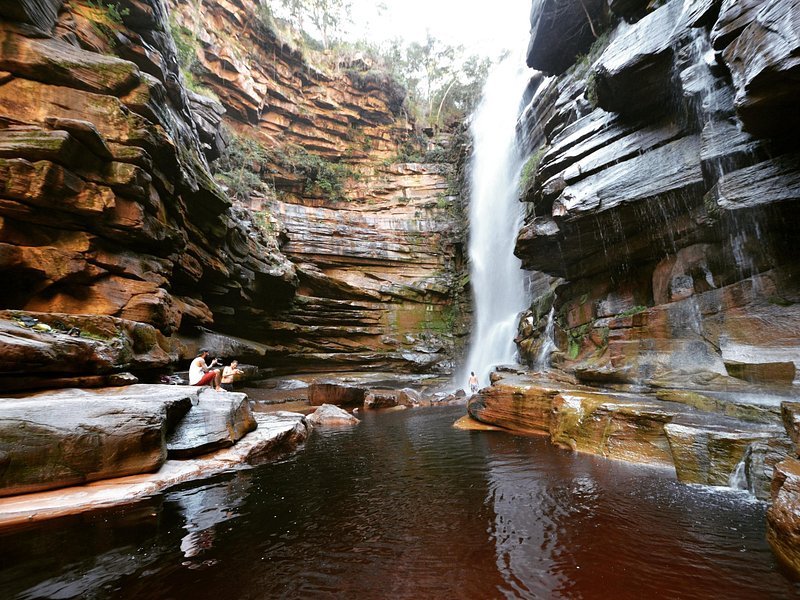
Chapada Diamantina trekking Brazil canyon waterfall hidden pool Bahia

The Chapada Diamantina is one of Brazil's most extraordinary and least-known landscapes — a vast plateau of sandstone escarpments, hidden waterfalls, cave systems, and crystal-clear swimming holes carved by millions of years of erosion in the highlands of Bahia. The name refers to the diamond rush of the 19th century that brought prospectors to these remote highlands; today the national park preserves a landscape of dramatic canyons, endemic wildlife, and waterfalls that drop from 600-metre cliff faces into turquoise pools.

Multi-day treks from the gateway town of Lençóis take you through some of the most dramatic scenery in Brazil: the Cachoeira da Fumaça (smoke waterfall) where water vaporises before reaching the ground, the Poço Encantado (enchanted pool) where light enters through a cave entrance and illuminates an impossibly blue underground lake, and the Morro do Pai Inácio plateau with views across the entire Chapada. The swimming holes alone — fed by clear mountain water, set in sandstone canyons — are worth the journey from anywhere in Brazil.

Getting to Chapada Diamantina

Lençóis has its own small airport with daily flights from Salvador (1 hour) and connections from São Paulo. Overnight buses from Salvador take 7 hours. Guided trekking tours from Lençóis are essential — the trails are unmarked and local guides are mandatory for most visitor sites. Book through Viator for multi-day guided packages with accommodation included.
Gateway
Lençóis, Bahia
Best Season
May – September (dry)
Trek Duration
3–7 days
Highlights
Smoke waterfall, blue pools
From Salvador
1 hr flight / 7 hrs bus
Difficulty
Moderate
📋 Planning Tips
Book a local guide in Lençóis — the trails are unmarked and local knowledge is essential. The Fumaça waterfall is best viewed from the top (2-hour hike) in the morning when wind is calm. The Poço Encantado cave pool is only illuminated from mid-April to mid-September between 10am–12pm — the light angle creates the famous blue effect. Bring water shoes for river crossings and swimming holes.
⭐ Why It's Worth It
The Chapada Diamantina is Brazil's best-kept secret — spectacular canyon scenery, hidden waterfalls that drop off cliff edges into the clouds, and swimming holes that look digitally enhanced but are entirely real. Almost no international tourists visit, which means you have some of the most extraordinary landscapes in South America almost entirely to yourself. If you're spending time in Brazil beyond Rio, this is where to go.
Chapada Diamantina trekking tour Bahia Brazil
Chapada Diamantina Guided Trek — Bahia, Brazil
Multi-day canyon trek through Brazil's most spectacular hidden landscape — waterfalls, blue pools, and sandstone escarpments in Bahia.
Book Tour →

3

Rio de Janeiro Hang Gliding

🪂 Extreme · Year-Round
Rio de Janeiro hang gliding tandem Pedra Bonita Atlantic rainforest beach coastline

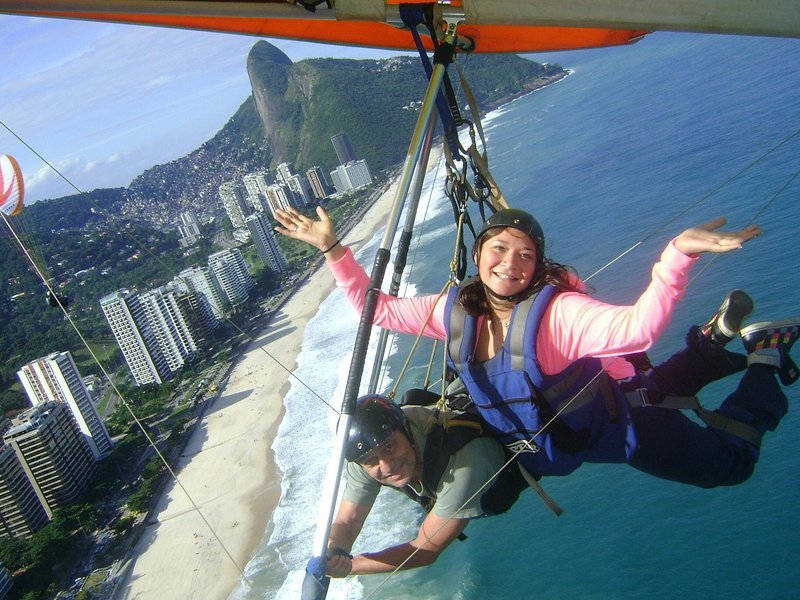
Tandem hang gliding off Pedra Bonita — a granite launch ramp in the Tijuca National Park above Rio — delivers one of the great urban flight experiences in the world. You run off the edge of a cliff into the Atlantic rainforest canopy, catch a thermal, and glide over the forest as the city, beaches, and Guanabara Bay unfold below. The flight lasts 8–12 minutes and lands on Pepino beach in São Conrado, with the ocean rushing up to meet you.

The combination of landscape — Atlantic rainforest below, Copacabana and Ipanema stretching along the coast, Sugarloaf and Corcovado visible in the distance — makes this one of the most scenic urban flights available anywhere in the world. No experience is required: you are attached to a certified pilot throughout, running off the ramp together on their count of three.

Booking hang gliding in Rio

Flights operate year-round from Pedra Bonita, about 30 minutes from Ipanema. Transport from your hotel is included in most tour packages. Flights are weather-dependent — operators offer flexible rescheduling. Book through Viator to ensure you're using a licensed operator with certified equipment and pilots. All ages and fitness levels can participate.
Launch Point
Pedra Bonita, Tijuca NP
Landing
Pepino Beach, São Conrado
Flight Time
8–12 minutes
Experience Req.
None
Season
Year-round
Difficulty
Easy
📋 Planning Tips
Book in advance — popular time slots fill up, especially on weekends. Wear comfortable closed-toe shoes and lightweight clothing (the air is cooler at altitude). Leave valuables at your hotel — you won't have pockets on the glider. Pilots often carry a GoPro and sell you the footage after the flight — worth buying. Morning flights typically have calmer wind conditions; afternoon flights can offer better thermals for longer airtime.
⭐ Why It's Worth It
Running off a cliff in the Atlantic rainforest and suddenly being suspended over Rio de Janeiro — the beaches, the bay, the mountains, the favelas all spread out below in the golden light — is one of those experiences that is completely impossible to prepare for. The landing on the beach, walking out of the water with sand underfoot, still trailing behind the glider, is the perfect ending. One of the best things you can do in Rio.
Rio de Janeiro hang gliding tour tandem Brazil
Rio de Janeiro Tandem Hang Gliding — Pedra Bonita
Glide over Rio's Atlantic rainforest and land on Pepino beach — 8–12 minutes of the most scenic urban flight in the world. No experience needed.
Book Tour →

4

Rio Carnival — Sambódromo at Night

🎭 Cultural · February / March
Rio Carnival Sambódromo samba school costumes feathers parade night Rio de Janeiro

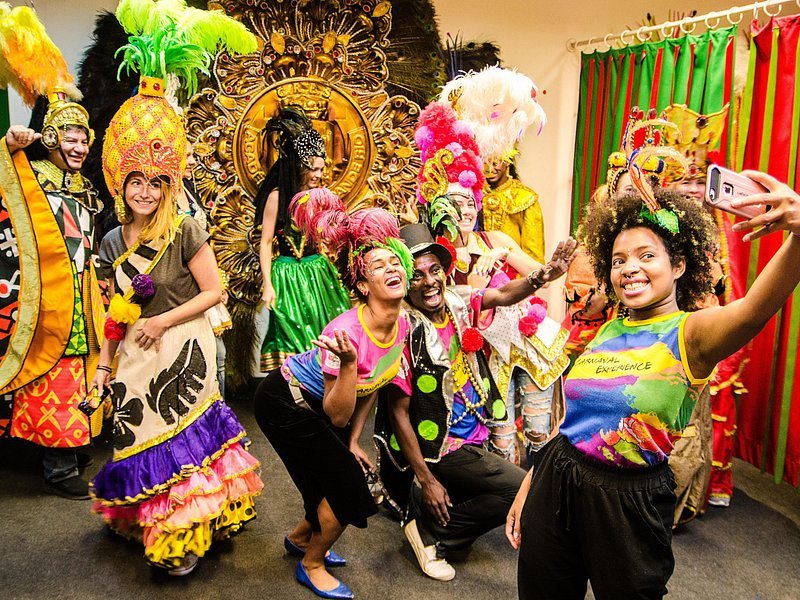
Rio Carnival is the largest street party on Earth — five days of music, dance, and colour that transforms the entire city. The centrepiece is the Sambódromo parade: twelve samba schools, each with 3,000–5,000 participants, compete over two nights in the 700-metre purpose-built stadium designed by Oscar Niemeyer. The choreography, costumes, floats, and drumming are the result of an entire year's preparation by communities that live and breathe samba.

The energy inside the Sambódromo on parade night is unlike anything else in the world — the drums hit you in the chest before the school rounds the corner, the colours of the costumes are so saturated they seem impossible, and the collective joy of 70,000 people responding to 3,000 dancers moving as one is overwhelming in the best possible way. It is not a spectator event — it is a participatory cultural explosion, and being inside it changes you.

Attending the Sambódromo

The Champions Parade (Saturday night) and Champions' Night (following Saturday) are the two main parade nights. Tickets range from affordable bleacher seats to premium boxes — book months in advance through official channels or through Viator. The street parties (blocos) run for weeks before official Carnival and are free to join. Book Rio accommodation at least 6 months ahead for Carnival week.
When
February or March
2026 Dates
Feb 28 – Mar 3, 2026
Parade Nights
Saturday & Monday
Tickets
Book 6+ months ahead
Street Blocos
Free — weeks before
Difficulty
Easy
📋 Planning Tips
Book Sambódromo tickets through Viator or official Brazilian carnival ticketing sites — do not buy from street touts. Sector 9 (the grandstands opposite the judges' box) offers the best view of the full school in formation. Arrive early — gates open 3–4 hours before the parade starts and the party begins immediately. The parade runs through the night until 6–7am. Bring a layer for the early morning chill.
⭐ Why It's Worth It
Carnival at the Sambódromo is one of those events that justifies planning a trip around it. Nothing in the world compares — the scale, the colour, the musical power of a full samba percussion section at full volume, and the complete abandon of 70,000 people celebrating together through the night. The street blocos in the weeks before are also extraordinary and free. If the dates work, go.
Rio Carnival Sambódromo tickets tour Brazil
Rio Carnival — Sambódromo Parade Tickets
Experience the world's greatest street party from inside the Sambódromo — samba schools, feathers, drums, and 70,000 people celebrating through the night.
Book Tickets →

5

Iguazu Falls — Brazilian Side

💧 Water · Year-Round
Iguazu Falls Brazil boat ride panoramic view 275 waterfalls Foz do Iguaçu

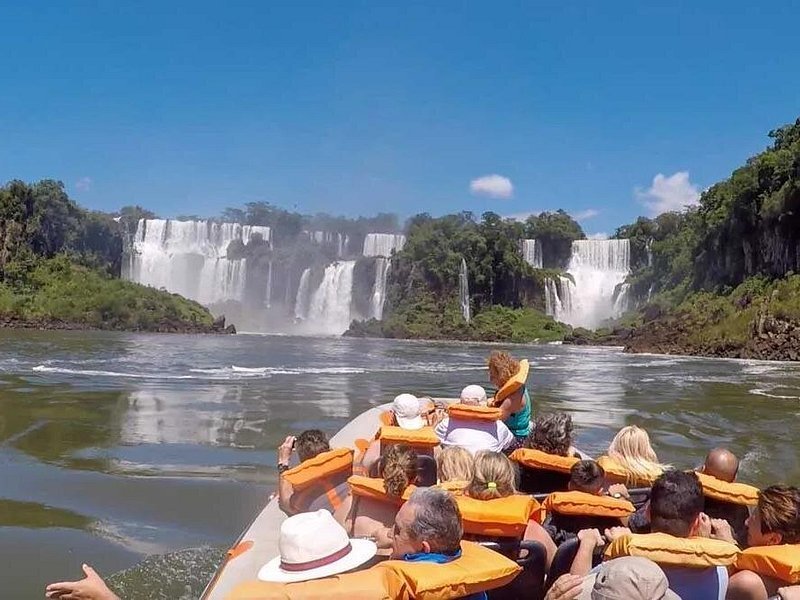
Iguazu Falls is the largest waterfall system in the world — 275 individual falls stretching 2.7km across the border of Brazil and Argentina, with a combined water volume that dwarfs Niagara Falls three times over. Eleanor Roosevelt, on seeing it for the first time, reportedly said "Poor Niagara." The Brazilian side of the park provides the full panoramic view from elevated walkways — the entire 2.7km arc of the falls spread before you, with the constant roar and mist rising above the jungle.

The boat ride — operated from the Brazilian side — brings you into the spray zone directly below the falls, soaking everyone aboard to the skin. The Argentine side, across the border, offers a different experience: elevated walkways above the water leading to the Garganta del Diablo (Devil's Throat), where you stand at the edge of the most powerful section of the falls looking directly into the abyss. Ideally, do both sides on consecutive days from Foz do Iguaçu.

Getting to Iguazu Falls

Foz do Iguaçu has its own airport (IGU) with direct flights from São Paulo (1.5 hours), Rio de Janeiro (2 hours), and other Brazilian cities. The national park is 20 minutes from the city by bus or taxi. Day tours from São Paulo or Rio are possible but overnight stays allow more time at the falls. Book through Viator for guided tours that cover both the Brazilian and Argentine sides.

Falls Count
275 individual falls
Width
2.7km
Gateway City
Foz do Iguaçu
From São Paulo
1.5 hrs by air
Best After
Heavy rain (Nov–Mar)
Difficulty
Easy
📋 Planning Tips
Spend at least 2 days — one for the Brazilian side (panorama and boat ride), one for the Argentine side (Garganta del Diablo walkways). Bring waterproof bags or cases for cameras on the boat ride — you will get completely soaked. The falls are most powerful November–March after heavy rains. Early morning (8am opening) avoids the worst of the crowds. The Macuco boat safari is bookable on site.
⭐ Why It's Worth It
Iguazu Falls is one of the few places in the world where photographs consistently undersell the reality. The scale only becomes apparent standing in front of it — the sound, the mist, the sheer volume of water moving with that force across 2.7km. The boat ride into the spray zone, getting completely drenched, with the falls directly above you, is extraordinary. Eleanor Roosevelt was right.
Iguazu Falls Brazil day tour Foz do Iguaçu boat ride
Iguazu Falls Day Tour — Brazilian & Argentine Sides
Full panorama of the world's largest waterfall system — 275 falls, 2.7km wide, with a boat ride into the spray. Do both sides if you can.
Book Tour →

6

Have a Caipirinha on Copacabana Beach

🍹 Cultural · Year-Round · Free
Caipirinha Copacabana Beach Rio de Janeiro Brazil sunset kiosk

Copacabana Beach is 4km of white sand facing the Atlantic, backed by one of the world's most famous urban seafronts — and at any hour of the day or evening it is one of the most joyful public spaces on Earth. At sunset, the beach kiosks set out their plastic chairs, the vendors work the sand with cold drinks and biscoito globo (airy rice flour crackers), and the entire population of Rio seems to converge on the waterfront to watch the light change over the ocean.

The caipirinha — Brazil's national cocktail, made with cachaça (sugar cane spirit), fresh lime, and sugar — is the correct drink for this experience. Made properly at a beach kiosk in Rio, with fresh limes muddled in a plastic cup and a level of sugar calibrated exactly to the heat, it is one of the best drinks in the world in one of the best settings. No booking required, no tour needed — just find a chair, order a drink, and stay until dark.

How to do it right

The kiosks along the Copacabana seafront all serve caipirinhas from around midday onwards. Arrive by 5pm for the best sunset light. Ask for "duplo" (double) for a stronger pour. Biscoito globo from the beach vendors are the essential snack. Stay for at least two hours — the light changes through gold, pink, and purple before darkness falls. Bring only what you're comfortable carrying on the beach.

Beach Length
4km of white sand
Best Time
5pm – sunset
Cost
~R$15–25 per caipirinha
Booking
None needed
Season
Year-round
Difficulty
Easy
📋 Tips
Leave valuables at your hotel — Copacabana is a busy public beach and pickpocketing occurs. Take only what you need: money, phone (be discreet with it), sunscreen. The kiosks on the beachfront (Avenida Atlântica side) are slightly more expensive but have the best views. Sunday is the biggest beach day — the entire city is out. Weekday evenings are calmer. The Ipanema beach kiosks are equally good and slightly more local in feel.
⭐ Why It's Worth It
There are more spectacular things to do in Rio, but nothing captures the spirit of the city better than sitting at a beach kiosk on Copacabana at sunset with a caipirinha in hand. The beach is completely democratic — everyone is there, from all parts of Rio, all doing the same thing. The light is extraordinary, the drink is perfect for the heat, and the whole thing costs about $4. It is the most joyful $4 you will spend in South America.

7

Christ the Redeemer & Sugarloaf Mountain

⛪ Cultural · Year-Round
Christ the Redeemer statue Rio de Janeiro aerial view Corcovado Sugarloaf Bay

The 38-metre Art Deco statue of Christ the Redeemer on the summit of Corcovado mountain — arms outstretched over Rio de Janeiro at 700 metres — is one of the seven wonders of the modern world and one of the most recognisable images on Earth. Standing at its feet, with the entire city spread out below: the beaches, the favelas cascading down the hillsides, Sugarloaf in the harbour, and the Tijuca forest surrounding everything, is genuinely moving — the scale of both the city and the statue working together in a way that photographs never quite capture.

Sugarloaf Mountain (Pão de Açúcar) — the dramatic granite plug rising from the entrance to Guanabara Bay — is reached by two cable car stages from Praia Vermelha. The summit, at 396 metres, gives a different perspective on Rio: the harbour entrance, the Niterói bridge, Corcovado with Christ visible across the bay, and at sunset, one of the most beautiful urban panoramas in the world. Doing both on the same day — Corcovado in the morning, Sugarloaf at sunset — is the perfect Rio day.

Getting to Christ the Redeemer and Sugarloaf

Christ the Redeemer is reached by the Corcovado cog railway (20 minutes from Santa Teresa) or by van from Cosme Velho. Book tickets in advance at agendamento.trem.rio — it sells out on peak days. Sugarloaf cable cars depart from Praia Vermelha — book in advance at bondinho.com.br. Combined guided tours covering both are available through Viator.
Corcovado Height
700m above sea level
Statue Height
38 metres
Sugarloaf Height
396m above sea level
Book Ahead
Essential — sells out
Best Time
Clear mornings (Christ), sunset (Sugarloaf)
Difficulty
Easy
📋 Planning Tips
Book Corcovado railway tickets well in advance at agendamento.trem.rio — peak season (December–March, July) sells out days ahead. Visit Christ in the morning for the best light and clearest visibility (clouds often form by afternoon). Visit Sugarloaf at sunset — the light over the bay from 5–6pm is extraordinary. Combined tour packages through Viator cover both and handle the logistics, including transport from your hotel.
⭐ Why It's Worth It
The view from the feet of Christ the Redeemer is one of the great urban panoramas in the world — Rio spread out in every direction, the beaches, the forest, the harbour, the mountains. But it's the statue itself at close range that is the surprise: the scale of it, the quality of the Art Deco stonework, and the sheer improbability of it standing on a forested mountain above one of the world's great cities. Sugarloaf at sunset is equally extraordinary and completely different. Do both.
Christ the Redeemer Sugarloaf Mountain tour Rio de Janeiro Brazil
Christ the Redeemer & Sugarloaf — Full Day Tour, Rio
Visit both of Rio's iconic summits — Christ the Redeemer at Corcovado and Sugarloaf at sunset over Guanabara Bay.
Book Tour →

8

Watch a Football Match at Maracanã

⚽ Cultural · Year-Round
Maracanã football match Rio de Janeiro Brazil torcida fans drums flags atmosphere

The Maracanã is the cathedral of football — built for the 1950 World Cup, once the largest stadium in the world with a capacity of 200,000, now modernised to 78,000 seats but still carrying the weight of its history in every concrete curve. Pelé scored his 1,000th goal here. Brazil won the 2013 Confederations Cup here. The 1950 World Cup final — when Uruguay beat Brazil in front of 200,000 people in what Brazilians call the Maracanazo — is still the most traumatic sporting event in the country's history, discussed three generations later.

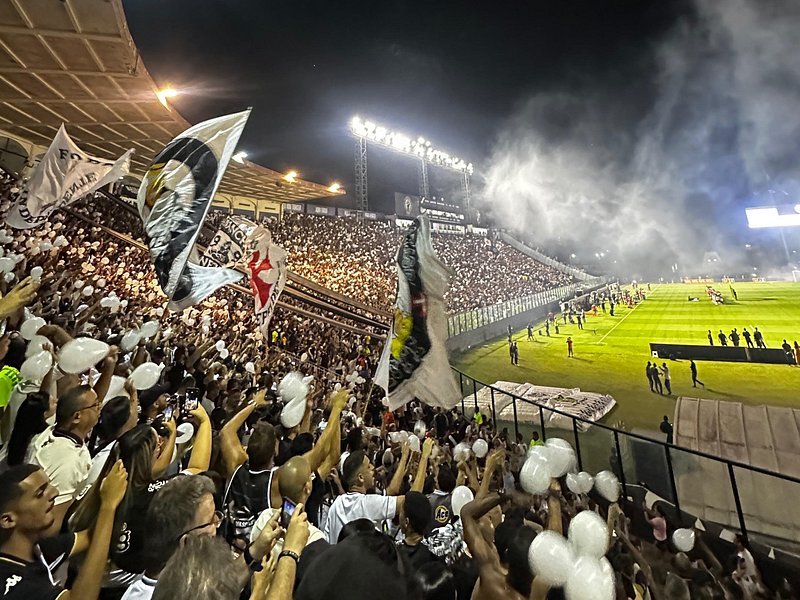
A Flamengo match at the Maracanã — the most supported club in Brazil, with a torcida (fan section) that produces some of the most extraordinary atmosphere in football anywhere in the world — is an experience that transcends sport. The drums, the flags, the choreographed sections of the crowd moving as one, the volume when a goal goes in: it is collective human experience at a level that very few events anywhere produce. The Fla-Flu derby (Flamengo vs Fluminense) is the most intense of all.

Getting Maracanã match tickets

Tickets can be bought through the official Flamengo website (flamengo.com.br), Fluminense website, the Maracanã website, or through Viator for guided match experiences that include transport, tickets, and a local guide who explains the culture and navigates the stadium. Guided match tours are strongly recommended for first-time visitors. Book in advance for derbies and top-of-table matches.

Stadium
Maracanã, Rio de Janeiro
Capacity
78,000 seats
Main Teams
Flamengo & Fluminense
Best Match
Fla-Flu Derby
Season
Year-round
Difficulty
Easy
📋 Planning Tips
A guided match tour through Viator is the best option for first-time visitors — they handle transport, tickets, and provide a local guide who knows the stadium and the culture. If buying independently, buy tickets online in advance — do not buy from touts outside the stadium. The torcida (standing fan section) is the most atmospheric but also the most crowded — seated sections offer a better view of the game itself. Arrive 45 minutes before kickoff for the full pre-match atmosphere.
⭐ Why It's Worth It
Brazilian football culture is unlike anything in European football — the drums, the organised chants, the flags, the complete emotional commitment of the torcida. A Flamengo match at the Maracanã with a full crowd is one of the great atmosphere experiences in sport. The stadium itself carries its history in a way that few sporting venues do. Even if you don't follow football, this is worth experiencing as a cultural event.
Maracanã football match tickets tour Rio de Janeiro Brazil
Maracanã Football Match — Guided Tour with Tickets
Experience Brazilian football at the world's most famous stadium — transport, tickets, and a local guide who knows the culture included.
Book Tickets →

Best Time to Visit Brazil

Brazil is a continent-sized country — the best time varies enormously by region and activity.
🎭 Carnival Season — February/March Rio Carnival is the single biggest reason to visit Brazil at a specific time. In 2026: Feb 28–Mar 3. Book everything 6+ months ahead. Street blocos run weeks before the official dates.
☀️ Rio & Northeast — Dec to Mar Best weather for Rio, Bahia, and the northeast coast. Warm, sunny, and the city is at its most vibrant. High season — prices peak. Iguazu Falls is most spectacular after heavy rains.
🌿 Amazon — June to November Dry season for the Amazon — water levels drop, wildlife concentrates on river banks, and trails are accessible. The wet season (Dec–May) floods the forest and allows boat access deeper in.
🏔️ Chapada Diamantina — May to Sept Dry season for the Chapada — trails are clear, waterfalls are accessible, and trekking conditions are best. The wet season (Oct–Apr) brings heavy rain that can make trails impassable.

Frequently Asked Questions — Brazil

When is the best time to visit Brazil?
It depends on where you're going. Rio and the northeast coast are best December–March (warm and sunny). The Amazon is best visited June–November (dry season). The Chapada Diamantina is best May–September. Carnival falls in February or March — book everything 6+ months ahead if you're coming for Carnival.
When is Rio Carnival?
Carnival falls in February or March, always the four days before Ash Wednesday. In 2026 it runs February 28–March 3. The Sambódromo parade nights are Saturday and Monday. Book flights, hotels, and Sambódromo tickets at least 6 months ahead — everything sells out. Street blocos run for weeks before the official dates and are free to join.
Is Iguazu Falls better from Brazil or Argentina?
Both sides are different but equally extraordinary. Brazil gives the full panoramic view of all 275 falls. Argentina puts you inside the falls on elevated walkways over the water, including the Garganta del Diablo. Ideally do both sides on consecutive days from Foz do Iguaçu — the border crossing is straightforward and most tours cover both.
How do you get Maracanã football tickets?
Buy through the official Flamengo website (flamengo.com.br), the Maracanã official site, or through Viator for a guided match experience with transport included. Guided tours are recommended for first-time visitors. Book in advance for derbies and top matches — do not buy from touts outside the stadium.
Is hang gliding in Rio safe?
Tandem hang gliding off Pedra Bonita has a strong safety record with regulated licensed pilots. No experience is required — you're attached to a certified pilot throughout. Book through Viator to ensure a licensed operator. Flights are weather-dependent and operators offer flexible rescheduling. All ages and fitness levels can participate.
How do you get to the Chapada Diamantina?
Lençóis is the gateway town — daily flights from Salvador (1 hour) and São Paulo (2 hours), or overnight bus from Salvador (7 hours). Guided trekking tours are essential as trails are unmarked. The park is best visited May–September (dry season). Book multi-day guided packages through Viator.

🇧🇷 Brazil Travel Tips

Brazil uses the Brazilian real (BRL). Credit cards are widely accepted in cities; carry cash for markets and beach kiosks. Basic Portuguese goes a long way — English is less widely spoken outside tourist areas than in other South American countries. Rio is a large city with both extraordinary hospitality and genuine security concerns in certain areas — stick to tourist areas, don't wear expensive jewellery, and be discreet with phones on the beach. Ubers work well throughout Brazil and are safer than hailing taxis from the street. Yellow fever vaccination is required for the Amazon and recommended for other regions. Brazil is enormous — don't try to cover the whole country in one trip. Pick a region and do it properly.
More Destinations to Explore
Ecuador travel guide TheCantMiss
🇪🇨 Things to Do in Ecuador & the Galápagos
View Guide →
Ecuador travel guide
🇪🇨 Ecuador
Rwanda travel guide
🇷🇼 Rwanda
Cambodia travel guide
🇰🇭 Cambodia
Finland travel guide
🇫🇮 Finland
Poland travel guide
🇵🇱 Poland
Denmark travel guide
🇩🇰 Denmark
Sweden travel guide
🇸🇪 Sweden