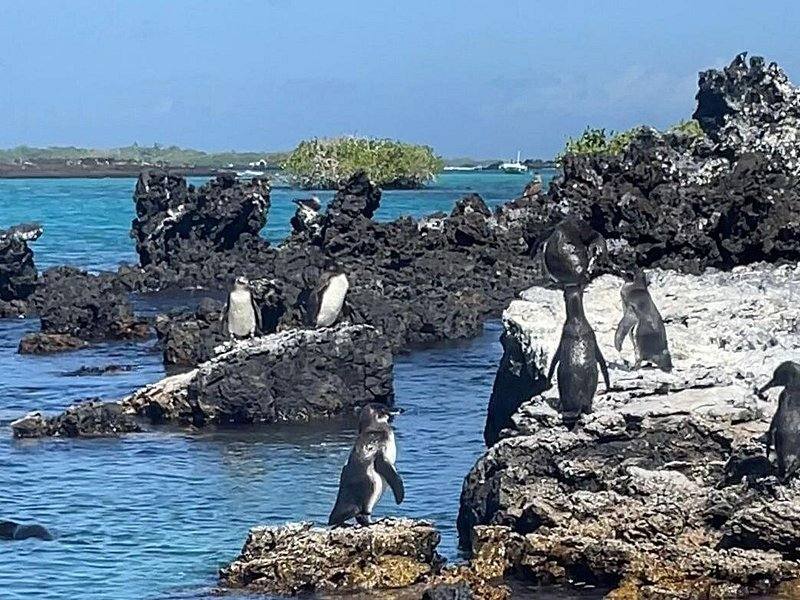
Galápagos penguins Isabela Island Ecuador snorkelling swimming unique wildlife
🇪🇨 Ecuador · Complete Activity Guide
🇪🇨

Things to Do in Ecuador

The Galápagos, the Amazon, the Andes, and wildlife that exists nowhere else on Earth

Share Facebook Pinterest WhatsApp

Ecuador is one of the most biodiverse countries on Earth — a small nation that contains the Galápagos Islands, the Amazon rainforest, the Andes, and the Pacific coast within its borders. The Galápagos alone would justify a trip from anywhere in the world: wildlife that evolved in isolation for millions of years and has no fear of humans whatsoever. Add an active volcano you can summit, the largest indigenous market in South America, and an Amazon jungle lodge, and Ecuador becomes one of the most compelling destinations on the planet.

This guide covers the best things to do in Ecuador in 2026 — eight experiences that capture the full extraordinary range of this country.

1

Swimming with Penguins, Isabela Island

🐧 Water · Year-Round
Galápagos penguins Isabela Island Ecuador snorkelling swimming unique wildlife

The Galápagos penguin is the only penguin species found north of the equator and the only one that lives in the tropics year-round — a biological anomaly made possible by the cold Humboldt and Cromwell currents that bring nutrient-rich water to the islands. Isabela Island has the largest population, and snorkelling alongside them — watching them torpedo through the water at extraordinary speed, torpedo past your mask within centimetres — is one of the great wildlife encounters available anywhere on Earth.

The same snorkelling sessions around Isabela typically also include marine iguanas (the world's only ocean-going lizard, diving to graze on underwater algae), Pacific green sea turtles, Galápagos sea lions, and an array of tropical fish over lava reef. The water is clear, the wildlife is dense, and none of it has any fear of humans whatsoever — the Galápagos animals simply never developed a fear response, having evolved without land predators.

Getting to Isabela Island

Isabela is reached by a 2-hour speedboat from Santa Cruz, or by a short flight. Most visitors base themselves in Puerto Ayora on Santa Cruz and take a day trip or stay 2–3 nights on Isabela. Snorkelling tours around Isabela depart daily — book through Viator for English-guided tours with equipment included.
Island
Isabela, Galápagos
From Santa Cruz
2 hrs by speedboat
Also See
Sea turtles, marine iguanas
Season
Year-round
Experience Req.
Basic swimming
Difficulty
Easy
📋 Planning Tips
Book snorkelling tours in advance through Viator — day tours from Santa Cruz to Isabela fill up in peak season (June–August and December–January). Bring your own mask and snorkel if possible for hygiene and fit. Wetsuits are provided — the water is 18–22°C in the cool season and 24–26°C in the warm season. The penguin colonies are most active in the morning. A guide is mandatory for all visitor sites.
⭐ Emily's Take
Swimming with Galápagos penguins is one of the highlights of my 75+ countries of travel. They are impossibly fast underwater — you see a blur of black and white streaking past your mask before you can process what just happened. Then one stops, treads water in front of you, and stares at you with complete curiosity. The lack of fear is the thing — it changes the entire quality of a wildlife encounter when the animal is actually interested in you.
Galápagos penguins snorkelling tour Isabela Island Ecuador
Isabela Island Snorkelling — Galápagos Penguins
Snorkel with Galápagos penguins, marine iguanas, sea turtles, and sea lions around Isabela Island — wildlife with no fear of humans.
Book Tour →

2

Giant Galápagos Tortoises, Santa Cruz

🐢 Wildlife · Year-Round
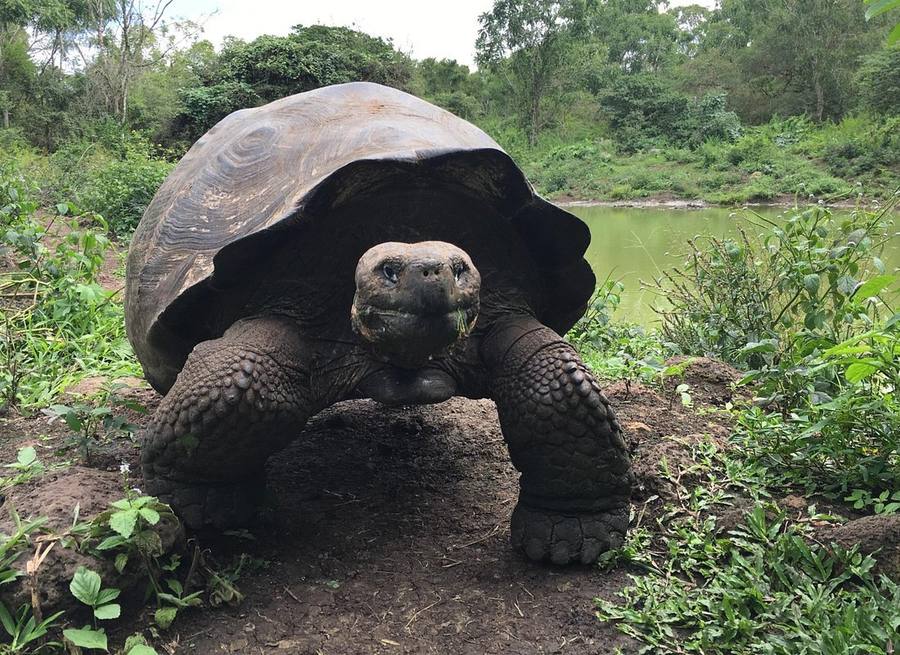
Giant Galápagos tortoise Santa Cruz Ecuador highlands wild ancient

The Galápagos giant tortoise is the largest living species of tortoise on Earth — adults can weigh up to 400kg and live for over 150 years, making some of the individuals you'll encounter in the wild older than any living human being. They were the first animals Darwin observed on his 1835 visit to the islands and were central to his development of the theory of natural selection: tortoises on different islands had evolved different shell shapes in response to different food sources.

The Santa Cruz highlands are home to wild populations that roam the volcanic slopes freely — large enough to require no enclosure and old enough to predate the concept of a zoo. Walking through the highland farms where they graze in the morning mist, standing next to an animal the size of a boulder that is looking back at you with complete equanimity, is an encounter with deep time that no photograph conveys. The Charles Darwin Research Station in Puerto Ayora houses the breeding programme and is a good first stop for context.

Visiting the giant tortoises on Santa Cruz

Guided highland tours from Puerto Ayora visit the farms where wild tortoises congregate — El Chato Tortoise Reserve is the most accessible. Morning tours offer the best sightings as tortoises are most active before midday. Book through Viator for English-guided tours with transport from Puerto Ayora.
Island
Santa Cruz, Galápagos
Best Site
El Chato Reserve
Max Weight
Up to 400kg
Max Age
150+ years
Season
Year-round
Difficulty
Easy
📋 Planning Tips
Morning tours (7–10am) offer the best sightings — tortoises are most active before the highland mist burns off. The Charles Darwin Research Station is free to enter and provides excellent background on the conservation programme. Don't feed or touch the tortoises — they are wild animals, not exhibits. Combine with a lava tunnel visit on Santa Cruz for a full highland day.
⭐ Why It's Worth It
Standing next to a 150-year-old tortoise in the wild highland mist of Santa Cruz — an animal that has been alive since before the American Civil War, calmly eating grass as if you're not there — is one of those encounters with scale and time that recalibrate something in your perspective. These animals are not curiosities. They are survivors of something ancient and enormous, and being in their presence feels like a privilege.
Giant Galápagos tortoise highland tour Santa Cruz Ecuador
Giant Tortoise Highland Tour — Santa Cruz, Galápagos
Walk among wild giant tortoises in the Santa Cruz highlands — some over 150 years old, roaming free in volcanic farmland.
Book Tour →

3

Amazon Rainforest Lodge, Napo River

🌿 Wildlife · Year-Round
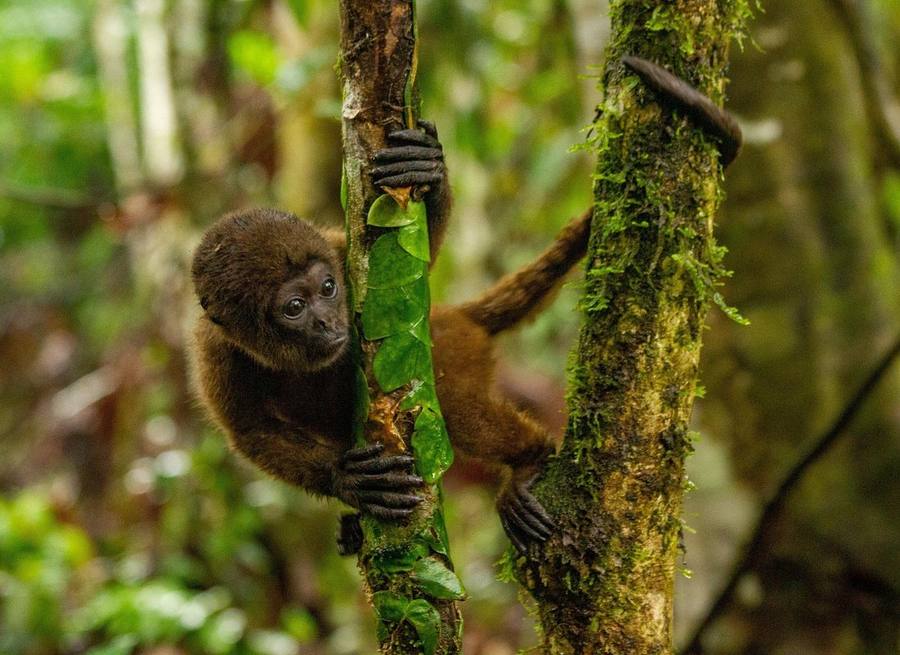
Amazon rainforest Ecuador Napo River woolly monkey jungle wildlife lodge

Ecuador's Amazon — the Oriente — is one of the most biodiverse regions in the world: over 600 species of birds, 150 species of mammals, and more tree species per hectare than almost anywhere else on Earth. Unlike the Brazilian Amazon, the Ecuadorian section is compact and accessible — a 30-minute flight from Quito delivers you to Coca or Tena, where boats take you deep into the river systems of the Napo, a major Amazon tributary.

Staying at a jungle lodge on or near the Napo River gives access to guided experiences that no day trip can replicate: predawn canoe trips for bird and caiman spotting, jungle walks with Kichwa guides who can identify medicinal plants and animal tracks invisible to untrained eyes, night walks through the forest with headlamps, piranha fishing, and the shaman ceremonies of the local communities. The woolly monkeys, giant otters, poison dart frogs, and anacondas are not guaranteed but the density of wildlife makes encounters likely.

Booking an Amazon lodge in Ecuador

The best lodges are on the lower Napo River — Sacha Lodge, Napo Wildlife Center, and Cotococha are all excellent at different price points. Most require a minimum 4-night stay and include all activities and guiding. Book through Viator for packaged lodge experiences, or directly with the lodges. Flights to Coca (Francisco de Orellana) from Quito take 30 minutes.
Region
Napo River, Oriente
From Quito
30 min flight to Coca
Min Stay
4 nights recommended
Wildlife
600+ bird species
Season
Year-round
Difficulty
Easy
📋 Planning Tips
Book 4+ nights for the full experience — 2-night visits don't give enough time for the jungle to open up. Bring lightweight long-sleeve clothing (mosquitoes), waterproof boots (provided by most lodges), a headlamp, and binoculars. The dry season (June–September) has slightly better wildlife viewing conditions but the lodge interiors are beautiful year-round. The shaman ceremony is a culturally sensitive experience — follow your guide's instructions carefully.
⭐ Why It's Worth It
The Ecuadorian Amazon is one of the most accessible true wilderness experiences in South America. A 30-minute flight from Quito and you're on a canoe in the dark, listening to the jungle wake up around you, with a Kichwa guide who can hear a harpy eagle from 500 metres. The combination of wildlife density, cultural depth, and relative accessibility makes this the best Amazon entry point for most travellers.
Amazon rainforest lodge Napo River Ecuador jungle tour
Amazon Rainforest Lodge — Napo River, Ecuador
Multi-day jungle lodge on the Napo River — wildlife walks, canoe expeditions, Kichwa guides, and shaman ceremonies in the Ecuadorian Amazon.
Book Lodge →

4

Galápagos Diving & Snorkelling

🤿 Water · Year-Round
Galápagos diving snorkelling hammerhead shark sea lion marine iguana Ecuador

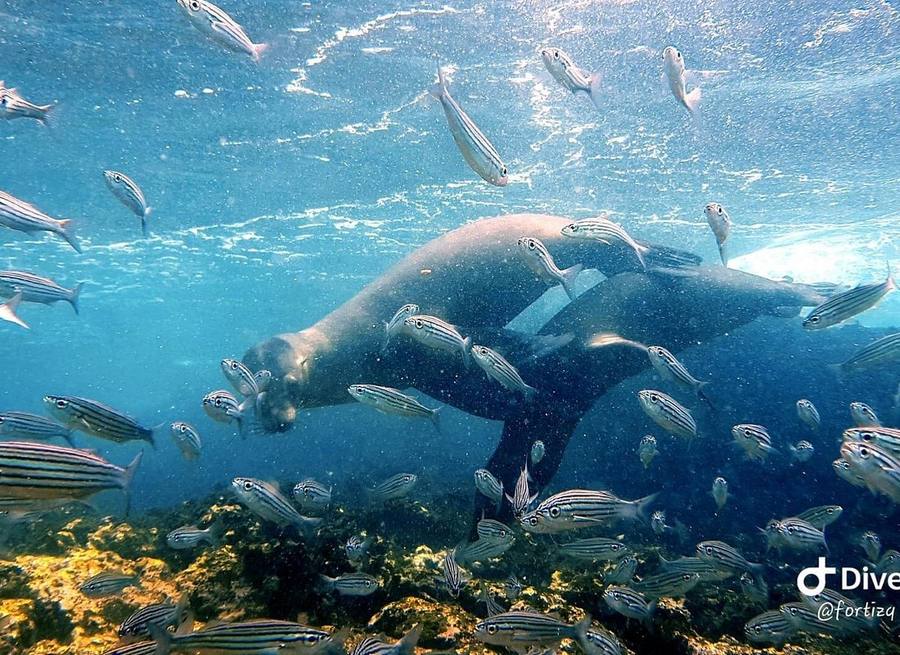
The Galápagos is one of the top five diving destinations in the world — an intersection of cold Antarctic currents and warm tropical water that creates an extraordinary richness of marine life found nowhere else. Below the surface: scalloped hammerhead sharks in schools of hundreds, whale sharks the length of buses, manta rays, Galápagos sharks, Pacific green sea turtles nesting on sand, marine iguanas grazing on underwater algae, and sea lions that treat divers as playmates — rolling, spiralling, and blowing bubbles in your face.

Snorkelling is excellent from almost every beach on the islands — the wildlife doesn't distinguish between snorkellers and divers. For diving, the advanced sites at Wolf and Darwin Islands in the far north of the archipelago offer the most dramatic pelagic encounters, including the world's highest concentration of whale sharks (June–November). Day dive trips from Santa Cruz or Isabela reach excellent sites without requiring a liveaboard.

Diving options in the Galápagos

Day dive trips operate from Puerto Ayora and Puerto Villamil — 2 dives per day, all equipment included. Liveaboard cruises (7–14 days) access the remote northern islands for the best pelagic encounters. Snorkelling is included in most island tours. Book through Viator for day dive trips, or directly with Galápagos dive operators for liveaboards.
Best Sites
Wolf & Darwin Islands
Whale Sharks
June – November
Hammerheads
Year-round
Day Dives
From Santa Cruz / Isabela
Liveaboard
7–14 days
Snorkelling
Included in most tours
📋 Planning Tips
Non-divers get excellent snorkelling from every beach — no certification required. For diving, PADI Open Water minimum is required for most sites. Advanced certification opens up the best dive sites. Wetsuits (3–5mm) are recommended year-round — water temperature ranges from 18°C (cool season) to 26°C (warm season). Book liveaboards 6–12 months in advance for peak season (June–August and December–January).
⭐ Why It's Worth It
Galápagos diving is in a category of its own. The marine iguanas grazing on the seabed while sea lions chase your fins — the combination of tropical and cold-water species, the volume of large animals, and the complete absence of fear in the wildlife creates an underwater experience that has no equivalent anywhere else on Earth. Even snorkelling from the beach delivers wildlife that most people will never see diving anywhere else in the world.
Galápagos diving snorkelling tour Ecuador
Galápagos Diving & Snorkelling Tour
Dive or snorkel with hammerhead sharks, whale sharks, marine iguanas, sea lions, and sea turtles in the Galápagos marine reserve.
Book Tour →

5

Otavalo Indigenous Market at Dawn

🎨 Cultural · Year-Round · Best on Saturdays
Otavalo indigenous market Ecuador Plaza de Ponchos textiles Andean Saturday

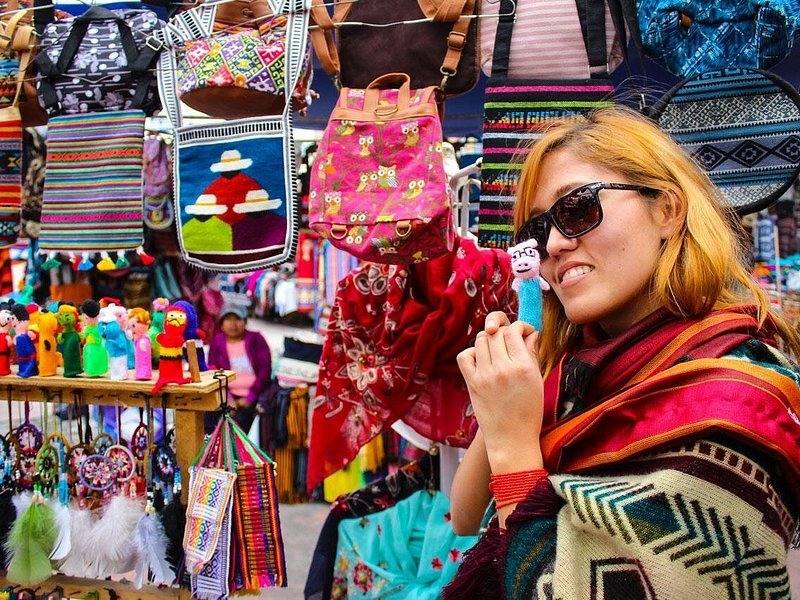
The Otavalo market in the Plaza de Ponchos is the largest indigenous market in South America — a trading tradition that predates the Inca conquest and has operated continuously for centuries. Every Saturday from around 7am the plaza fills with Otavalo vendors in traditional dress selling hand-woven wool and alpaca textiles, embroidered blouses, carved wooden figurines, hand-painted ceramics, silver jewellery, and the full produce of the Andean highlands.

What makes Otavalo extraordinary is its authenticity — this is not a tourist market performing indigenous culture for outsiders. The Otavalo people are one of the most commercially successful indigenous groups in the Americas, trading internationally since the 1970s, and the market reflects a living economic tradition rather than a staged cultural show. The vendors are skilled traders who negotiate in Kichwa first, Spanish second. Arriving at dawn, before the tour groups from Quito, gives access to the market in its most genuine form.

Getting to Otavalo from Quito

Otavalo is 110km north of Quito — approximately 2 hours by bus (direct buses from the Carcelén terminal) or 1.5 hours by organised tour. Saturday is the main market day; a smaller daily market operates throughout the week in the same plaza. Guided day tours from Quito through Viator include transport and a local guide who provides cultural context.
Location
Plaza de Ponchos, Otavalo
From Quito
~2 hours by bus
Best Day
Saturday from 7am
Daily Market
Yes — smaller scale
Payment
Cash preferred (USD)
Difficulty
Easy
📋 Planning Tips
Arrive before 9am on Saturday to experience the market before the tour buses from Quito arrive. Bargaining is expected — start at about 60% of the asking price and settle around 70–75%. Prices are already reasonable by any standard; aggressive bargaining is discourteous. Bring small-denomination USD bills. Combine with a visit to the Cascada de Peguche waterfall (30-minute walk from the market) and the weekly animal market at nearby Cayambe.
⭐ Why It's Worth It
Otavalo is the best market in South America — better than anything in Peru, Bolivia, or Colombia. The combination of quality, authenticity, and atmosphere is unmatched. The textiles are genuinely beautiful, the vendors are engaging and skilled negotiators, and the sense of a tradition that has operated continuously for centuries is palpable. Come early, take your time, and buy more than you planned to.
Otavalo indigenous market day tour from Quito Ecuador
Otavalo Indigenous Market Day Tour from Quito
Guided day trip to the largest indigenous market in South America — textiles, silver, ceramics, and Andean culture since pre-Inca times.
Book Tour →

6

Blue-Footed & Red-Footed Boobies, North Seymour

🐦 Wildlife · Year-Round
Blue-footed boobies Galápagos North Seymour Ecuador mating dance neon blue feet

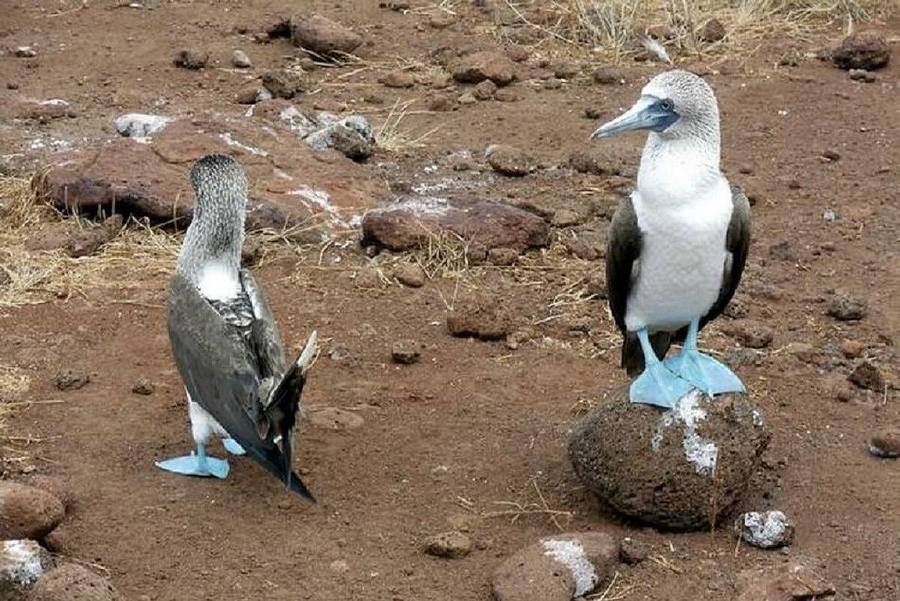
The blue-footed booby is one of the most extraordinary birds in the world — not because of rarity (they're relatively common in the Galápagos) but because of the feet. Neon turquoise, the colour of a swimming pool, used in elaborate mating dances where the male lifts each foot slowly and deliberately to display their intensity of colour to females. The bluer the feet, the healthier the bird, the better the mate. Evolution producing something that looks designed by a children's illustrator.

North Seymour Island, a 45-minute boat ride from Santa Cruz, has the densest booby colony in the Galápagos — nesting pairs on the ground within touching distance of the walking path, completely unperturbed by human presence. The same island also has magnificent frigatebirds (the males inflate a brilliant red throat pouch the size of a football during mating season), sea lions, and marine iguanas. Genovesa Island in the far north has the largest red-footed booby colony — rarer and worth the extra journey.

Visiting North Seymour Island

North Seymour is a popular day trip from Santa Cruz — book in advance as the daily visitor quota fills quickly. All visits require a licensed naturalist guide. The 2km walking loop takes approximately 2 hours. Combine with snorkelling in the surrounding waters for sea lions and reef fish. Book through Viator for day tours with transport and guide included.
Island
North Seymour
From Santa Cruz
~45 min by boat
Also See
Frigatebirds, sea lions
Red-Footed
Genovesa Island
Season
Year-round
Difficulty
Easy
📋 Planning Tips
Book North Seymour day trips in advance — visitor quotas are strict and popular slots fill up. Wear sturdy walking shoes (lava rock paths). Don't stray from the marked trail — nesting birds are on the ground directly adjacent to the path. The mating dances happen year-round but are most intense during the nesting season (May–August). A licensed guide is mandatory and adds significant value — the behaviour context transforms what you're watching.
⭐ Why It's Worth It
Watching a blue-footed booby do its mating dance from two metres away — lifting each absurdly blue foot in slow ceremony, spreading its wings, sky-pointing its beak — while completely ignoring you is one of the great wildlife spectacles in the Galápagos. The feet are even more extraordinary in person than in photographs: the colour is genuinely neon, genuinely surreal. North Seymour is the best single wildlife day trip in the islands.
Blue-footed boobies North Seymour island tour Galápagos Ecuador
North Seymour Island Day Trip — Blue-Footed Boobies
Walk within touching distance of nesting blue-footed boobies, frigatebirds, and sea lions on North Seymour — the Galápagos at its most concentrated.
Book Tour →

7

Fish Market at Sunset, Santa Cruz

🐟 Cultural · Year-Round · Free
Santa Cruz fish market sea lion Puerto Ayora Galápagos Ecuador sunset fishermen

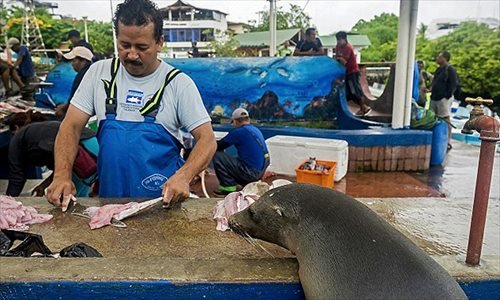
Every evening at Puerto Ayora's small fish market, the day's catch arrives. The fishermen clean their haul on the stone counters as the sun drops over the harbour — and the sea lions know it. Two or three of them have claimed counter space as their own, shouldering forward to snatch fish scraps with complete authority, occasionally knocking a fisherman's hand away with their muzzle. Brown pelicans stand on the roof waiting for their moment. Marine iguanas sun themselves on the dock below.

This is not a staged wildlife experience — it is simply what happens at the fish market every evening in Puerto Ayora, and it has been happening this way for as long as anyone can remember. Locals eat fried fish at the plastic tables while sea lions jostle on the counter two metres away. It costs nothing, requires no booking, and is one of the most purely joyful experiences in the Galápagos — the whole improbable ecosystem of the islands compressed into a single small market.

How to find the fish market

The fish market is on the waterfront in Puerto Ayora on Santa Cruz Island — a 5-minute walk from the main pier. Arrive between 5pm and 6pm for the best activity. Order fresh fried fish and a cold Pilsener at the market tables and stay for the show. No booking, no guide, no fee.
Location
Puerto Ayora waterfront
Best Time
5–6pm daily
Cost
Free to watch
Fish & Beer
~$5–8 USD
Season
Year-round
Difficulty
Easy
📋 Tips
No booking needed — just show up. Arrive by 5pm to get a good table before the market gets busy. Order the fried fish of the day — whatever the fishermen just cleaned is what you'll get. Don't try to touch the sea lions or feed them directly; they manage the counter negotiations entirely on their own terms. The pelicans on the roof are also patient and will descend opportunistically. Bring small USD bills.
⭐ Why It's Worth It
The fish market at sunset is one of my favourite things in the entire Galápagos. There is something about watching a sea lion calmly push a fisherman's arm aside to steal a fish — in a place where this has just always been how it works — that captures the islands better than any tour. Order the fish, drink the beer, watch the show. It's free, it's real, and it's the most Galápagos thing you can do without a boat.
Santa Cruz fish market sea lion Puerto Ayora Galápagos
Puerto Ayora Fish Market — Free Evening Experience
Watch sea lions and pelicans compete for fish scraps at the daily market — arrive at 5pm, order fried fish, bring cash. No booking needed.
Explore Santa Cruz Tours →

8

Cotopaxi Volcano Climb

🌋 Hiking · Hard · Year-Round
Cotopaxi volcano climb Ecuador 5897m Andes guided summit active

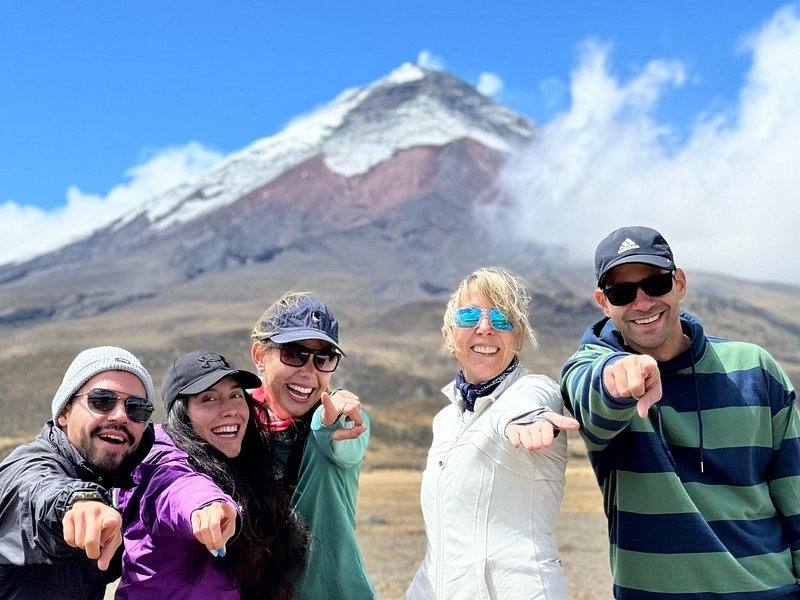
Cotopaxi is one of the world's highest active volcanoes — 5,897 metres above sea level, with a near-perfect snow cone visible from Quito on clear days. The summit was first reached in 1872 and the mountain has erupted numerous times since, most recently in 2015–2016. It is now open again, and summiting it — through high-altitude páramo, across glaciers, in the dark, arriving at the crater rim as dawn breaks over the Andes — is one of the most dramatic climbing experiences in South America.

The standard route is non-technical — no ropes, no previous climbing experience required — but the altitude is serious. The climb begins at the refuge hut (4,800m) at midnight, ascending through snow and ice to the crater rim at 5,897m over 5–6 hours. The physical demand is significant: thin air, steep terrain, and temperatures of -10°C to -20°C at the summit. Acclimatisation of 2–3 days in Quito (2,850m) beforehand is essential, and the climb should only be attempted with a licensed ASEGUIM mountain guide.

Preparing for the Cotopaxi climb

Guided climb packages from Quito include transport, refuge accommodation, a licensed guide, and all technical equipment (crampons, ice axe, harness). Acclimatise for at least 2 days in Quito before attempting the summit. Physical fitness is critical — the climb involves 5–6 hours of sustained uphill effort at altitude. Book through Viator for packaged guided climbs with certified ASEGUIM guides.

Summit
5,897m
Climb Duration
5–6 hours from refuge
Start Time
Midnight from refuge
Temperature
−10°C to −20°C summit
Guide Required
Yes — ASEGUIM certified
Difficulty
Hard
📋 Safety & Planning Tips
Acclimatise for a minimum of 2 days in Quito before attempting Cotopaxi. Day-hikes to 4,000–4,500m on the days before help prepare your body. Only attempt with a licensed ASEGUIM guide — this is a legal requirement in the national park. Check current volcanic activity status before departure. The climb is frequently cancelled due to weather — build flexibility into your itinerary. A summit success rate of 60–70% is typical; altitude sickness is common and the guide will make the call on whether to continue.
⭐ Why It's Worth It
Arriving at the crater rim of Cotopaxi as the sun rises over the Andes — an active volcano, 5,897 metres high, the Ecuadorian highlands spread out below you — is one of the great mountain experiences in South America. The climb is hard, the altitude is humbling, and the cold is serious. But standing on the crater rim of one of the world's highest active volcanoes at dawn is completely worth every step of the midnight ascent.
Cotopaxi volcano guided climb Ecuador summit
Cotopaxi Volcano Guided Summit Climb
Guided midnight ascent to the crater rim of one of the world's highest active volcanoes — 5,897m, crampons, ice axe, ASEGUIM guide.
Book Climb →

Best Time to Visit Ecuador & the Galápagos

Ecuador has two distinct seasons — and the Galápagos is excellent year-round with different conditions each season.
🌊 Warm Season — December to May Water temperatures up to 26°C — ideal for snorkelling and swimming. Calmer seas and greener landscapes. Sea birds nesting. Rain on the mainland but excellent Galápagos conditions. Peak travel season December–January.
🌬️ Cool Season — June to November Water temperatures 18–22°C with strong currents bringing whale sharks (June–November) and hammerheads. Drier on the islands. Better visibility for diving. Otavalo market is excellent year-round.
☀️ Mainland Dry — June to September Best time for Cotopaxi climbing and Andean highlands travel. Clear skies for mountain views from Quito. Amazon is drier. Otavalo market is excellent. Peak season for the Amazon lodge.
🌦️ Mainland Wet — October to May Heavier rain on the mainland but lush Amazon and green Andes. Cotopaxi is climbable year-round with a guide. The Galápagos is excellent regardless of mainland rain.

Frequently Asked Questions — Ecuador

When is the best time to visit the Galápagos?
The Galápagos is excellent year-round. December–May is warmer (26°C water) with calmer seas — ideal for swimming. June–November is cooler with stronger currents bringing whale sharks (June–November) and hammerheads. Giant tortoises, blue-footed boobies, and sea lions are present year-round. December and June–August are peak tourist seasons — book well ahead.
How do you get to the Galápagos Islands?
Flights depart from Quito (via Guayaquil) and Guayaquil to Baltra or San Cristóbal Island — approximately 2 hours from Guayaquil. A $20 transit control card is required in Guayaquil plus a $100 national park entrance fee on arrival. Book flights well in advance. Most visitors base themselves in Puerto Ayora on Santa Cruz for the best access to day trips.
Do you need a guide in the Galápagos?
Yes — licensed naturalist guides are mandatory for all visitor sites in the Galápagos National Park, which covers 97% of the islands' land area. Day tours and liveaboard cruises include a licensed guide. The guide system is a key reason the Galápagos remains as pristine as it does. Guides add enormous value — the behaviour context transforms every wildlife encounter.
What is the Otavalo market and when should you go?
The Otavalo market in Plaza de Ponchos is the largest indigenous market in South America — textiles, jewellery, ceramics, and Andean produce traded since pre-Inca times. The main market day is Saturday from 7am. It is 2 hours from Quito by bus or guided day tour. Arrive early before the Quito tour groups arrive. Bargaining is expected.
Is Cotopaxi safe to climb?
Cotopaxi (5,897m) is safe to climb with a licensed ASEGUIM guide, proper acclimatisation (2–3 days in Quito minimum), and good fitness. Check current volcanic activity before departure. The climb is non-technical but physically demanding — 5–6 hours from the refuge hut at midnight in temperatures of −10°C to −20°C. Summit success rates are around 60–70%; altitude sickness is common and the guide will make the final call on conditions.
What is the best island to visit in the Galápagos?
Santa Cruz is the best base — good infrastructure, Charles Darwin Research Station, giant tortoise highlands, and day trips to all major sites. Isabela is the best for snorkelling with penguins and marine life. North Seymour is the best single day trip for wildlife density. For first-time visitors, basing yourself in Puerto Ayora (Santa Cruz) gives the best overall access.

🇪🇨 Ecuador Travel Tips

Ecuador uses the US dollar — no currency exchange needed for American visitors. Quito (2,850m) requires 1–2 days acclimatisation before high-altitude activities. The Galápagos National Park entrance fee ($100 USD) must be paid in cash on arrival at the islands. Book Galápagos accommodation, flights, and tours well in advance for peak seasons. Altitude sickness is common above 3,500m — take it easy, drink coca tea, and ascend gradually. The Galápagos has strict biosecurity rules — no bringing food, plants, or animals to or between islands. Quito's historic centre (a UNESCO World Heritage Site) is excellent and often overlooked by visitors rushing to the Galápagos.
More Destinations to Explore
Cambodia travel guide TheCantMiss
🇰🇭 Things to Do in Cambodia
View Guide →
Finland travel guide
🇫🇮 Finland
Poland travel guide
🇵🇱 Poland
Denmark travel guide
🇩🇰 Denmark
Sweden travel guide
🇸🇪 Sweden
Austria travel guide
🇦🇹 Austria
Netherlands travel guide
🇳🇱 Netherlands
Rwanda travel guide
🇷🇼 Rwanda