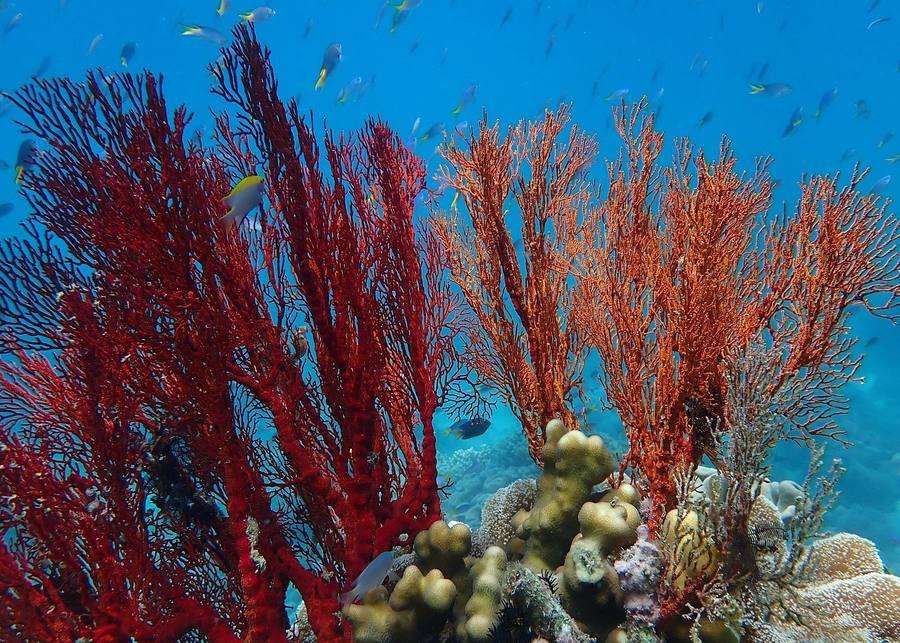
Australia
The Ultimate Australia Itinerary — Sydney, Cairns, the Outback & Melbourne
This is the best Australia itinerary for first-time visitors who want to see the country's greatest hits properly — three nights in Sydney for the harbour, Bondi, and the Blue Mountains; four nights based in Cairns for the Great Barrier Reef and the Daintree; three nights in the Red Centre for Uluru and the outback; and three nights in Melbourne for food, culture, and the Great Ocean Road. It's the classic Sydney–Reef–Outback–Melbourne circuit, built around the experiences that make Australia genuinely extraordinary rather than just photogenic.
One practical reality first-time visitors miss: Australia is enormous. Sydney to Cairns is the same distance as London to Cairo. Flying between stops is essential — all domestic flights on this itinerary are bookable via Qantas, Jetstar, or Virgin Australia, and add relatively little time or cost to the overall trip.
Sydney
🎫 Sydney Experiences
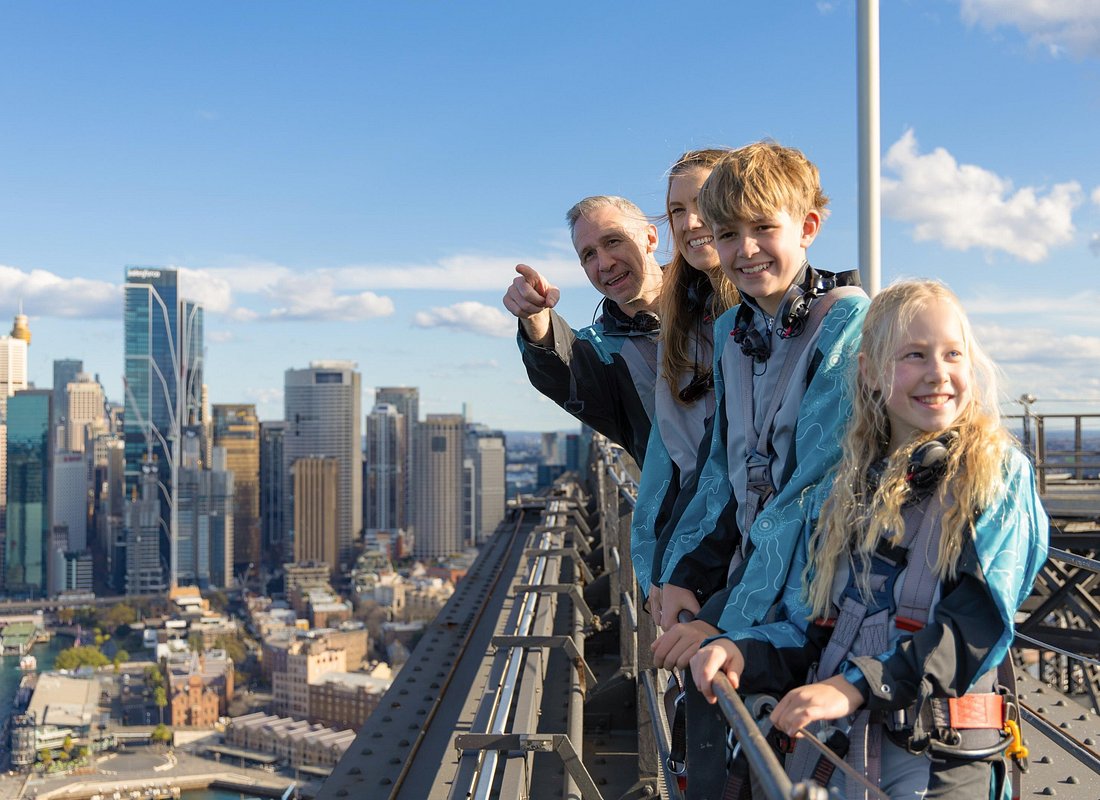
Climb the Sydney Harbour Bridge at Sunrise
🌅 Iconic · Can't Miss
The Sydney Harbour Bridge climb is one of the world's great urban experiences — 134 metres above the harbour, standing on the arch of a 1932 steel structure with 360-degree views of one of the most beautiful cities on Earth. At sunrise, the harbour turns gold below you, the Opera House catches the first light across the water, and the city is still quiet enough that you can hear the wind.
BridgeClimb runs guided ascents around the clock and in all weather — the nighttime climb is spectacular (the city lights reflected in the harbour), but sunrise is the one worth setting an alarm for. The climb takes about 3.5 hours including briefing and gear-up, and covers roughly 1,400 steps. No prior fitness is required; the guide pace is relaxed and the handrails continuous throughout.
This is not a cheap experience — the sunrise climb runs around $350 AUD per person — but it is one of those things that genuinely exceeds expectations on the day. The view from the top of the arch, looking down at the Opera House sails and out across the Heads to the ocean, is simply extraordinary.
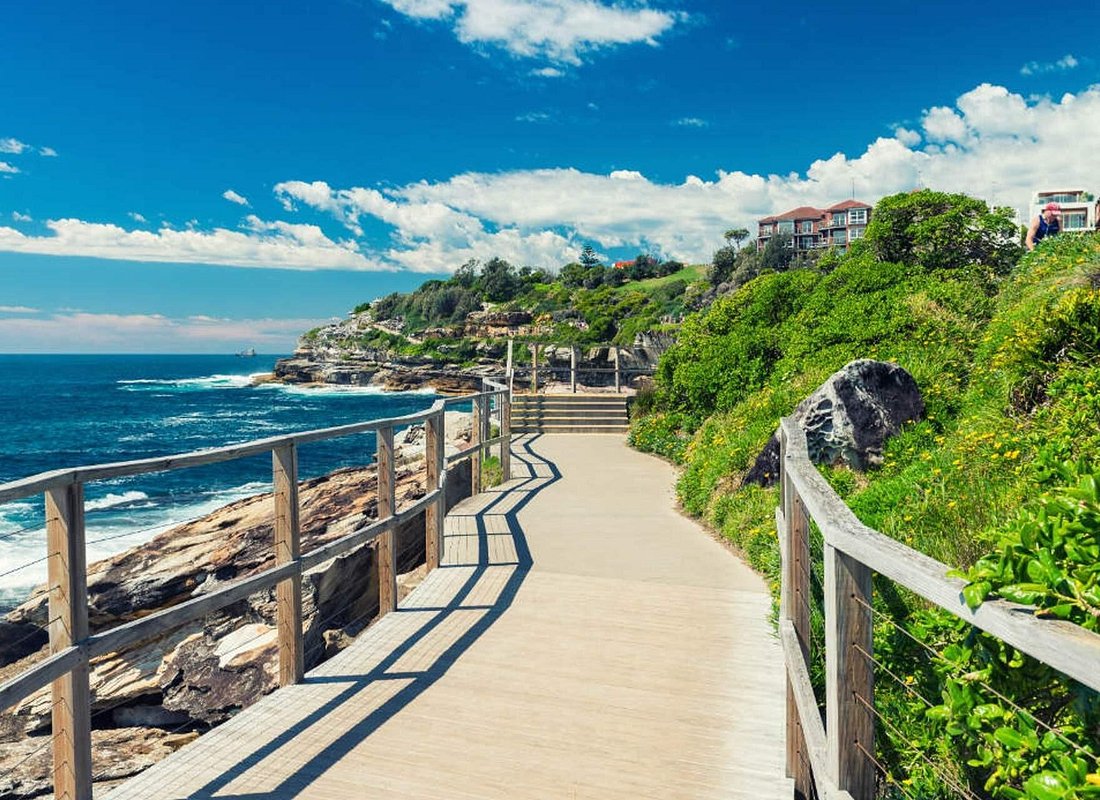
Bondi Beach & the Bondi to Coogee Coastal Walk
🏖️ Beach · Iconic Walk
Bondi Beach is one of the world's most famous stretches of sand — and it earns it. The arc of white sand backed by Sydney's surf culture, the clear blue of the South Pacific, and the promenade energy of the beach on a summer morning creates something genuinely iconic. But the Bondi to Coogee Coastal Walk, which begins at the south end of Bondi and follows the clifftops for six kilometres to Coogee Beach, is the experience that makes the whole thing extraordinary.
The walk takes about two hours at a relaxed pace and passes through a series of smaller beaches — Tamarama, Bronte, Clovelly, and Gordons Bay — each carved into sandstone cliffs above water that ranges from deep aquamarine to electric blue. The path is mostly level, the views are continuous, and the combination of beach below and open Pacific beyond is one of the finest pieces of coastal walking accessible from a major city anywhere in the world.
Start at Bondi at 7am before the crowds arrive, walk south to Coogee, and have breakfast at one of the cafes on Coogee Beach looking back along the coast. If the timing works, the Bondi Icebergs ocean pool at the south end of Bondi is open for early morning laps and has become one of the most photographed spots in Australia — the pool hanging over the rocks with waves breaking across its edge.
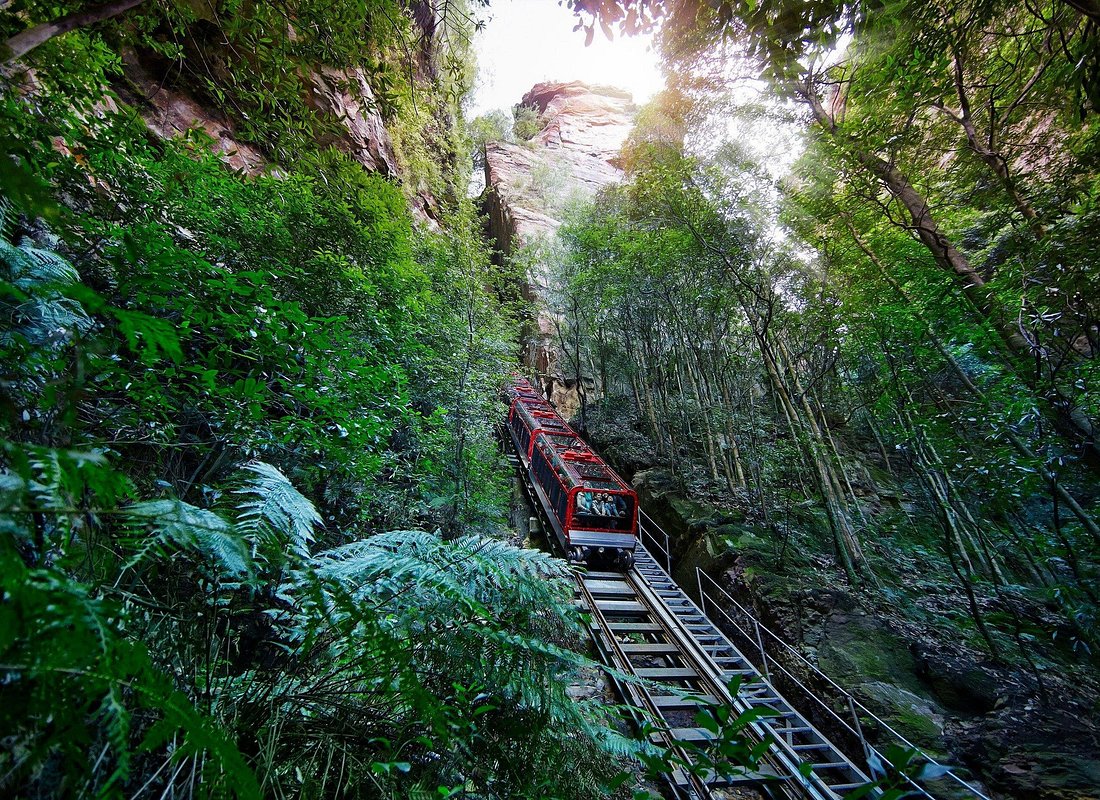
Blue Mountains Day Trip — Three Sisters & Scenic World
🏔️ Nature · Sydney Day Trip
The Blue Mountains — a UNESCO World Heritage plateau of deep canyon gorges, eucalyptus forest, and sandstone escarpments — are less than two hours from Sydney by train, and one of the finest national park day trips accessible from any major city in the world. The blue haze that gives the range its name comes from the eucalyptus oil released by the millions of gum trees below; it's real, it's beautiful, and it turns the whole landscape a distinctive dusty blue as the day heats up.
The Three Sisters — three sandstone columns rising from the valley floor at Echo Point in Katoomba — are the signature view and genuinely impressive at sunrise, when the early light hits the rock and the valley below fills with mist. The Scenic World complex at nearby Katoomba offers a series of experiences that feel simultaneously touristy and spectacular: the Scenic Railway (the world's steepest passenger railway, dropping 52 degrees into the valley), the Scenic Walkway through ancient rainforest at the canyon floor, and the Skyway cable car crossing 270 metres above the Jamison Valley.
Allow a full day. Take the train from Central Station to Katoomba (2 hours, around $8 AUD each way), walk the Three Sisters lookout at Echo Point, then spend 2–3 hours at Scenic World. Lunch in Katoomba's main street cafes, then take the canyon walk back up if you're feeling energetic, or return to Sydney via Leura for afternoon tea.
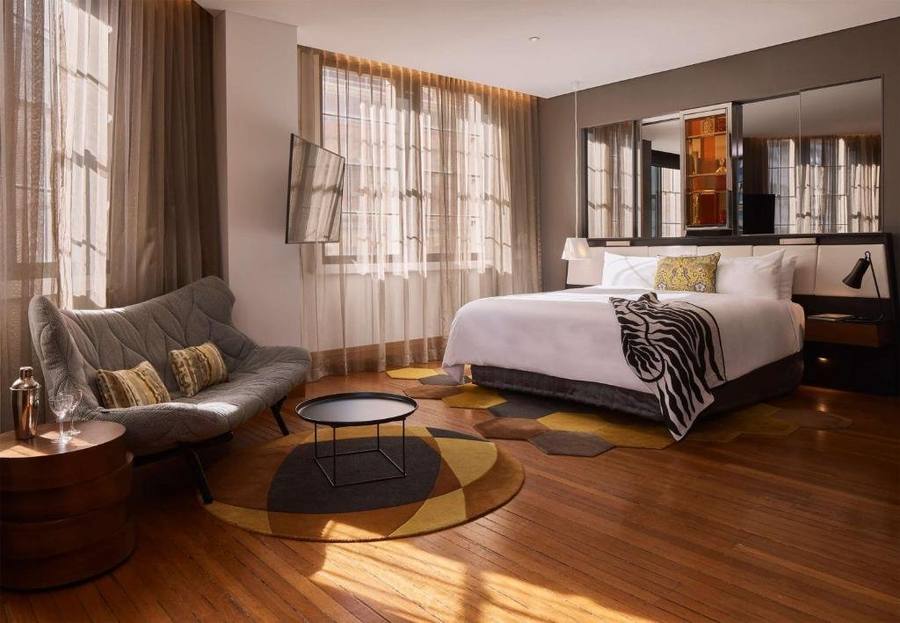
🏨 Where to Stay — Sydney
Cairns & the Great Barrier Reef
🎫 Cairns & Reef Experiences
Dive or Snorkel the Great Barrier Reef
🤿 World Wonder · Can't Miss
The Great Barrier Reef is the world's largest living structure — 2,300 kilometres of coral system stretching from Cape York to the Whitsundays, home to more than 1,500 species of fish, 4,000 types of mollusc, and 600 species of hard and soft coral. It is also, unambiguously, one of the greatest things on Earth. Whether you dive it or snorkel it, seeing the outer reef for the first time produces a reaction that surprises almost everyone: the scale, the colour, and the density of life are genuinely overwhelming.
A day trip from Cairns reaches the outer reef in about 90 minutes and gives you 3–4 hours in the water — enough to be extraordinary but not enough to go deep into the reef's best sites. For the real experience, a two-day liveaboard is the right choice: deeper sites, night dives, and the chance to see the reef shift from the daytime rush of colour to the night-time glow of bioluminescence. Certified divers can penetrate coral walls, drift through bommies covered in sea fans, and encounter reef sharks, barracuda, and (seasonally) manta rays in numbers that day boats don't access.
Non-divers can still have a genuinely extraordinary experience snorkelling the shallows of the outer reef. The visibility is often 20–30 metres and the coral formations immediately below the surface are spectacular. Most liveaboard operators offer introductory dive experiences for non-certified guests on the first day.
The Daintree Rainforest — Earth's Oldest Tropical Forest
🌿 Ancient Nature · Day Trip from Cairns
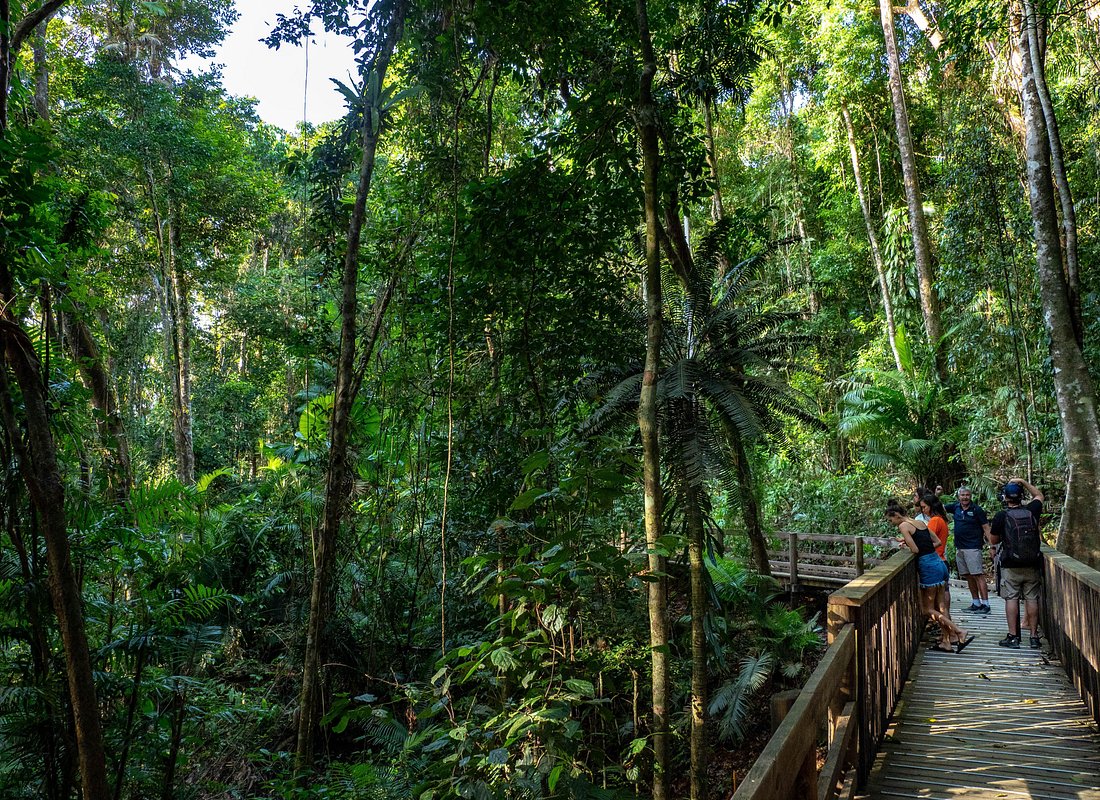
The Daintree Rainforest, an hour north of Cairns via Port Douglas, is the oldest continuously surviving tropical rainforest on Earth — 180 million years old, predating the Amazon by 100 million years, and containing plant species that have existed since before the dinosaurs. It is one of the few places in the world where two distinct World Heritage Areas — a coral reef and a tropical forest — meet at the same stretch of coastline. Standing on the beach at Cape Tribulation, with the reef to your right and 180-million-year-old rainforest pressing against the shore behind you, is genuinely humbling.
A Daintree day tour from Cairns typically includes the wildlife-rich Mossman Gorge (where the forest meets crystal-clear swimming holes), a crocodile-spotting cruise on the Daintree River (saltwater crocodiles up to five metres are common), and a guided walk through the rainforest with a knowledgeable guide who can point out the cassowary tracks, fan palms, and ancient cycad species that predate flowering plants. The biodiversity density in the Daintree is extraordinary — it contains a third of Australia's mammal species and 40% of its bird species in less than 0.1% of the country's land area.
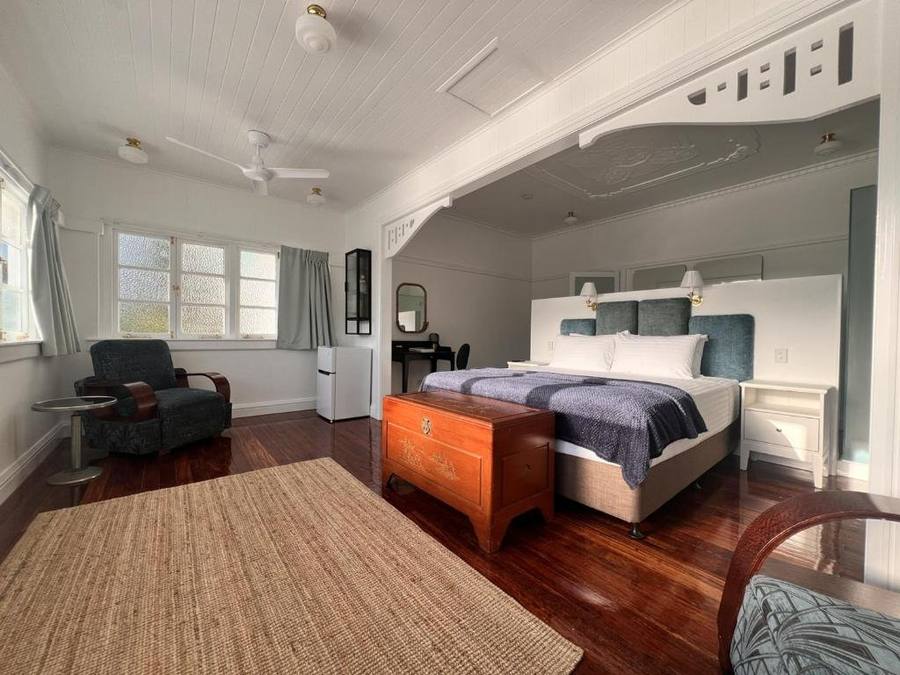
🏨 Where to Stay — Cairns
Uluru & the Red Centre
🎫 Outback Experiences
Uluru at Sunrise — The Base Walk
🌅 Sacred · World Wonder
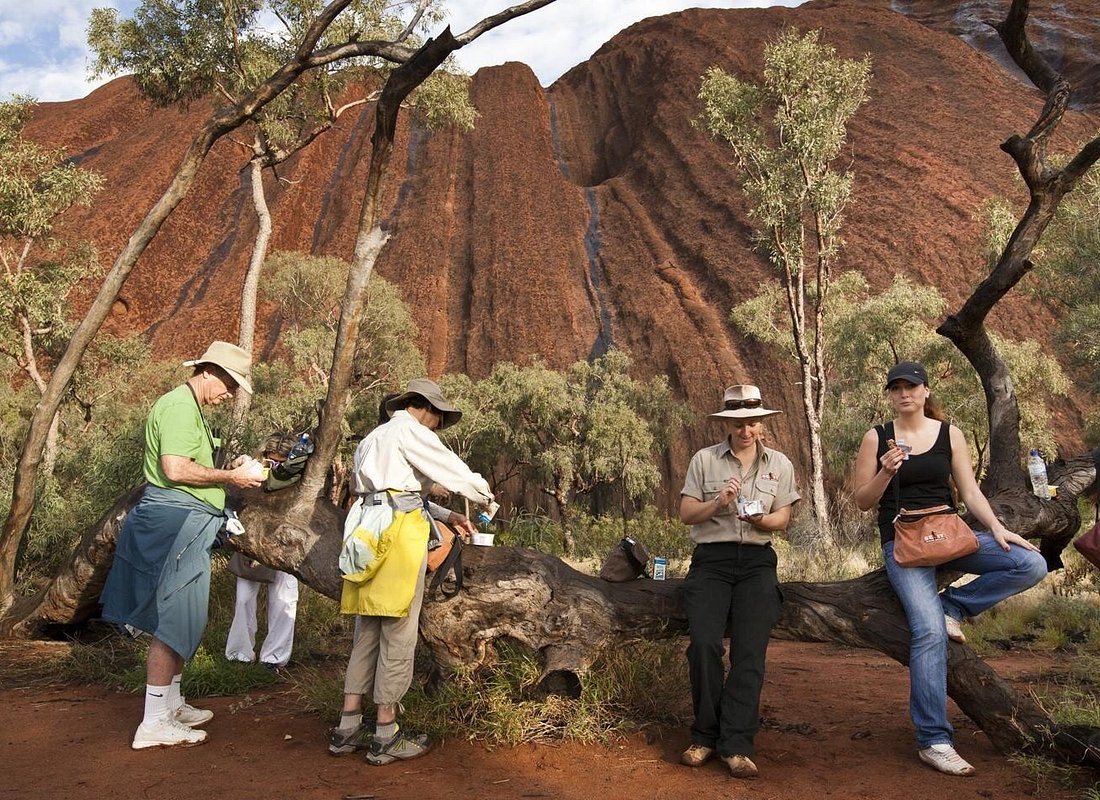
Uluru is one of the most extraordinary sights on Earth — a 348-metre sandstone monolith rising from a flat red desert plain in the Northern Territory, 600 million years old, and sacred to the Anangu people for at least 30,000 years. No photograph adequately captures the scale or the quality of its presence. In person, it stops you cold. The rock changes colour continuously as the light changes — deep purple before dawn, orange as the sun first hits the surface, blazing blood red as the morning brightens, then ochre and rust through the day.
The sunrise experience is the non-negotiable. Set an alarm for well before dawn, drive to the sunrise viewing area, and watch the rock go from silhouette to deep purple to the extraordinary red-orange it becomes as the first direct sunlight hits the western face. The transformation takes about 20 minutes and produces absolute silence among whoever is watching — it's genuinely transcendent in a way that very few natural phenomena are.
The 10.6km base walk around the perimeter takes about 3–4 hours and reveals Uluru's extraordinary surface texture — the caves, waterholes, and rock art panels that tell the stories of the Tjukurpa (the Anangu law and creation stories). Note that climbing Uluru has been permanently prohibited since October 2019, in respect for its deep spiritual significance. The base walk is how it's meant to be experienced.
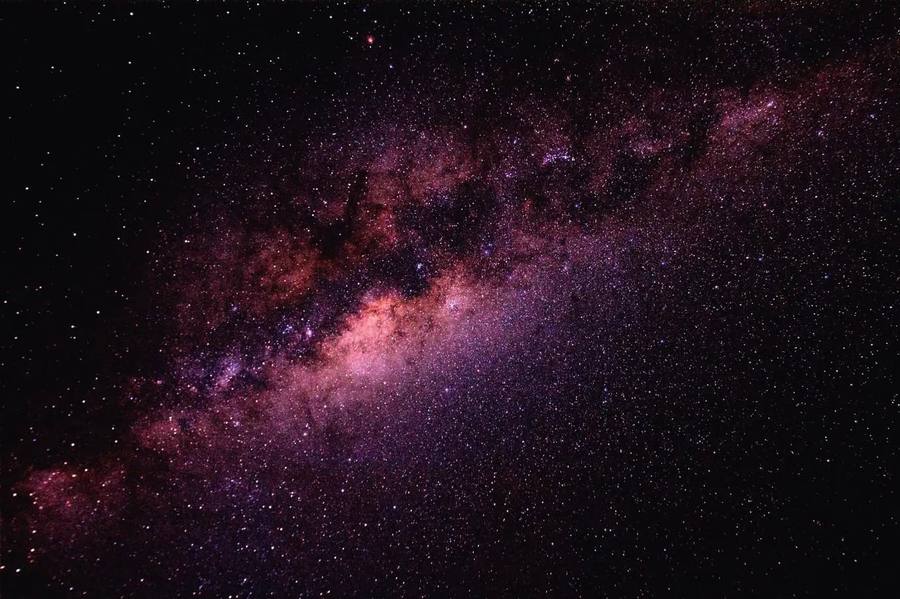
Stargazing in the Outback — Milky Way Under the Darkest Skies on Earth
⭐ Night Sky · Bucket List
The Australian outback around Uluru has some of the darkest skies on Earth — no light pollution for hundreds of kilometres in any direction, clear skies for most of the year, and an altitude and atmosphere that make the southern hemisphere's night sky visible in a way it is nowhere else. The Milky Way doesn't just appear as a faint smear here; it arcs in full colour across the sky, with dark nebulae and star-forming regions visible to the naked eye that most people have never seen.
Ayers Rock Resort's Outback Sky Journeys programme sets up telescopes in the desert each night — professional guides walk you through the southern sky, pointing out the Magellanic Clouds (our galaxy's nearest companions), the Southern Cross, and the Aboriginal astronomical traditions that have named and navigated by these stars for 65,000 years. The Anangu relationship to the night sky is as sophisticated and ancient as any astronomical tradition in the world — the guide's explanation of Emu in the Sky (a constellation defined by the dark space between stars rather than the stars themselves) is one of the most remarkable things you'll encounter in Australia.
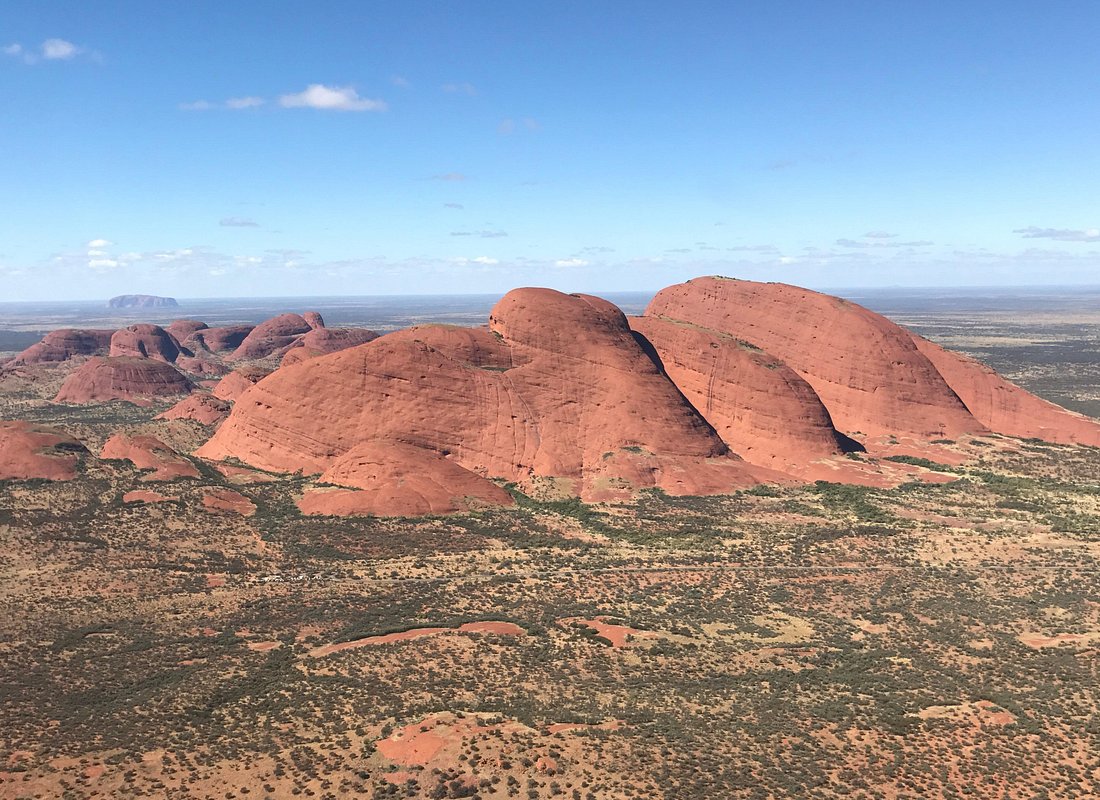
Kata Tjuṯa — Valley of the Winds Walk
🏜️ Sacred Landscape · Half Day
Kata Tjuṯa (the Olgas) — 36 enormous red domed rock formations rising from the desert plain 50km west of Uluru — is as dramatic as its more famous neighbour and far less visited. The Valley of the Winds walk, a 7.4km circuit through the gorges between the domes, is one of the finest walks in Australia: red rock walls narrowing around you, desert silence so complete it has a quality of its own, and views across the outback plain that extend to the horizon in every direction.
Kata Tjuṯa is geologically distinct from Uluru — the domes are made of conglomerate rock rather than sandstone, and their relationship to the Tjukurpa is different and largely restricted from public disclosure (parts of Kata Tjuṯa are the most sacred men's sites in the region). Visit at sunset — the rock turns a deep blood red that rivals Uluru, and the combination of warm light and the scale of the formations is extraordinary.
🏨 Where to Stay — Uluru
Melbourne
🎫 Melbourne Experiences
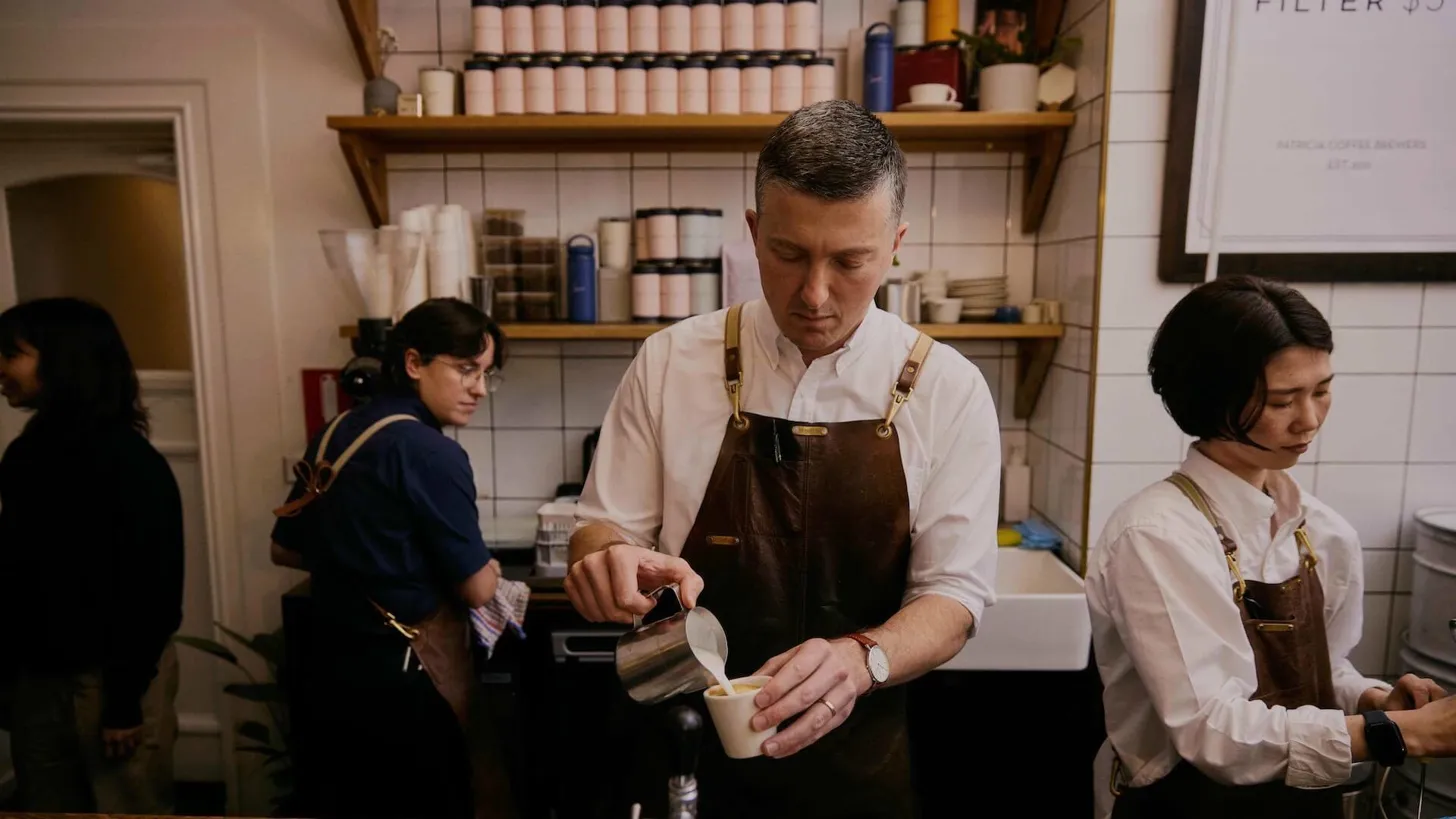
Melbourne's Coffee Scene — The World's Best Flat White
☕ Coffee · World's Best Coffee City
Melbourne's coffee culture is the result of a specific historical accident — the city's large Italian and Greek immigrant communities arriving in the 1950s brought espresso culture from Europe decades before the rest of the English-speaking world discovered it. The result, seven decades later, is a city that takes coffee more seriously than anywhere else on Earth. The standard is set not at flagship roasters or destination cafés, but in tiny standing-room counters hidden in CBD laneways where a barista has been pulling the same shot for fifteen years.
The best way to experience it is simply to walk. Degraves Street, Centre Place, Hardware Lane, and the back-streets of Fitzroy contain more world-class espresso counters per block than most cities contain in total. Don't book anything. Don't use a map. Walk until you smell coffee, go in, order a flat white, and repeat.
The Great Ocean Road & the 12 Apostles
🌊 Road Trip · World's Greatest Coastal Drive
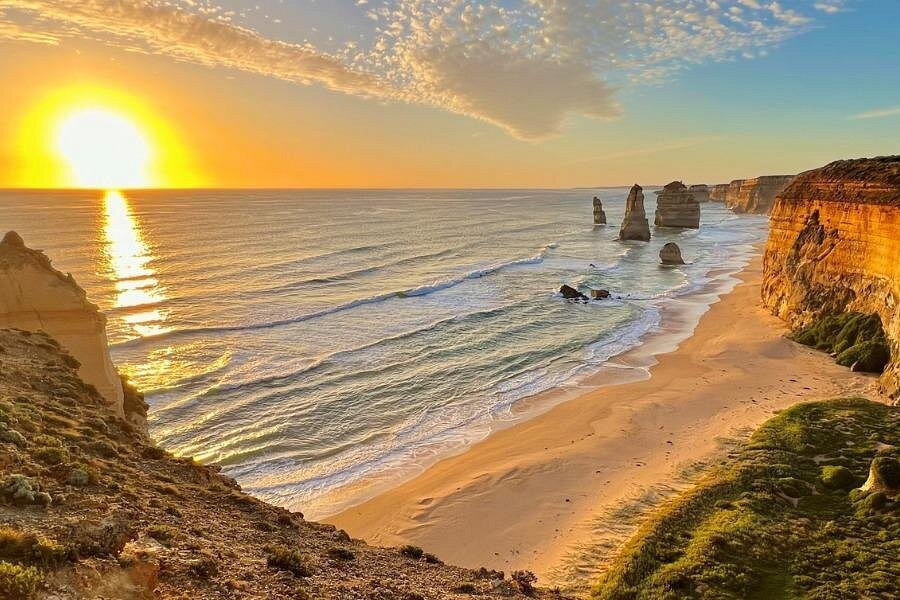
The Great Ocean Road, which winds along Victoria's surf coast for 243 kilometres from Torquay to Allansford, is one of the finest coastal drives in the world — limestone sea stacks, hidden beach coves, eucalyptus forest dropping to the shore, and the consistent roar of the Southern Ocean against a coastline that has been carved into extraordinary formations over millions of years. The 12 Apostles — eight remaining limestone stacks rising up to 45 metres from the sea — are the famous endpoint, but the drive is the experience.
Leave Melbourne early to reach the 12 Apostles by 8am, before the tour buses arrive in numbers. The light at that hour turns the limestone gold, the crowds are thin, and the Southern Ocean is at its most dramatic in the morning wind. Then drive the return leg slowly — stopping at Loch Ard Gorge (where the geometry of the rock and the colour of the water is extraordinary), Kennett River for koalas in the roadside gum trees (they are reliably there, asleep in the forks of branches, almost impossible to miss once you know what to look for), and Bells Beach, the most famous surf break in Australia.
Watch AFL at the MCG
🏈 Sport · Greatest Stadium on Earth
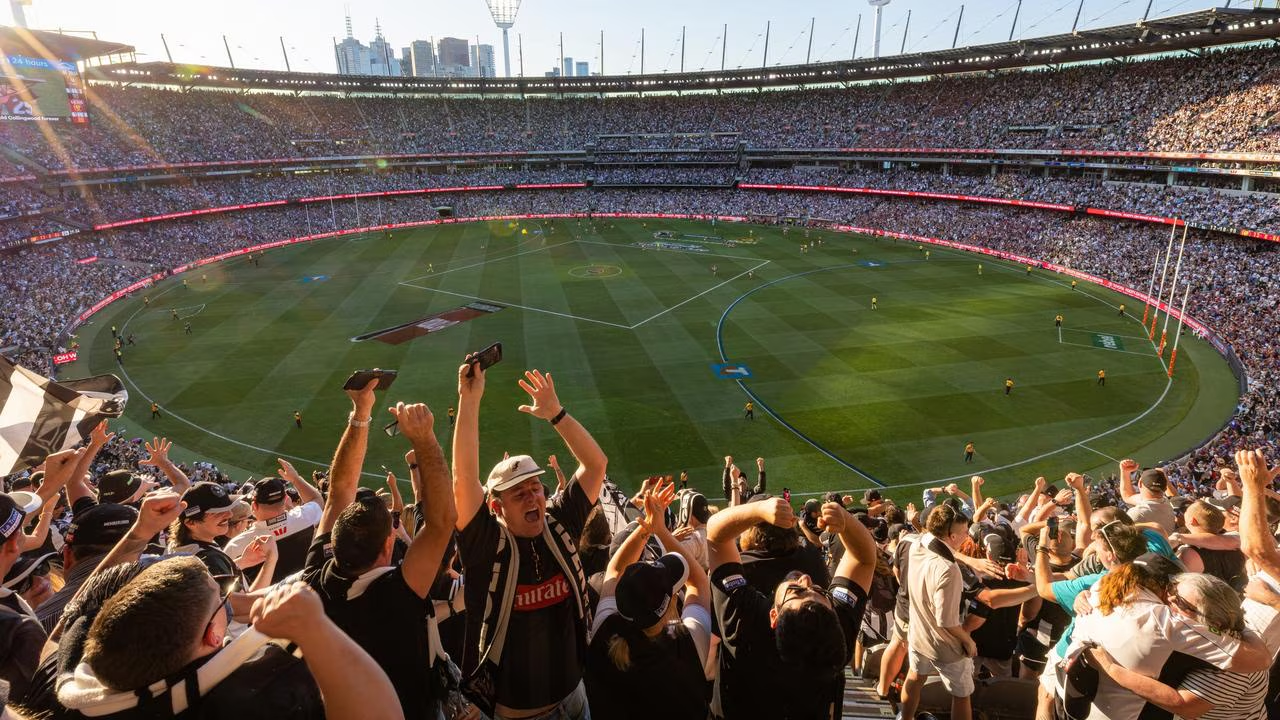
Australian Rules Football is unlike any sport on Earth — a full-contact game played on a cricket oval by 36 players with no substitutions, combining aerial marking of a rugby ball, long kicks covering 60 metres, and a scoring system that rewards both accuracy and near-misses. The Melbourne Cricket Ground (MCG), which holds 100,024 people and is the largest stadium in the Southern Hemisphere, fills almost entirely for big AFL matches. The atmosphere — Melbourne families, rival supporter sections, the smell of Four'N Twenty pies — is an experience completely specific to this city.
AFL season runs March through September, with finals in October. A Friday night game or Saturday afternoon match at the MCG gives you the full experience — the approach through Yarra Park, the roar when the first ball is bounced, and the complete absorption of a Melbourne crowd in their sport. Even if you understand nothing about the rules (the game is genuinely difficult to follow at first), the atmosphere is extraordinary from any section of the ground.
🏨 Where to Stay — Melbourne
Australia Trip FAQs
What is the best Australia itinerary for first-time visitors? +
The best first-time Australia itinerary covers four regions in 13 nights: Sydney (Days 1–3) for the Harbour Bridge, Bondi, and the Blue Mountains; Cairns (Days 4–7) for the Great Barrier Reef and Daintree Rainforest; Uluru (Days 8–10) for the sunrise base walk and outback stargazing; and Melbourne (Days 11–13) for world-class coffee, laneways, and the Great Ocean Road.
How many days do you need in Australia? +
A minimum of 13–14 days is recommended to cover Australia's main highlights across Sydney, the Great Barrier Reef, Uluru, and Melbourne. Australia is roughly the size of the continental USA — Sydney to Cairns is the same distance as London to Cairo — so flying between regions is essential. Three nights each in Sydney, Cairns, and Melbourne, plus three nights at Uluru, is the minimum to do each stop justice.
What is the best time to visit Australia? +
April to October is the best window for the classic itinerary. Uluru in summer (December–February) can exceed 45°C. The Great Barrier Reef is diveable year-round but visibility peaks April–October. Sydney and Melbourne are pleasant most of the year but excellent in spring (September–November) and autumn (March–May).
Can you still climb Uluru in 2026? +
No — climbing Uluru has been permanently prohibited since October 2019, in respect of its deep spiritual significance to the Anangu people. The 10.6km base walk around the perimeter is the recommended way to experience it, particularly at sunrise when the rock shifts from deep purple to blood red as the light changes.
Is the Great Barrier Reef worth visiting in 2026? +
Yes — the Great Barrier Reef remains one of the world's greatest natural wonders. Even non-divers can snorkel the outer reef and encounter extraordinary marine life. A liveaboard dive trip from Cairns's Reef Fleet Terminal offers the most spectacular experience, with coral walls, manta rays, reef sharks, and visibility often exceeding 30 metres.
Is Melbourne or Sydney better to visit? +
They're genuinely different cities. Sydney has the harbour — one of the world's great natural settings — plus Bondi Beach and the Blue Mountains. Melbourne has the better food and coffee culture, hidden laneways, AFL at the MCG, and the Great Ocean Road. Most itineraries start in Sydney and end in Melbourne. If you can do both, do both.
Visa: Most nationalities require an eVisitor (subclass 651) or ETA — both are applied for online before travel. US, UK, EU, and Canadian passport holders are eligible for the free eVisitor allowing stays up to 90 days. Apply at immi.homeaffairs.gov.au.
Getting around: Domestic flights are the only practical way to cover Australia's distances — book 4–6 weeks ahead for best fares on Qantas, Jetstar, or Virgin Australia. Car hire is essential in the Red Centre. Sydney and Melbourne have excellent public transport for city use.
Best time: April to October is the best window across all stops on this itinerary. Summer (December–February) is scorching in the outback (45°C+) and monsoon season in far north Queensland. The Reef is diveable year-round but clearest April–October.
Money: Australia uses the Australian Dollar (AUD). Everything is more expensive than you expect — budget around $100–200 AUD per person per day excluding accommodation. Tipping is not customary but increasingly appreciated in cities.
Wildlife: Australia has more venomous creatures than anywhere on Earth. In the outback, watch your step around rocks and logs. In the sea, heed local advice on box jellyfish (October–April, tropical waters). Kangaroos are a serious driving hazard at dawn and dusk — don't drive rural roads at those hours.


