🇹🇭 Thailand · Complete Activity Guide
🇹🇭
Things to Do in Thailand
Temples, jungle, the world's best street food, and experiences you genuinely can't get anywhere else
Thailand is one of the most rewarding countries on Earth for travellers who want genuinely unique experiences — not just beautiful beaches, but the coolest things to do in Asia that simply don't exist anywhere else. From the world's largest water fight at Songkran to releasing ten thousand paper lanterns into the night sky at Loy Krathong, Thailand's best experiences are unlike anything you'll find on any other bucket list.
This guide covers the most unique things to do in Thailand in 2026 — the activities that make travellers say they'd come back just to do it again. Whether you're looking for the best things to do in Bangkok, the top experiences in Chiang Mai, or the most extraordinary adventures across the country, these are the ones that make Thailand unforgettable.
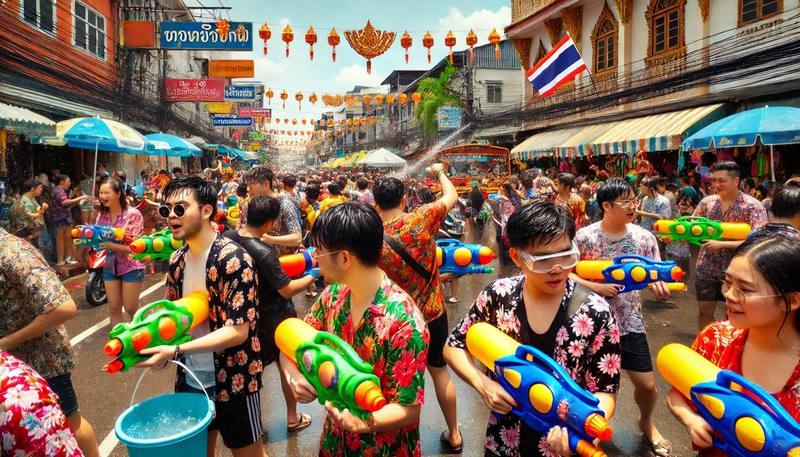
Songkran is Thailand's traditional New Year — and it is also the world's largest, most joyful, most completely uninhibited water fight. For three days (April 13-15, extending to 5-7 days in Chiang Mai), the entire country essentially stops and throws water at each other. Buckets, hoses, water guns, garden hoses attached to pickup trucks — everything is in play. Nobody is exempt. Monks watch from doorways. Elderly grandmothers ambush tourists with ice-cold buckets. Children stationed at street corners score direct hits on motorcycles passing at 30km/h. It is magnificent.
Chiang Mai's moat road around the old city becomes the focal point — a continuous 10km circuit where locals and tourists mix in equal measure and the water never stops. The spirit is genuinely inclusive and good-natured; Songkran has none of the edge of nightclub festivals. Families participate, strangers share supplies, and the Buddhist tradition of water blessings underpins the whole thing with a sense of renewal rather than pure chaos.
Protect your electronics — waterproof cases are essential and available everywhere for a few dollars. Wear clothes you don't mind ruining. Sunscreen constantly — you're outside in 35°C heat for 8 hours and getting drenched. Book accommodation in Chiang Mai months in advance; the city fills completely for Songkran.
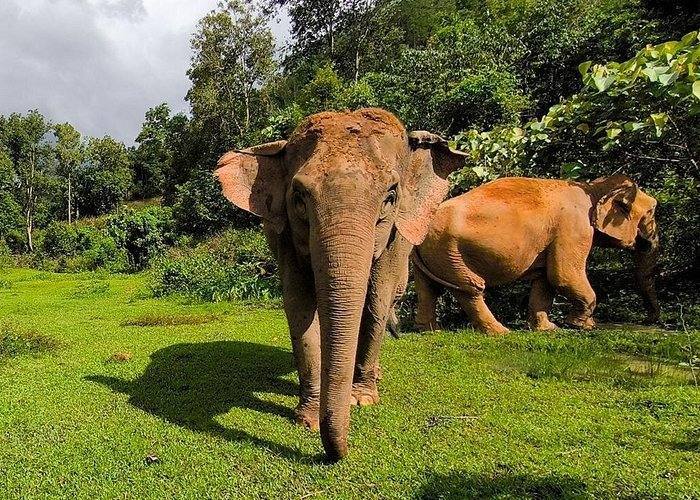
Thailand has a long and complicated history with elephants — the animals are culturally central (the white elephant is a national symbol) but the elephant tourism industry has caused enormous suffering through riding, performance training, and chains. The ethical elephant sanctuary movement that emerged in Chiang Mai over the past two decades represents a genuine alternative: rescued elephants living in forest environments, choosing their own behaviour, fed and cared for but not controlled.
A half-day at a genuine ethical sanctuary involves walking with the elephants through forest, feeding them fruit, watching them interact with each other and with their mahouts (caretakers), and often bathing them in a river — mud optional but recommended. The elephants are habituated to human presence but not trained to perform. What makes the experience extraordinary is watching the animals simply be themselves — the social dynamics of a herd, the way they communicate, the sheer size and gentleness of them at close quarters.
The key distinction: no riding. Any sanctuary that offers elephant rides is not operating ethically — the training process for riding elephants involves a practice called phajaan that is extremely cruel. Choose a sanctuary with a strict no-riding, no-hook, no-chain policy. Elephant Nature Park (founded by Lek Chailert) is the most famous; several others operate to comparable standards in the Chiang Mai area.
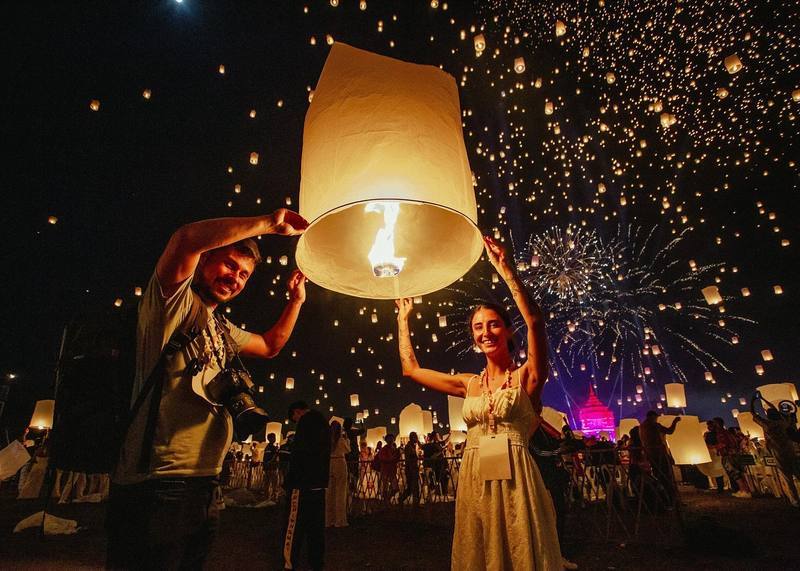
On the full moon night of the 12th lunar month — usually November — Chiang Mai releases ten thousand paper lanterns into the sky simultaneously. The Yi Peng festival (the northern Thai version of Loy Krathong) fills the entire sky above the old city with slowly rising points of light that drift south with the prevailing wind, fading into the distance until the sky looks like an inverted galaxy. It is one of the most beautiful things a human can witness.
The lanterns are made of tissue paper over a bamboo frame with a wax fuel disc at the base — lit from below, they fill with hot air and rise in a few seconds. Releasing one is a prayer, a wish, or simply a letting-go — the tradition involves releasing the lantern along with the worries and bad luck of the past year. The simultaneous release at temples and organised events turns this private ritual into a collective act of extraordinary beauty.
Alongside the sky lanterns, the festival involves floating krathong — small lotus-shaped vessels made from banana leaves, flowers, and candles — on the Ping River and in the moat. The combination of fire on water below and light rising above in the same moment is unlike anything else in travel.
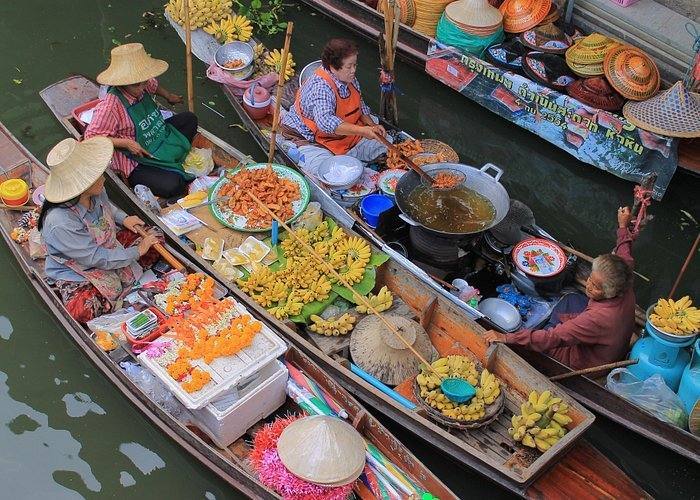
The Damnoen Saduak floating market, 100km southwest of Bangkok, is one of Thailand's most iconic images — narrow wooden canoes piled with tropical fruit, vegetables, and cooked food, paddled by vendors in wide-brimmed hats through a network of canals lined with stilt houses. The market has operated every morning since the 19th century and at its best — arriving before 8am, in the first hour before the tour groups arrive — it is genuinely extraordinary.
Go as early as possible. The market is busiest between 8am and 10am but the most atmospheric hour is 6-7am when vendors are setting up, the mist is still on the water, and the light is perfect. Hire a long-tail boat from the main dock to navigate the network of canals — the boat gives you access to the deeper sections where the real trading happens rather than the tourist-facing front canal. Noodle soup eaten directly from the boat is the correct breakfast.
The Amphawa Floating Market is a less-visited alternative 15km away that operates on weekend evenings and attracts more local Thai visitors than international tourists. For a more authentic and less crowded experience, Amphawa is worth considering alongside or instead of Damnoen Saduak.
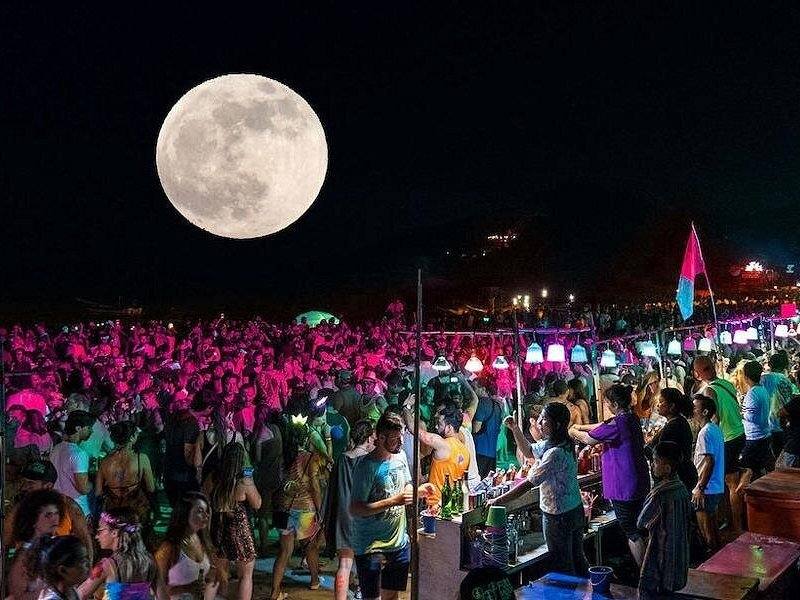
The Full Moon Party at Haad Rin Beach on Koh Phangan has been running every month since the 1980s and remains one of the most famous parties in the world — 20,000-30,000 people on a beach in the Gulf of Thailand, multiple DJ stages, fire shows, neon paint, and a party that starts at sunset and ends at sunrise. At its peak in the early hours, it is a genuinely extraordinary spectacle — the whole beach lit up, the sea behind it, everyone moving together under a full moon.
The party starts genuinely around 9pm and peaks between midnight and 3am. The fire shows — performers spinning fire staffs, fire jump ropes, flaming hoops — run throughout the night on the beach. Multiple bars and stages play everything from reggae to techno to Thai pop. The neon body paint (applied at booths all around the beach for 100 baht) is compulsory in spirit if not in law.
Practical realities: wear shoes you don't mind destroying (the beach has broken glass), keep your valuables somewhere very secure, and book accommodation on Koh Phangan months ahead for full moon weekends. The Half Moon and Black Moon parties at other venues on the island offer alternatives on the off-weeks if the main event dates don't work.
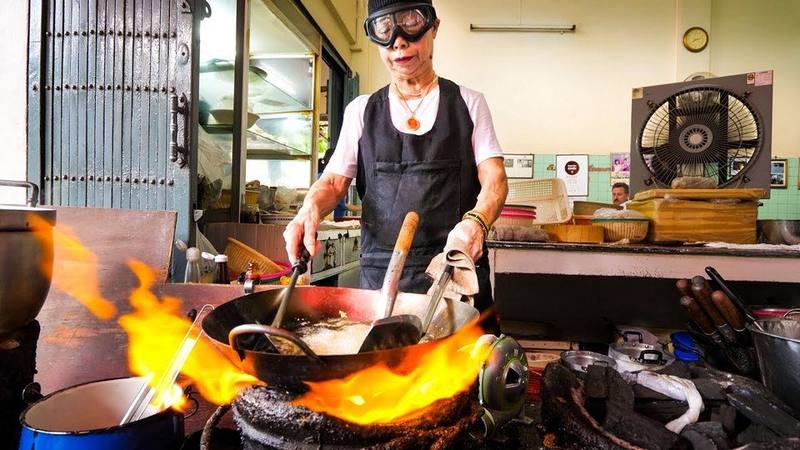
Bangkok has more Michelin-starred street food stalls than any city on Earth. The Michelin Guide Thailand, launched in 2017, awarded Bib Gourmand and full stars to restaurants and stalls that Western food culture had overlooked entirely — including Jay Fai, a single cook in a small shophouse on Mahachai Road who has been awarded a full Michelin star for her crab omelette and priced accordingly, and a pad thai stall that charges 45 baht (about $1.25) for a dish that would cost $18 in London.
A guided night food tour of Bangkok is one of the best value experiences in travel — for $30-40 you eat at 6-8 different stalls across Chinatown, Silom, and the old neighbourhoods, guided by someone who knows which cart to queue at, when the best produce arrives, and what to order. Bangkok's food culture is complex and regional — the Isaan (northeastern) stalls serve completely different food from the central Thai stalls, and Yaowarat (Chinatown) has its own distinct Chinese-Thai fusion that's different again.
Eating well independently in Bangkok is also completely achievable — any packed street cart at 7pm is a reliable indicator of quality. The best single food experience in the city is arguing about which vendor has the best khao man gai (poached chicken rice) in a queue at 9am on Petchaburi Road.

The Similan Islands are among the top ten dive destinations on Earth — nine uninhabited granite islands in the Andaman Sea, 80km off the coast of Khao Lak, accessible only by liveaboard or day trip. The underwater topography is dramatic: enormous granite boulders forming swim-throughs, tunnels, and overhangs covered in soft coral, with visibility commonly reaching 30 metres and water temperatures around 28°C.
The marine life is extraordinary by any standard — whale sharks are regularly encountered between February and April, manta rays cruise the cleaning stations at Koh Bon and Koh Tachai (north of the Similans), leopard sharks rest on sandy bottoms, and enormous schools of barracuda, tuna, and trevally move through the blue water. The sheer density of fish life at the signature Similan sites (Elephant Head Rock, Beacon Point, Christmas Point) is like swimming inside an aquarium.
A 3-4 day liveaboard from Khao Lak is the best way to experience the Similans — you dive 4-5 times per day including night dives, maximising time in the water and accessing sites that day-trip boats can't reach. The park is closed from May 15 to October 31 for the monsoon season; the best conditions are November through April.

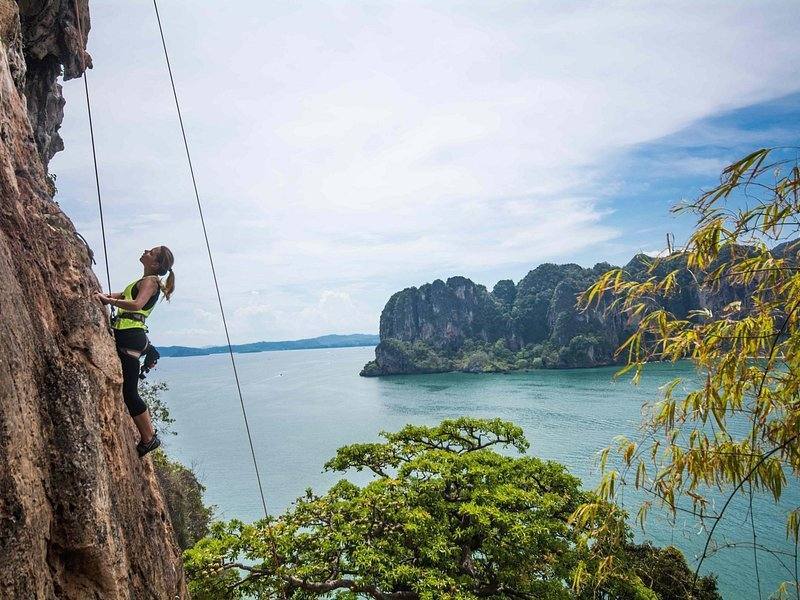
Railay Beach in Krabi province is accessible only by long-tail boat — it sits on a peninsula cut off from the mainland by vertical limestone karst cliffs that also make it one of the finest sport climbing destinations in the world. The limestone walls rise directly from the Andaman Sea, providing routes of all grades with the ocean below and views across the bay to the islands. Over 700 climbing routes have been established, ranging from beginner-friendly 5a slabs to expert 8c overhangs.
The most famous area is the main Railay East and West beach cliffs, where routes are well-bolted and guides are available for complete beginners. The deep water soloing (DWS) scene — climbing above the sea and falling directly into it — is spectacular and uniquely possible here due to the combination of deep water and climbable overhangs. King Climbers and Hot Rock are the most reputable local guide operations.
Half-day beginner courses cost around $40-60 and include all equipment and instruction — most people with no climbing experience can get 10-15 metres up a route by the end of the day. For experienced climbers, Railay's multi-pitch routes and the outlying islands (accessible by boat) provide weeks of interesting climbing.
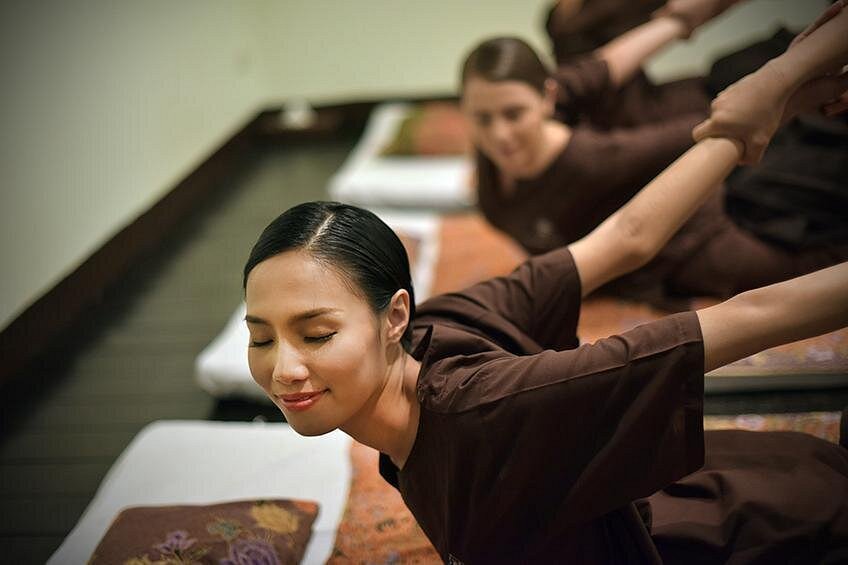
Traditional Thai massage is not a relaxation massage. It is an ancient therapeutic practice rooted in Ayurvedic medicine and Buddhist healing traditions — a systematic two-hour process of compression, stretching, and manipulation that works through the body's sen lines (energy pathways) using the therapist's hands, forearms, elbows, knees, and feet. You are not lying still on a table being gently kneaded. You are being stretched into positions you thought your body couldn't achieve and compressed along muscle lines that you didn't know were tense.
The result — if you find a genuinely skilled therapist — is a body that feels entirely rebuilt. Not just relaxed: functionally different, with greater range of motion and a specific lightness that Western massage rarely produces. The experience requires surrendering control to someone who clearly has a plan and trusting that the occasionally uncomfortable compression is purposeful, which it is.
Quality varies enormously. In tourist areas, many massage shops offer Thai massage at 200-300 baht ($6-9) per hour — these are fine for basic relaxation. For genuine therapeutic traditional massage, seek out therapists trained at Wat Pho in Bangkok (the original school of Thai massage) or the Old Medicine Hospital in Chiang Mai. Expect to pay 400-600 baht for a 2-hour session from a trained practitioner.
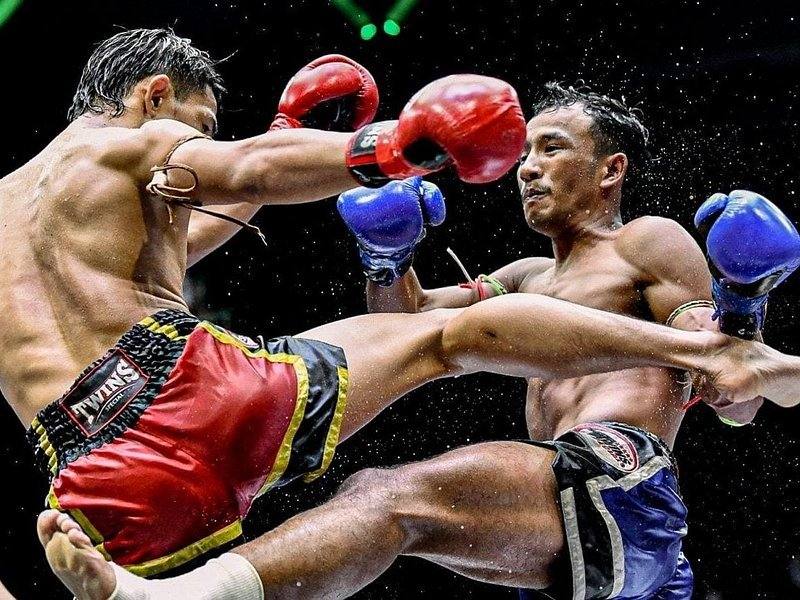
Muay Thai — the art of eight limbs — is Thailand's national sport and one of the most effective striking martial arts in the world. Fighters use fists, elbows, knees, and kicks in devastating combination, and the level of professional Muay Thai at Bangkok's major stadiums is genuinely extraordinary to watch in person. Lumpinee Stadium and Rajadamnern Stadium both hold regular fight nights with bouts ranging from junior fighters on the undercard to championship-level professionals in the main events.
The atmosphere at a live fight bears no resemblance to watching it on a screen. The sarama music (traditional Thai fight music played throughout — a sinuous, hypnotic melody on oboe and drums) creates a ritualistic atmosphere. Cornermen shout instructions through the ropes. The crowd bets actively and vocally. When two top fighters meet in the third round and the technical exchanges begin, the crowd responds to every blocked kick and every landed elbow with a collective intake of breath. It is one of the great sports atmospheres in the world.
Taking a Muay Thai lesson is a completely different experience but equally worthwhile — Bangkok and Chiang Mai both have serious training camps that offer single sessions for tourists alongside their resident fighters. A morning training session (pad work, bag work, clinch drills) gives a genuine sense of what the sport demands. You'll discover muscles you didn't know existed.