🇱🇰 Sri Lanka · Complete Activity Guide
🇱🇰
Things to Do in Sri Lanka
The world's most scenic train journey, wild elephants in open grassland, and 3,000 years of Ayurvedic healing
Sri Lanka is one of the most rewarding and underrated destinations in Asia — a compact island that packs an extraordinary range of unique experiences into a single trip. The best things to do in Sri Lanka range from riding what many travellers consider the world's most scenic train journey to watching herds of wild elephants cross open grassland at Udawalawe, or trekking through UNESCO cloud forest in the Knuckles Mountain Range.
This guide covers the coolest and most unique things to do in Sri Lanka in 2026 — from the iconic Kandy to Ella train ride to Ayurvedic treatments, kitesurfing at Kalpitiya, and tea tasting in the hill country. Sri Lanka's complete bucket list.
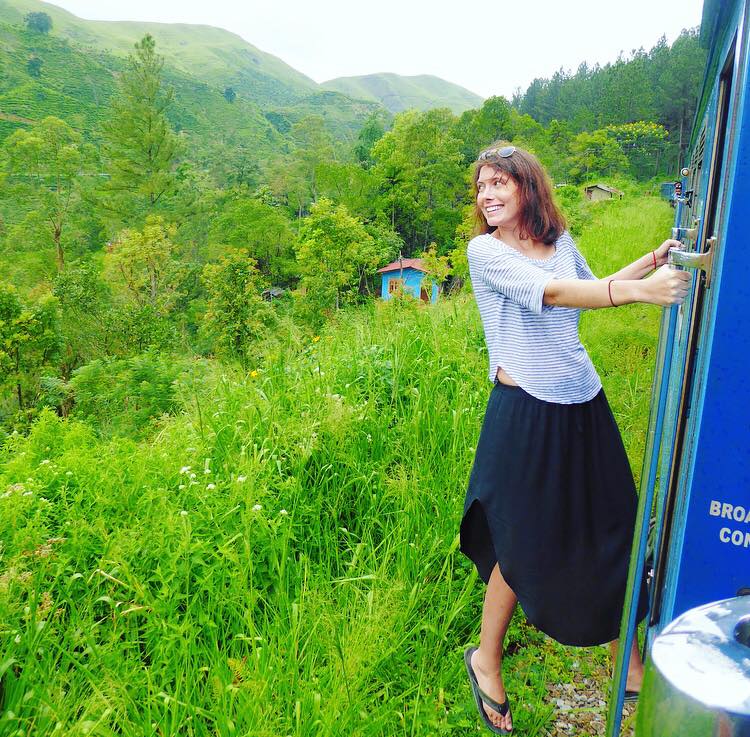
The Kandy to Ella train journey is widely considered one of the most beautiful train rides on Earth — six hours winding through the central highlands of Sri Lanka, through emerald tea plantations that cascade down impossibly steep hillsides, past waterfalls, across nine-arch stone viaducts, and through cloud forest that clings to the mountain ridges above 1,800 metres. The light in the late afternoon, when the sun slants through the tea bushes and the mist hangs in the valleys, is extraordinary.
The full experience requires: a seat in first class (the observation saloon at the front of the train has panoramic windows) or second class with the door open, which gives unobstructed views and is the way most photographers ride. The train passes through Nanuoya (for Nuwara Eliya, the colonial-era hill station), Haputale, and the famous Nine Arch Bridge near Ella — visible from the carriage windows as the train curves across it. Locals hang out of the open doors for selfies at the bridge; joining them, once you've assessed the safety, is the correct response.
Book first class seats weeks in advance through Sri Lanka Railways online or through a local agent. Second class is bookable at the station. The journey from Kandy departs around 8:45am and arrives in Ella around 3:30-4pm — do it in this direction rather than reverse to have afternoon light on the most scenic sections.
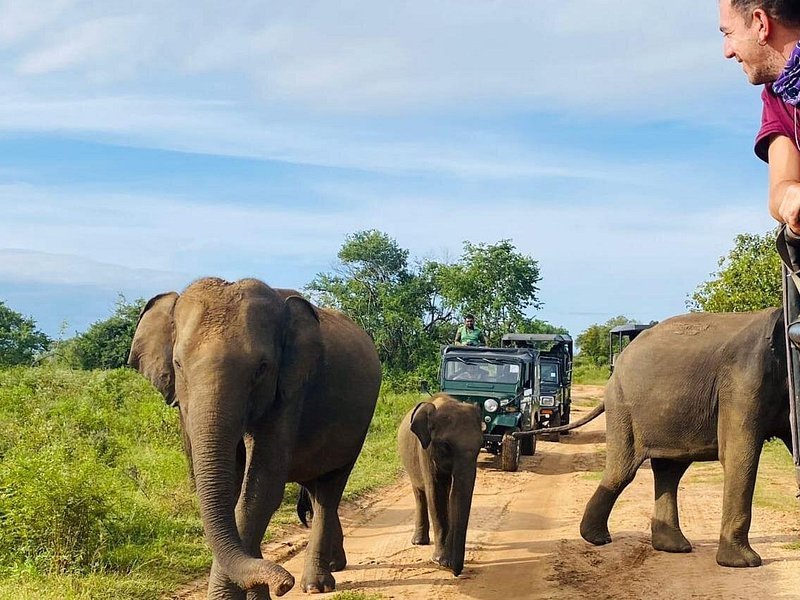
Udawalawe National Park is one of the best places on Earth to see wild elephants in large numbers — not the solitary individuals or small groups typical of forest parks, but herds of 50 to 100 animals moving across open grassland in the golden light of late afternoon. The park's savanna-style habitat on Sri Lanka's southern plains provides long sightlines and exceptional encounter quality: elephants at close range, clearly visible, moving naturally, with no trees to hide behind.
The park also reliably delivers leopards (harder to spot but present), large groups of water buffalo wallowing in the reservoir, mugger crocodiles on the banks, and an extraordinary variety of birds — over 200 species including painted storks, grey herons, and the endemic Sri Lanka junglefowl. The combination of open landscape, accessible wildlife, and the relatively small size of the park (308 square kilometres) makes it one of the most satisfying safari experiences in Asia.
Udawalawe is a 4-hour drive from Colombo or 2.5 hours from Ella — easily combined with the Kandy-Ella train journey. Morning drives (6-9am) and evening drives (3-6pm) give the best elephant activity. The Elephant Transit Home at the edge of the park rehabilitates orphaned elephants and runs feeding sessions open to visitors at set times.
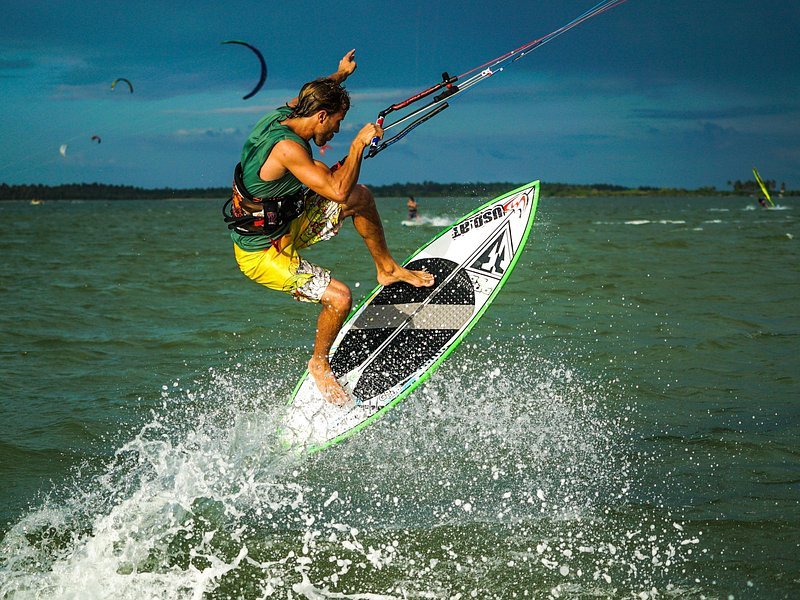
Kalpitiya on Sri Lanka's northwestern coast has emerged as one of Asia's fastest-growing kitesurfing destinations — a protected lagoon with flat, shallow water, consistent trade winds of 15-25 knots during the main season (May to October), and a growing infrastructure of IKO-certified schools that has made it one of the best places in the world to learn. The lagoon's flat water is ideal for beginners working on water starts and transitions; the ocean-facing side offers wave riding for advanced riders.
The setting is extraordinary — the lagoon stretches for kilometres with the Indian Ocean visible on the other side of the sandbar, dolphins regularly swim alongside kiters, and the sunsets over the water are exceptional. A beginner course typically runs 3 days (9-12 hours of instruction) and takes most students to independent riding on flat water. Advanced riders come specifically for the lagoon's freestyle conditions.
Kalpitiya is a 3-hour drive north of Colombo. Accommodation ranges from basic guesthouses to comfortable kite camps with board and accommodation packages. The town itself is a quiet Muslim fishing community — respectful dress outside the kite beach is appropriate.
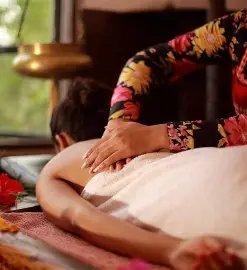
Ayurveda — the world's oldest documented medical system, originating in India and Sri Lanka over 3,000 years ago — is practiced in Sri Lanka at a level of seriousness and authenticity that is difficult to find in the increasingly commercialised wellness tourism industry. A proper Ayurvedic treatment at a traditional clinic involves an initial consultation with a physician (vaidya) who assesses your dosha (constitutional type) and prescribes a personalised treatment protocol — not a menu of spa services.
The signature treatment is abhyanga — a 60-90 minute full-body synchronised oil massage using warm herbalised sesame oil, performed by two therapists working in perfect coordination. This is followed by shirodhara — a continuous stream of warm oil poured onto the forehead from a hanging vessel for 20-30 minutes, producing a state of profound relaxation that most recipients describe as unlike anything else they have experienced. The combination of abhyanga and shirodhara in a single session is genuinely transformative.
The best Ayurvedic experiences in Sri Lanka are at the dedicated Ayurveda resorts in Beruwala and Induruwa on the southwest coast, and at traditional clinics in Colombo and Kandy. A day programme (treatment + physician consultation + Ayurvedic meals) at a quality resort costs around $80-150 USD and is extraordinary value compared to equivalent wellness experiences elsewhere.
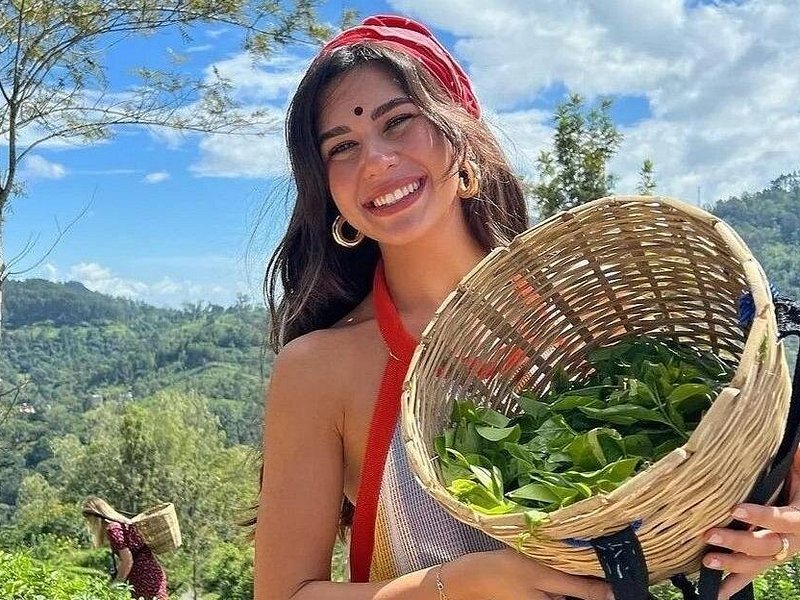
Sri Lanka (Ceylon) produces some of the world's finest tea — the high-altitude estates of the central hill country around Nuwara Eliya, Haputale, and Ella grow single-estate teas that bear little resemblance to the supermarket blends sold under the Ceylon name internationally. A morning at a working tea estate — walking the emerald terraces where pluckers in bright saris move through the rows at dawn, watching the withering, rolling, oxidising, and firing process in the factory, and sitting with a tea master for a tasting of six grades of single-estate leaf — is one of the most sensory and genuinely educational experiences Sri Lanka offers.
The difference between grades of Ceylon tea is dramatic when tasted side by side — from the astringent, copper-coloured broken orange pekoe to the delicate, golden flowery orange pekoe first flush, each with a completely distinct character shaped by altitude, rainfall, and processing. Understanding what you're tasting makes every cup of tea for the rest of your life more interesting.
The Pedro Estate near Nuwara Eliya and the Mackwoods Labookellie Estate (visible from the Kandy-Nuwara Eliya road) are the most visitor-friendly. The best time to visit is during the high-grown season (January-March for the Nuwara Eliya district) when the finest first-flush teas are being processed.