🇯🇵 Japan · Complete Activity Guide
🇯🇵
Things to Do in Japan
Ancient ritual, powder mountains, sacred summits, and the world's most extraordinary food city
Japan consistently tops lists of the world's best travel destinations — and for good reason. The coolest things to do in Japan are genuinely unlike anything available anywhere else: racing a go-kart through Tokyo dressed as Mario, watching the sunrise from the summit of Mt. Fuji, or eating the world's best sushi at a counter with eight seats at 5:30 in the morning. These aren't tourist activities — they're the unique Japan experiences that people come back for.
This guide covers the best things to do in Japan in 2026 — from the most unique experiences in Tokyo to the top activities in Kyoto, Hakone, and Hokkaido. Whether it's your first trip or your fifth, these are the bucket list moments that define Japan travel.
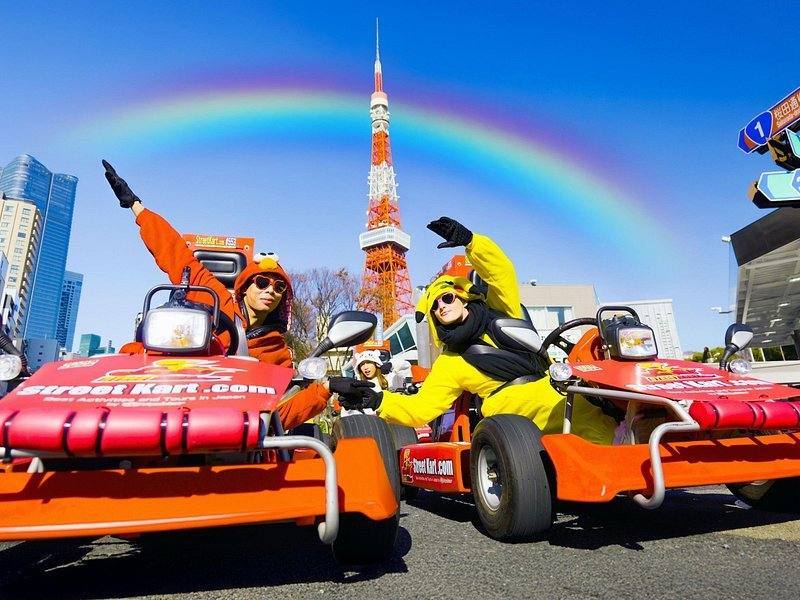
You dress as your favourite Nintendo character — Mario, Luigi, Princess Peach, Bowser — and then you drive a real go-kart through the actual streets of Tokyo. Not a track. Not a closed circuit. The actual streets of Shibuya and Akihabara, with traffic lights and pedestrian crossings and Tokyo's 14 million residents watching you drive past in a toad costume at 40km/h. It's completely surreal and completely Japanese and there is genuinely nothing else like it anywhere on Earth.
Tours operate from multiple starting points around central Tokyo, with the most popular routes passing through Akihabara (Tokyo's electronics and anime district), Odaiba (the futuristic waterfront island), and Shibuya. Costumes are provided. The go-karts are real vehicles — you need a valid international driving licence. A lead guide drives at the front of the convoy and support staff follow behind. The whole experience takes 1.5-2 hours and covers 10-20km of central Tokyo.
An international driving licence is mandatory — bring your home country licence and the IDP translation. Most operators require booking at least a few days in advance, and popular costume choices (Mario, especially) get claimed quickly. Go on a weekend evening when Tokyo's streets are busy enough to feel electric but not so congested that you're stopping constantly.

Japan's most iconic image — the perfect white cone rising above the clouds — is also one of its most achievable high-altitude hikes. Mount Fuji stands at 3,776 metres and is climbed by around 200,000 people each year during the official season (July to mid-September). The standard overnight route from the Yoshida 5th Station takes 5-7 hours to ascend and 3-4 hours to descend, with mountain huts open for rest, food, and basic accommodation at intervals along the way.
The reason most people climb overnight is Goraiko — the Japanese word for the sunrise seen from the summit. Standing above the clouds at 3,776m as the first light turns the Pacific coast amber below you is one of the most transcendent moments Japan offers. The summit crater walk around the rim takes about 90 minutes and passes the actual highest point, Kengamine.
The mountain can be brutal in bad weather — temperatures at the summit drop to near-freezing even in summer and wind speeds can make the upper sections treacherous. Proper hiking gear, layers, and rain protection are essential. The Yoshida Trail is the most crowded but best-supported route with the most huts. Go mid-week if possible — weekends at the summit feel like a shopping centre car park.


Hokkaido's snow is famous among serious skiers for a simple reason: it is the lightest, driest, deepest powder in the world. The island sits at the intersection of cold Siberian air masses and the Sea of Japan, which produces a specific atmospheric chemistry that results in snow with a moisture content of around 2-3% — powder so light that skiing through it produces an audible whoosh rather than the hiss of wetter European snow. Niseko, the main resort area, averages 15 metres of snowfall per season.
Backcountry skiing in Hokkaido means guided tree runs through the birch forests that cover the lower volcanic slopes — dropping into untracked powder between the trees with a guide who knows exactly which lines to ski and which to avoid. The terrain is technically demanding but the snow is so forgiving that intermediate-advanced skiers who wouldn't attempt this elsewhere find it manageable here. The lack of rocks and the consistent depth of snow coverage makes Hokkaido's backcountry uniquely accessible.
The season runs from December to April, with January and February delivering the most consistent storm cycles. Stay in Niseko Hirafu for the best infrastructure and après-ski, or Furano for a more local, less-crowded atmosphere. Book guides well in advance for January and February — the best guides fill up months ahead.


A night in a traditional ryokan is one of the most complete cultural immersions Japan offers — and Hakone, an hour from Tokyo in the volcanic mountains of Kanagawa, is where to do it properly. The town sits above an active volcanic zone which feeds hundreds of natural hot springs. A good Hakone ryokan gives you tatami floors, futon bedding laid out while you eat dinner, a yukata robe for wandering the inn's corridors, a kaiseki dinner of 8-12 seasonal courses served in your room, and — the centrepiece — access to an onsen fed by geothermal water that has been running through volcanic rock for thousands of years.
The onsen experience is central to Japanese culture in a way that goes beyond bathing — it's rest, ritual, and social levelling all at once. The water temperature runs around 40-42°C and the mineral content varies by source: some springs are milky white (sulphur), others clear with an iron tang. The protocol is strict: wash thoroughly before entering, no swimwear, no towels in the water. Tattooed visitors are often prohibited from shared baths — check in advance or book a ryokan with private en-suite onsen rooms.
On clear mornings, Mt. Fuji is visible from Hakone's ridge — many ryokan rooms face west for exactly this view. The best time to visit is autumn (October-November) when the maple trees turn red and the combination of foliage, volcanic steam, and Fuji-san is almost hallucinogenically beautiful.

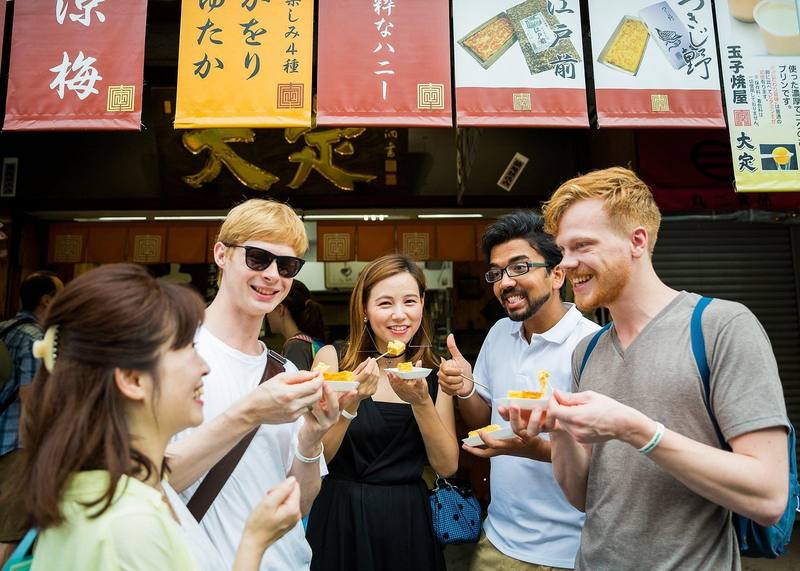
The Tsukiji Outer Market in central Tokyo is one of the great food experiences on Earth — a dense network of tiny stalls, counter restaurants, and wholesale dealers that has been feeding Tokyo since 1935. The inner market (the famous tuna auction) moved to Toyosu in 2018, but the outer market stayed and remains the best place in the world to eat breakfast. Show up before 6am, find a counter with 8 seats and a chef who's been doing this for 40 years, and eat the best sushi you've ever had for about $25.
The atmosphere before dawn is extraordinary — chefs collecting fish directly from the stalls, the smell of charcoal and soy sauce, steam from tamagoyaki pans, the sound of knife on cutting board at 5:30 in the morning while the rest of Tokyo sleeps. The most famous counter is Sushi Dai (which relocated to Toyosu) but the outer market equivalents — Sushi Zanmai, Daiwa Sushi — are equally outstanding. Arrive early or queue.
Beyond sushi, the outer market is excellent for tamago (egg) skewers, fresh oysters, sea urchin on rice, and tamagoyaki (the thick sweet Japanese omelette) eaten hot from the pan. Bring cash — most stalls don't take cards. The market gets crowded by 8am with tourists; the 5-6am window belongs to the professionals and the early risers who know what they're doing.

Hanami — the Japanese tradition of gathering under cherry blossom trees to eat, drink, and celebrate spring — is one of the most genuinely joyful cultural practices anywhere in the world. In Kyoto, where the density of temples, shrines, and traditional wooden architecture provides the perfect backdrop for the pale pink bloom, it reaches its peak form. Maruyama Park, the Philosopher's Path, and the grounds of Kiyomizudera are the most famous spots — crowded at midday, magical at dawn and dusk.
Peak bloom (mankai) typically lasts 7-10 days in late March to early April, with the exact timing varying by year. The cherry trees are extremely sensitive to temperature — a warm February can shift bloom two weeks earlier than expected. Japanese weather forecasters publish sakura forecasts from January onwards; the Japan Meteorological Corporation's predictions are the most reliable. When the forecast comes out, hotel availability in Kyoto vanishes within days.
A guided hanami experience adds the cultural context that transforms it from a pretty photo opportunity into something genuinely meaningful — the tradition of seasonal appreciation, the philosophical acceptance of transience (mono no aware), and the specific vocabulary the Japanese have developed around the different stages of bloom. The week of full bloom is extraordinary; the week after, when the petals fall like pink snow, is arguably more beautiful.