🇮🇳 India · Complete Activity Guide
🇮🇳
Things to Do in India
The world's greatest colour festival, wild tigers at dawn, the Taj Mahal at sunrise, and the most spiritually charged river on Earth
India is one of the most sensory and overwhelming travel destinations on Earth — and the best things to do here range from the genuinely transcendent to the completely unique. The coolest experiences in India are unlike anything available anywhere else: a Holi festival in Vrindavan, where the colour festival was born; a sunrise boat on the Ganges at Varanasi; or a jungle safari in Gir Forest — the only place on Earth where wild Asiatic lions still roam free.
This guide covers the most unforgettable and unique things to do in India in 2026 — from the Taj Mahal at first light to a Ranthambore tiger safari, a silent meditation retreat in Rishikesh, and the frozen river Chadar trek in Ladakh. India's ultimate bucket list.
Holi in Vrindavan is the original — the birthplace of the festival that has since spread across India and around the world. Vrindavan is the town where the Hindu god Krishna is said to have played as a child, and where he first threw coloured powder at his beloved Radha. The town celebrates Holi for a full week rather than the single day observed elsewhere in India, and the intensity and devotion of the celebration here has a completely different character from the tourist Holi events now staged worldwide.
The Banke Bihari Temple on the main day is the epicentre — a completely enclosed space where thousands of devotees throw coloured powder simultaneously in a cloud that turns the air a solid shade of magenta and orange. The priests throw flowers and silver paper along with the colour. The chanting and the drums and the sheer physical immersion in pigment is genuinely overwhelming in the best possible way. You will not be able to predict your emotional response to it.
The practical reality: wear white clothes you don't mind permanently destroying. Cover your face and hair as much as possible (a bandana and sunglasses are essential). All colours used at proper Holi celebrations are natural and safe — the cheap synthetic colours sold by street vendors can irritate skin and eyes, so avoid them. Book accommodation in Vrindavan or Mathura months ahead; the entire region fills completely for the festival week.

Ranthambore National Park in Rajasthan is India's finest tiger reserve and one of the best places on Earth to see wild Bengal tigers. The park covers 1,334 square kilometres of dry deciduous forest around a 10th-century hilltop fort — a landscape where tigers have been protected from hunting since 1973 under Project Tiger, and where the population has grown from single digits to over 70 individuals today.
Tiger sightings at Ranthambore are among the most reliable of any tiger reserve in the world. The open landscape and the tigers' relative habituation to vehicles means sightings are often prolonged — a tigress with cubs lying at the edge of a lake at dawn, or a large male emerging from the forest at dusk, watched from an open jeep from 15 metres away. The ruined fort above the forest adds an archaeological dimension that makes the landscape extraordinary even without a sighting.
Book your safari permit as early as possible — 60-90 days ahead for peak season (October through June). Morning drives (6-10am) give the highest tiger probability. Zone 1-5 are the core zones with the highest wildlife density; request these zones when booking.

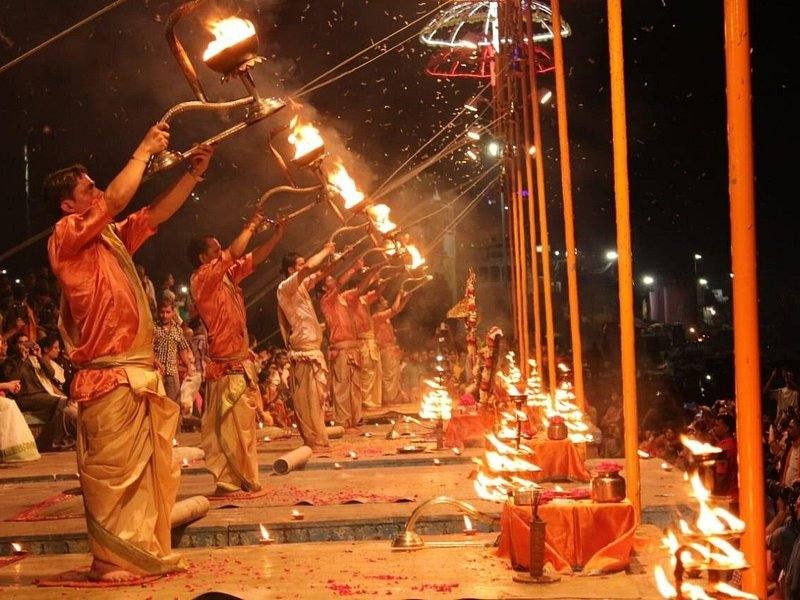
Varanasi is one of the oldest continuously inhabited cities on Earth — 3,000 years of uninterrupted human settlement on the banks of the Ganges — and the dawn Ganga Aarti ceremony is its most concentrated spiritual experience. At sunrise, a rowing boat takes you out onto the Ganges as the light turns the river gold and the ghats (stone steps leading to the water) come to life with pilgrims, priests, and the smoke of cremation fires that have burned here without interruption for millennia.
The Aarti ceremony at Dashashwamedh Ghat — priests performing elaborate fire rituals to the river, incense smoke rising, bells and chanting mixing with the sound of the water — is witnessed from the boat as the sun rises behind the city. The cremation ghats at Manikarnika nearby are where Hindus believe the soul is released directly to moksha (liberation from rebirth) — watching from respectful distance, the fires burning through the night and dawn, is among the most profound human experiences available to a visitor anywhere.
Varanasi is not an easy city — intense, overwhelming, occasionally shocking. It is also one of the most spiritually charged places on Earth. Go with a guide on your first morning; return independently once you have your bearings.
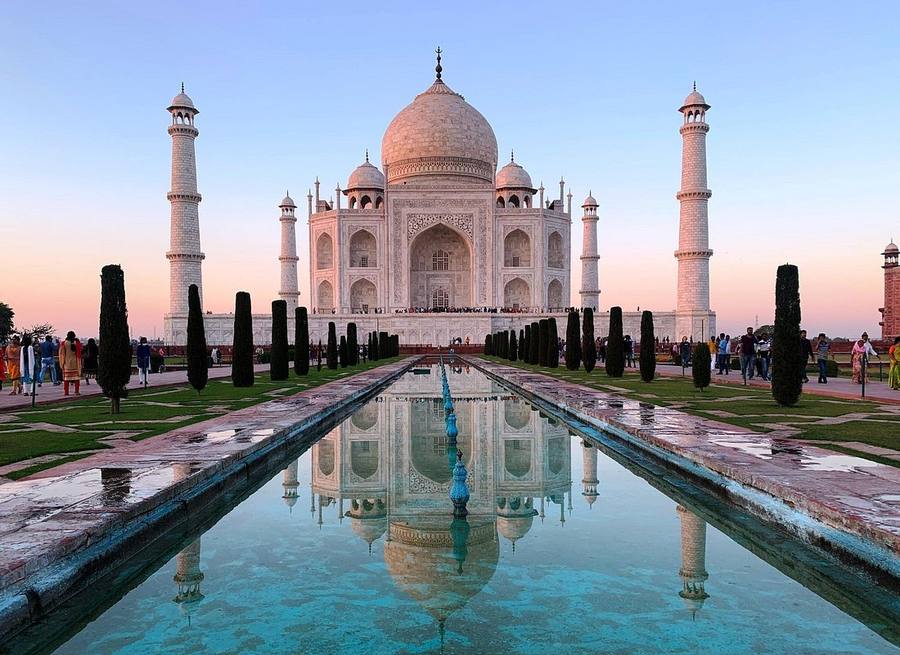
The Taj Mahal at sunrise is one of the few tourist experiences on Earth that fully justifies the planning required to see it properly. Shah Jahan built it over 22 years as a mausoleum for his wife Mumtaz Mahal — 20,000 workers, white Makrana marble inlaid with 28 types of precious and semi-precious stones, and a symmetry so perfect that the complex appears to shift and float depending on the light. At the moment the sun clears the horizon and the marble turns from grey to pink to blinding white, the scale and perfection of it is genuinely overwhelming.
The gates open at dawn — arriving in the first 30 minutes gives you the entrance pools and forecourt largely to yourself, which by 9am will be filled with thousands of visitors. The key viewpoints are the reflecting pool directly ahead of the entrance (the classic postcard view), the river terrace behind the main structure where you can see the Yamuna River and the surrounding gardens, and the interior mausoleum where Mumtaz Mahal and Shah Jahan are buried in near-total darkness.
Stay the night in Agra rather than doing a day trip from Delhi — the sunrise is the best experience and the Golden Triangle route (Delhi → Agra → Jaipur) is worth taking properly rather than rushing.
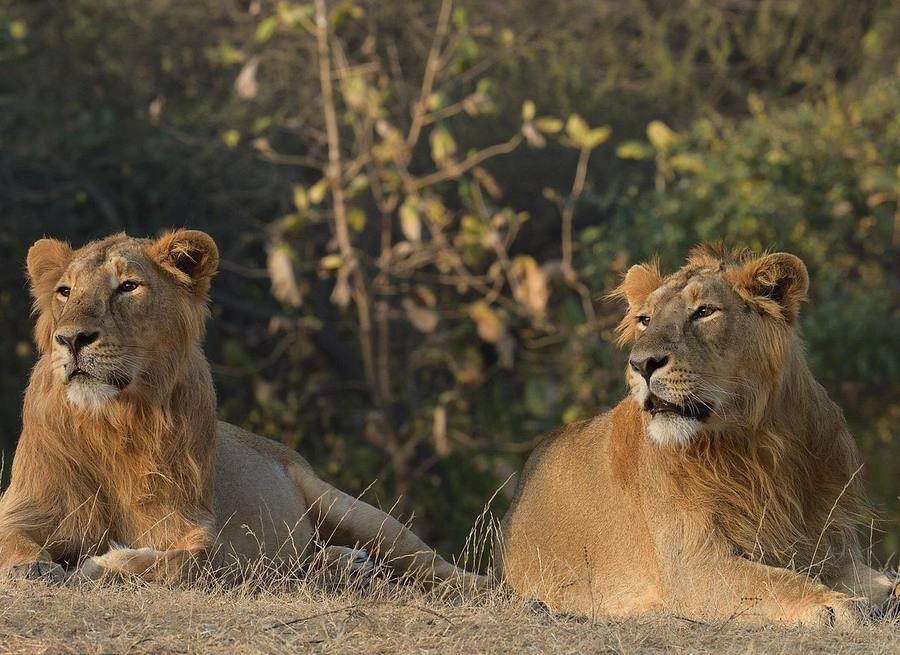
Gir Forest National Park in Gujarat is the only place on Earth where wild Asiatic lions still exist. Once ranging from Greece to India, the Asiatic lion was hunted to near-extinction — by 1900 fewer than 20 individuals remained, all in the Gir Forest. Today, thanks to extraordinary conservation efforts, the population has recovered to over 600 individuals. Gir is the only lion safari on Earth where you can see the Asiatic subspecies — slightly smaller than African lions, with a distinctive fold of skin along the belly and a less extensive mane.
Lion sightings at Gir are excellent — the park is compact and the lions are well habituated to safari vehicles. Typical sightings involve prides resting in the shade, or lions moving through the teak and acacia forest in the early morning. The landscape is drier and more rugged than African savanna, and the experience has a different character — quieter, more intimate, with far fewer vehicles than you'd find at major African parks.
Combine Gir with a visit to the Sasan Gir village and the lion interpretation centre, and a day at Somnath — one of the twelve sacred Jyotirlinga Shiva temples, on the Arabian Sea coast 40km away.