🇸🇪 Sweden · Complete Activity Guide
🇸🇪
Things to Do in Sweden
Arctic wilderness, medieval Stockholm, and experiences that are uniquely, unmistakably Swedish
Arctic wilderness, medieval Stockholm, and experiences that are uniquely, unmistakably Swedish
Sweden covers an extraordinary range for a single country — from the medieval cobblestones of Stockholm's Gamla Stan and the perfectly preserved warship in the Vasa Museum, to dog sledding across frozen Lapland wilderness and sleeping in a hotel carved entirely from ice. Add in the world's most celebrated summer solstice festival, a genuinely unique massage tradition, and one of the most invigorating wellness rituals on Earth, and Sweden earns its place on any serious travel list.
This guide covers the best things to do in Sweden in 2026 — the experiences that make travellers say they'd come back just to do them again. From Stockholm to Swedish Lapland, these are the ones that make Sweden unforgettable.
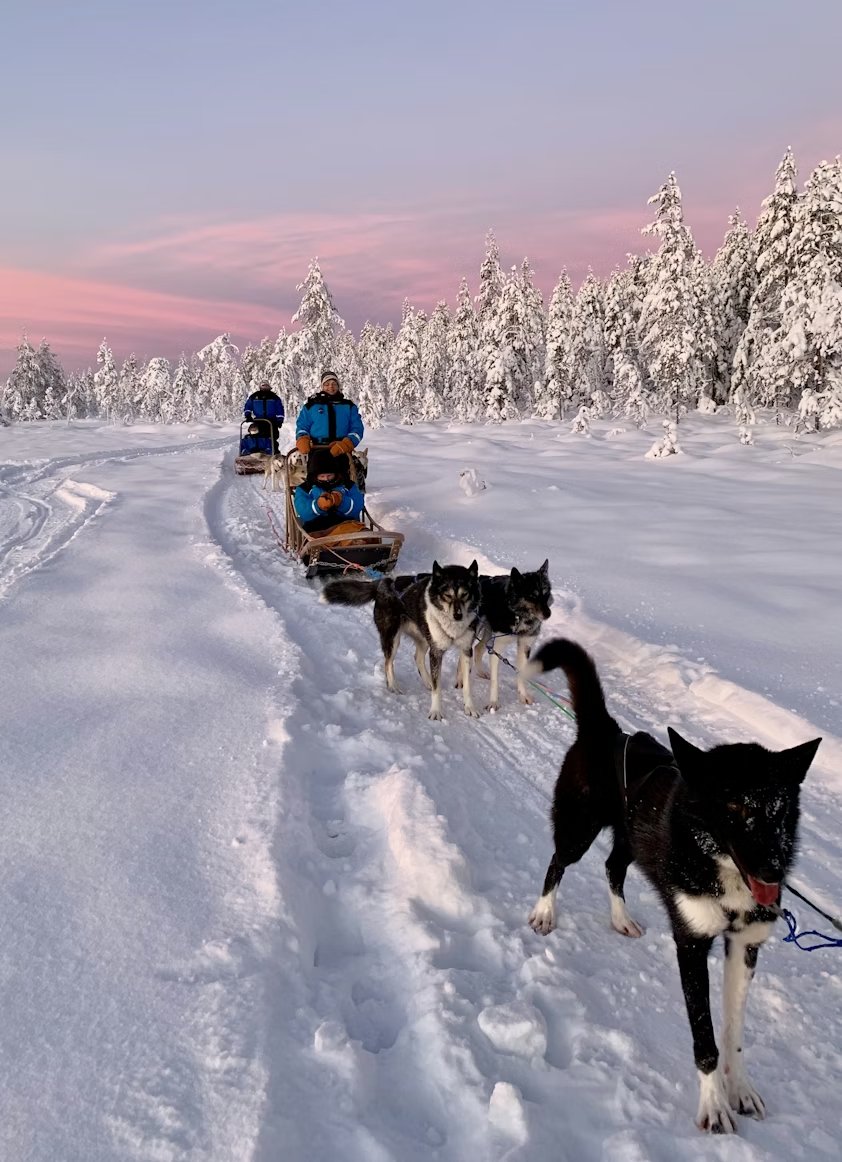
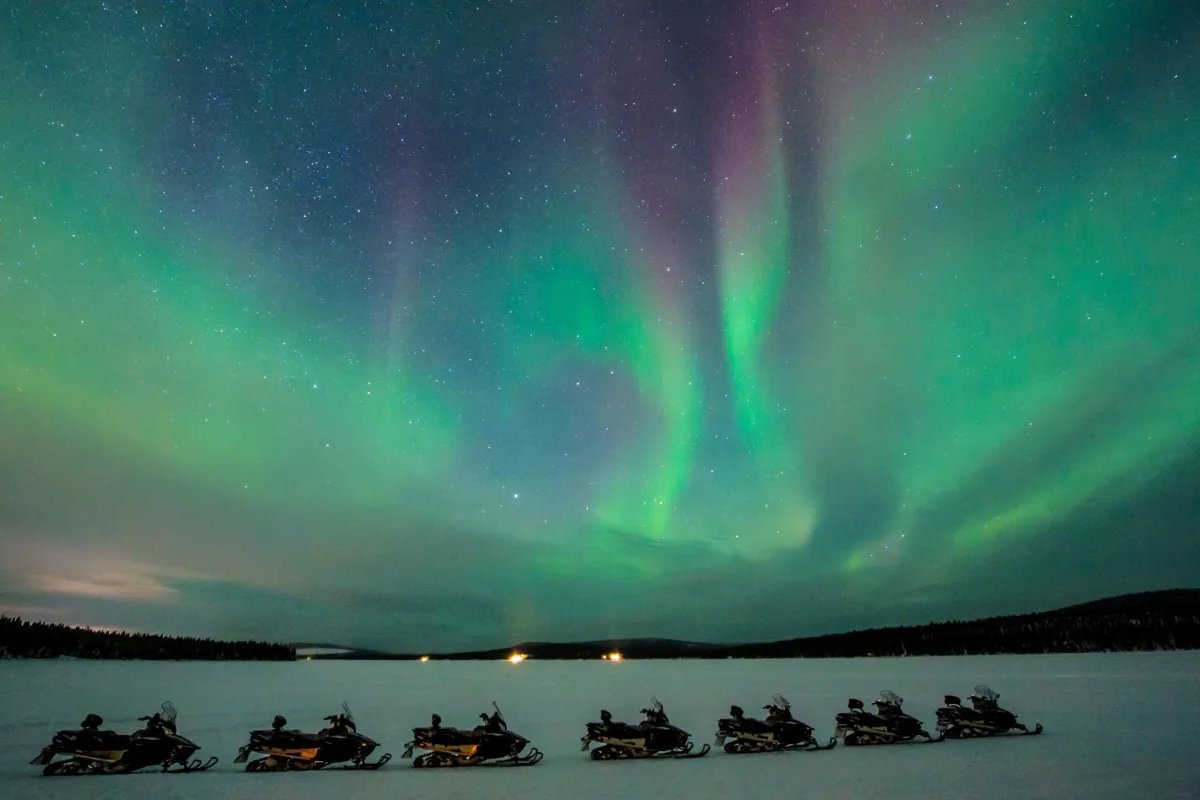
Swedish Lapland in winter is one of the last genuinely wild landscapes in Europe — vast forests of birch and pine under deep snow, frozen rivers, reindeer on the ridgelines, and skies dark enough for the northern lights to be visible on clear nights. Dog sledding through this landscape is the most immersive way to experience it: sitting or standing on the runners of a sled pulled by a team of Alaskan huskies, moving through forest in near-silence except for the sound of paws and snow.
The huskies are the centrepiece of the experience. They are purpose-bred working dogs with extraordinary endurance and a driving instinct to run — the moment the brake is released, the team surges forward with a force that surprises most first-timers. Learning to control the sled, manage the team, and read the terrain is the skill element of the experience. Multi-day expeditions sleep in wilderness cabins or lavvu tents, covering 20–40km per day through landscapes that have no roads.
Kiruna is the main hub for Swedish Lapland dog sledding — fly from Stockholm Arlanda in 1.5 hours. Operators run experiences from half-day introductions to 3–5 day expeditions. The ICEHOTEL in Jukkasjärvi, 17km from Kiruna, is the most famous base. Book well in advance for December through February — the most popular winter dates sell out months ahead.
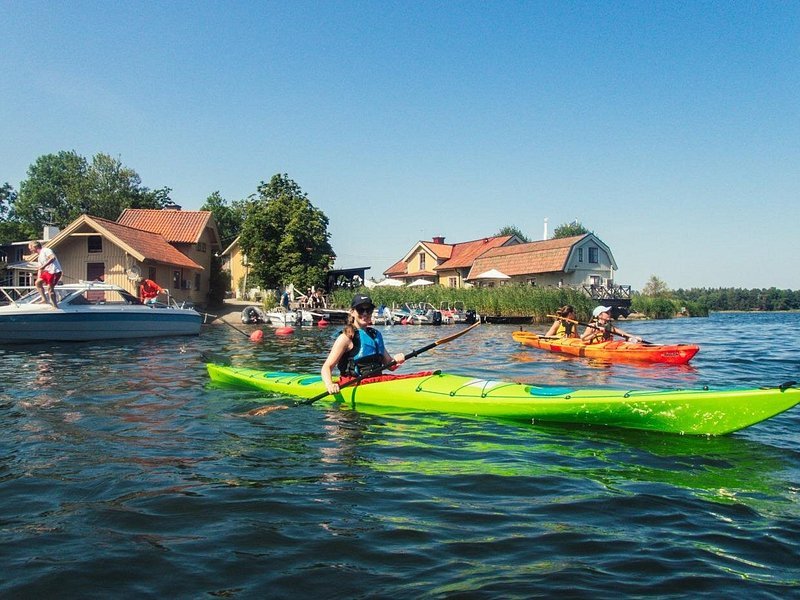
The Stockholm archipelago is one of the great kayaking destinations in the world — 30,000 islands, islets, and skerries spread across the Baltic Sea east of Stockholm, ranging from large inhabited islands with fishing villages and wooden summer houses to bare flat rocks barely above the waterline. Paddling through this landscape in summer, camping on uninhabited islands under the midnight sun, is one of the most freeing outdoor experiences available in Northern Europe.
Sweden's allemansrätten (right of public access) means you can land and camp on almost any island for up to two nights without permission — a freedom that makes multi-day archipelago kayaking uniquely flexible. The water is clean enough to swim in throughout the summer months. The light in late June and July — golden well past 10pm — transforms the landscape every evening.
Guided day tours depart from Djurgården and Nacka, about 30 minutes from Stockholm city centre. Multi-day self-guided rentals are available from operators in Vaxholm and Gustavsberg — the Waxholmsbolaget ferry network connects the outer islands and allows flexible routing. June through August is peak season; September offers quieter water and lower prices with reliable weather.
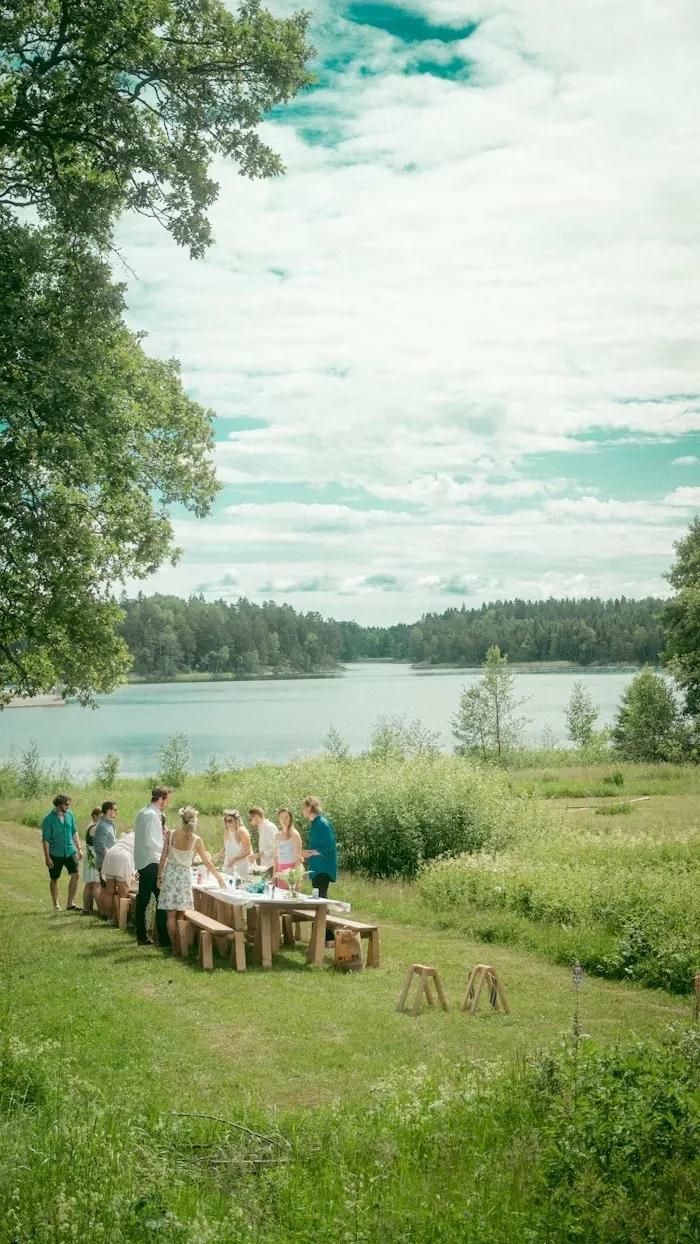
Midsommar is the most Swedish day of the year — the summer solstice celebration that brings the entire country to a standstill. On Midsommar Eve (the Friday between June 19–25), Swedes leave the cities for the countryside, gather around a maypole (midsommarstång) decorated with birch branches and wildflowers, raise it together, and dance around it in flower crowns while singing traditional songs. Then everyone sits down to eat pickled herring, new potatoes with dill, strawberries and cream, and drink snaps.
What makes Midsommar special is its genuine cultural depth — this is not a tourist event, it's what Swedish families actually do, and have done for centuries. The light at this time of year barely dims between sunset and sunrise. The landscape is at its most lush. The mood is joyful, unselfconscious, and deeply communal in a way that is rare in modern life.
The countryside and archipelago are the best places — Dalarna region is the most traditional, and the Stockholm archipelago islands have famous celebrations. Book accommodation many months in advance; Sweden empties out of cities completely on Midsommar weekend and rural accommodation fills up entirely. If you can't find countryside accommodation, Skansen open-air museum in Stockholm runs a large public celebration.
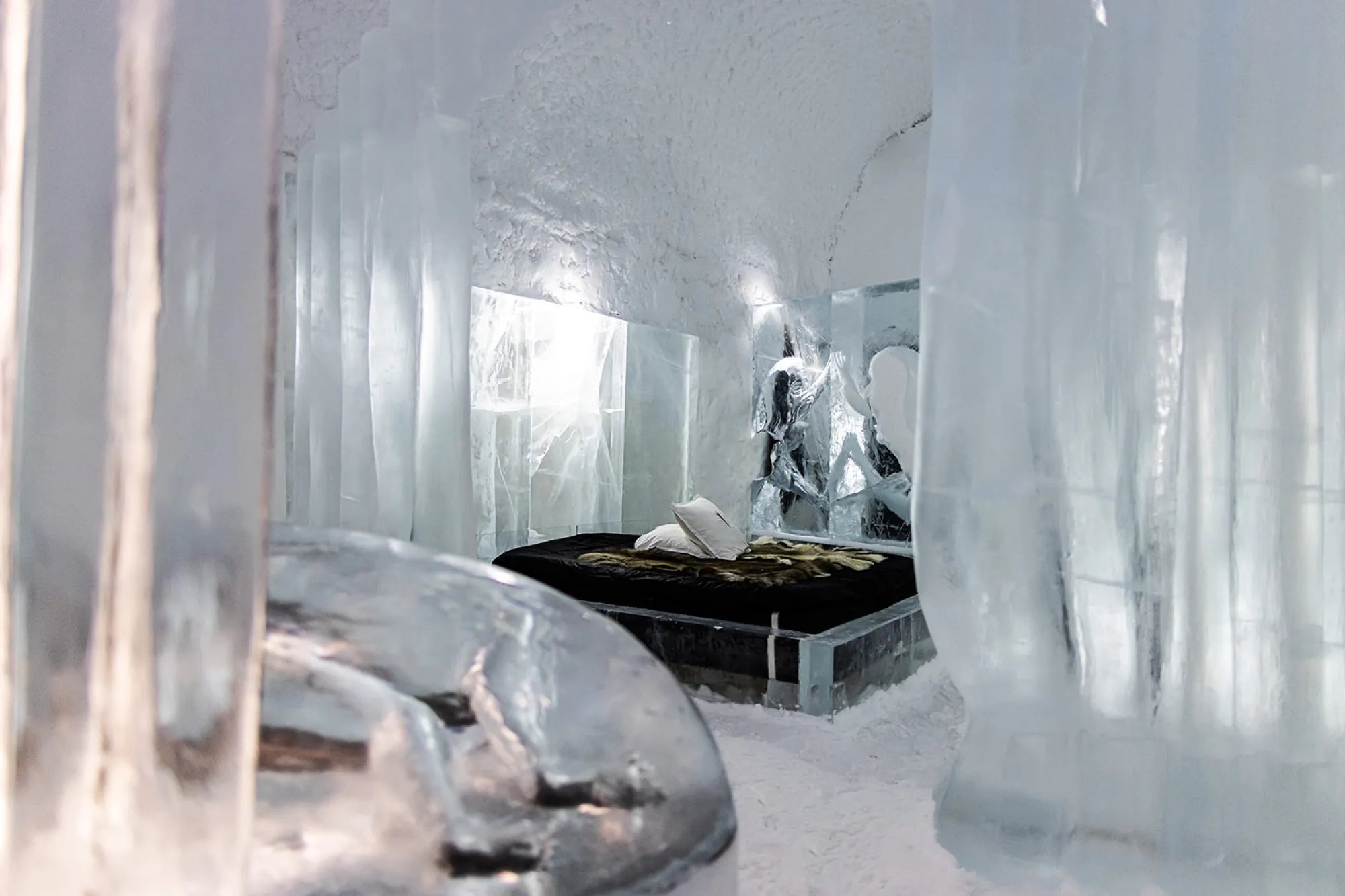
The ICEHOTEL in Jukkasjärvi, 200km above the Arctic Circle near Kiruna, is the world's most extraordinary hotel — built entirely from ice and snow harvested from the Torne River each November, opened to guests in December, and allowed to melt back into the river in spring. Every room is a unique art installation, carved by artists from around the world into sculptures, reliefs, and furniture from ice that is lit from within.
Sleeping in an ICEHOTEL room means sleeping at around -5°C in a thermal sleeping bag on a bed of ice, under reindeer hides. The experience is genuinely unlike anything else — the silence, the blue-white light through the ice walls, the knowledge that the entire building will cease to exist in a few months. Guests warm up in the heated common areas and typically do a pre-dawn northern lights excursion or dog sled before returning to their rooms.
The ICEHOTEL offers both cold rooms (the ice art suites) and warm rooms for those who want the experience without sleeping at -5°C. The permanent year-round section (ICEHOTEL 365) is available outside the winter season. Book the ice art suites many months ahead — they sell out completely. The hotel is 17km from Kiruna airport; transfers are included with most bookings. January and February offer the darkest nights and best northern lights probability.
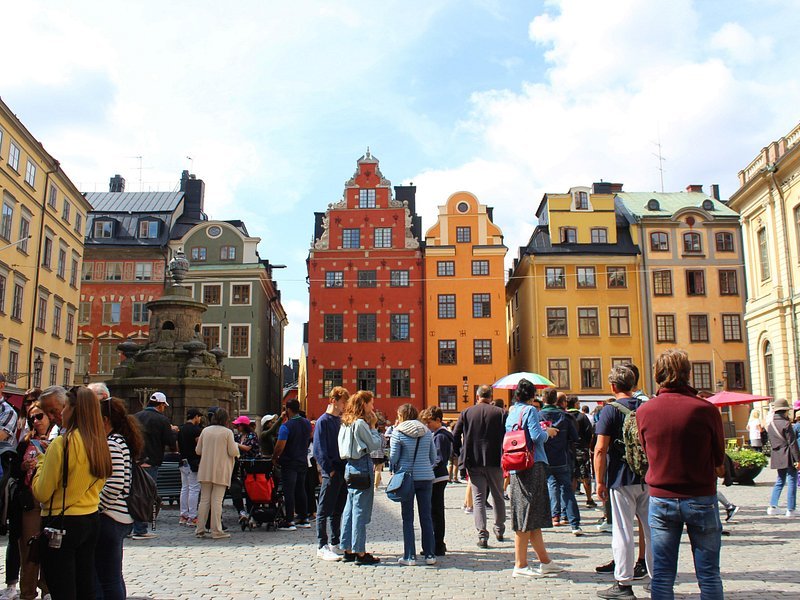
Gamla Stan — Stockholm's Old Town — is one of the best-preserved medieval city centres in Europe. Built on a small island between the freshwater Lake Mälaren and the Baltic Sea, it has been the heart of Stockholm since the 13th century. The street plan has barely changed in 700 years: narrow winding alleys, steep staircases, and merchant buildings in ochre, rust, and golden-yellow that crowd together above the cobblestones.
The centrepiece is Stortorget — the main square, surrounded by the most photographed row of buildings in Sweden, in shades of red, yellow, and orange that date from the 15th and 16th centuries. The Royal Palace sits on the northern edge of the island, the Nobel Museum occupies the old stock exchange on Stortorget, and the Storkyrkan cathedral dates from 1279. Every alley in Gamla Stan contains something worth stopping for.
A guided walking tour covers the key sites in 1.5–2 hours and provides historical context that transforms what you're seeing — the Stockholm Bloodbath of 1520, the medieval plague history, the royal intrigues. Self-guided exploration works just as well with a good map. The best time to visit is early morning before the tourist groups arrive, or in the evening when the square empties and the buildings glow in the low light. Gamla Stan is a 10-minute walk from Stockholm Centralstation.
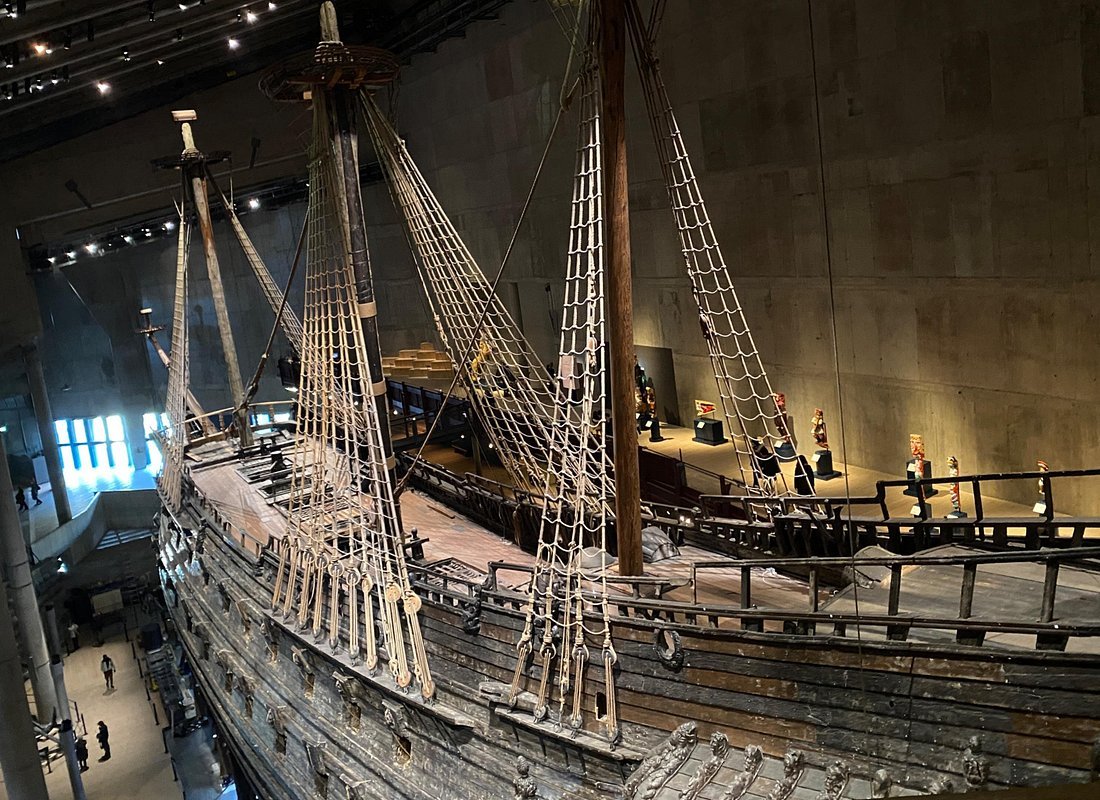
The Vasa is a 17th-century Swedish warship that sank on its maiden voyage in Stockholm harbour on 10 August 1628 — less than 20 minutes after leaving the dock. It sat on the harbour bottom for 333 years before being raised in 1961, preserved to an extraordinary degree by the cold, low-salinity waters of the Baltic. Today it stands almost completely intact in a purpose-built museum on Djurgården island: a 69-metre wooden warship from 1628, complete with carved decorations, cannons, and rigging.
Nothing quite prepares you for the scale of the ship when you walk in. The museum is essentially just a building wrapped around the Vasa itself — you view the ship from multiple levels, close enough to see the original paint traces on the carved figures that decorate the stern. The exhibition covers the construction, the sinking, the recovery, and the lives of the sailors found on board.
The museum is on Djurgården island — a 20-minute walk from Gamla Stan or reachable by tram (line 7) or ferry from Slussen. Entry costs approximately 190 SEK. It is consistently rated the most visited museum in Scandinavia. Arrive at opening (10am) or in the late afternoon to avoid the midday crowds. A guided tour significantly enhances the visit — the story of why the ship sank (political pressure to launch prematurely, inadequate ballast) is as interesting as the ship itself.
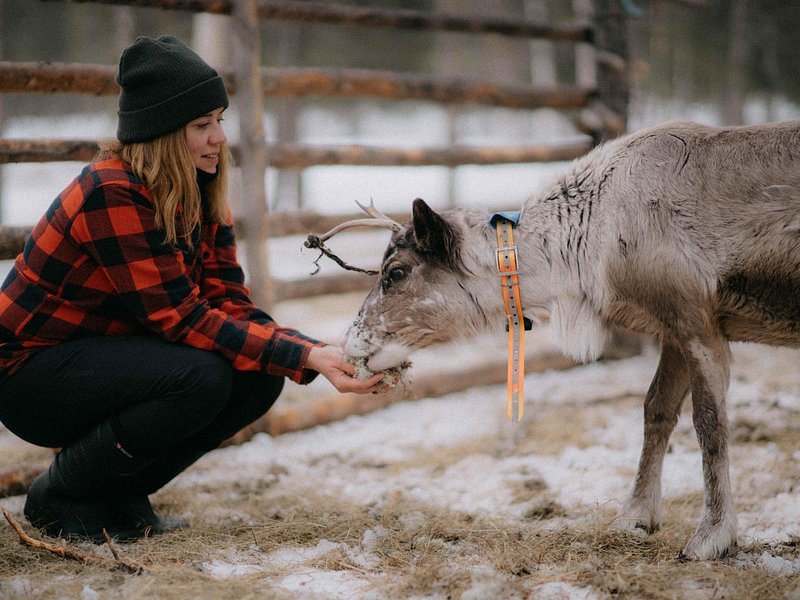
The Sami are the indigenous people of northern Scandinavia — the Sápmi region that spans northern Sweden, Norway, Finland, and Russia — and reindeer herding has been central to Sami culture for thousands of years. A Sami reindeer experience in Swedish Lapland gives direct access to this living culture: visiting a reindeer herder on their land, feeding the herd, learning about traditional tracking and herding techniques, and sharing coffee and food in a traditional lavvu (a conical tent similar to a tipi).
The reindeer themselves are extraordinary animals — semi-wild, adapted to arctic conditions, and managed on vast seasonal migration routes that the Sami have followed for generations. In winter the herds are gathered closer to the settlements, making access easier. The experience gives context to the landscape that no guidebook can — the Sami understanding of this terrain, its weather, and its wildlife goes back millennia.
Most experiences are based around Kiruna and Jokkmokk in Swedish Lapland. They typically run November through April when the reindeer are most accessible. Half-day and full-day options are available, often combined with ICEHOTEL stays or dog sledding. Book through Viator or directly with Sami-owned operators — supporting indigenous operators is important for the cultural integrity of the experience.
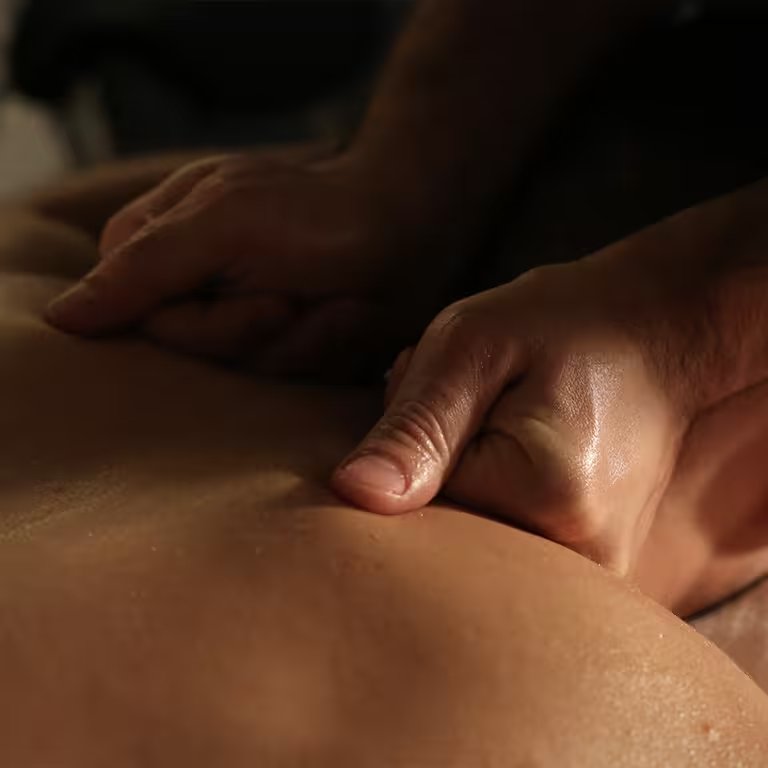
Swedish massage — the most widely practised massage technique in the Western world — was developed in Stockholm in the early 19th century by Per Henrik Ling, a Swedish fencing master and physiologist. The technique combines effleurage (long gliding strokes), petrissage (kneading), tapotement (rhythmic tapping), friction, and vibration in a systematic full-body approach that addresses both muscle tension and circulation. Getting one in Stockholm, where the technique was invented, is the logical completion of the story.
Stockholm has an excellent range of massage and spa facilities — from hotel spas to dedicated massage studios in the city centre. The standard of training and practice is high. A full Swedish massage typically runs 60–90 minutes and addresses the full body in sequence.
Stockholm Massage on Norrmalm is one of the most reputable dedicated studios — professional, English-speaking, and centrally located. Book in advance, especially on weekends. The session typically begins with a brief consultation about areas of focus and pressure preference. Most studios offer pre-booking online. Combine with a sauna and ice plunge for the complete Swedish wellness experience.
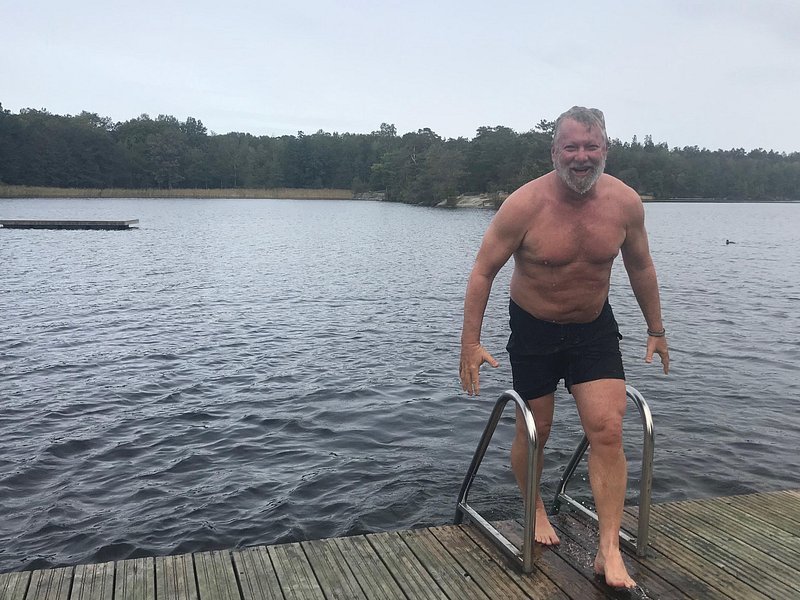
The Swedish bastu (sauna) ritual is one of the foundational wellness practices of Scandinavian life — a wood-fired sauna heated to 80–100°C, followed immediately by a cold plunge into a lake, fjord, or cut hole in the ice. The physiological effect is profound: the heat opens the blood vessels and relaxes the muscles; the cold plunge causes a massive vasoconstriction and adrenaline release that leaves the body feeling completely reset. Repeated cycles amplify the effect.
Unlike the Finnish sauna tradition (which has UNESCO recognition), the Swedish bastu is less ritualised but just as embedded in daily life. Swedes sauna at lakeside cabins, archipelago islands, and increasingly in urban bathing facilities. The key is the cold plunge immediately after — not eventually, not after drying off, but straight from the sauna door into the water. That transition is the experience.
Stockholm has excellent urban sauna facilities. Hellasgården in Nacka (20 minutes from central Stockholm) is the most famous — a lakeside sauna complex open year-round where you can plunge into Källtorpssjön regardless of the season. Erstaviken, Södermalm's waterfront, and several archipelago island facilities also offer the experience. In winter, holes are cut in the ice for the plunge. Towel, swimwear, and flip-flops are all you need.
Sweden operates on two completely different travel modes depending on the season — plan around which experiences matter most to you.