🇫🇮 Finland · Complete Activity Guide
🇫🇮
Things to Do in Finland
Santa Claus, northern lights, frozen seas, and the world's best sauna culture
Santa Claus, northern lights, frozen seas, and the world's best sauna culture
Finland is a country of extraordinary contrasts — the birthplace of Santa Claus and one of the world's great wilderness destinations in the same breath. In winter, Lapland is a snow-covered world of reindeer, northern lights, icebreakers, and glass igloos where you fall asleep under the aurora. In summer, 188,000 lakes and the midnight sun create a completely different country. And year-round, the Finnish sauna remains the most important cultural institution in a nation that takes its rituals seriously.
This guide covers the best things to do in Finland in 2026 — seven experiences that capture what makes this country completely unlike anywhere else in the world.
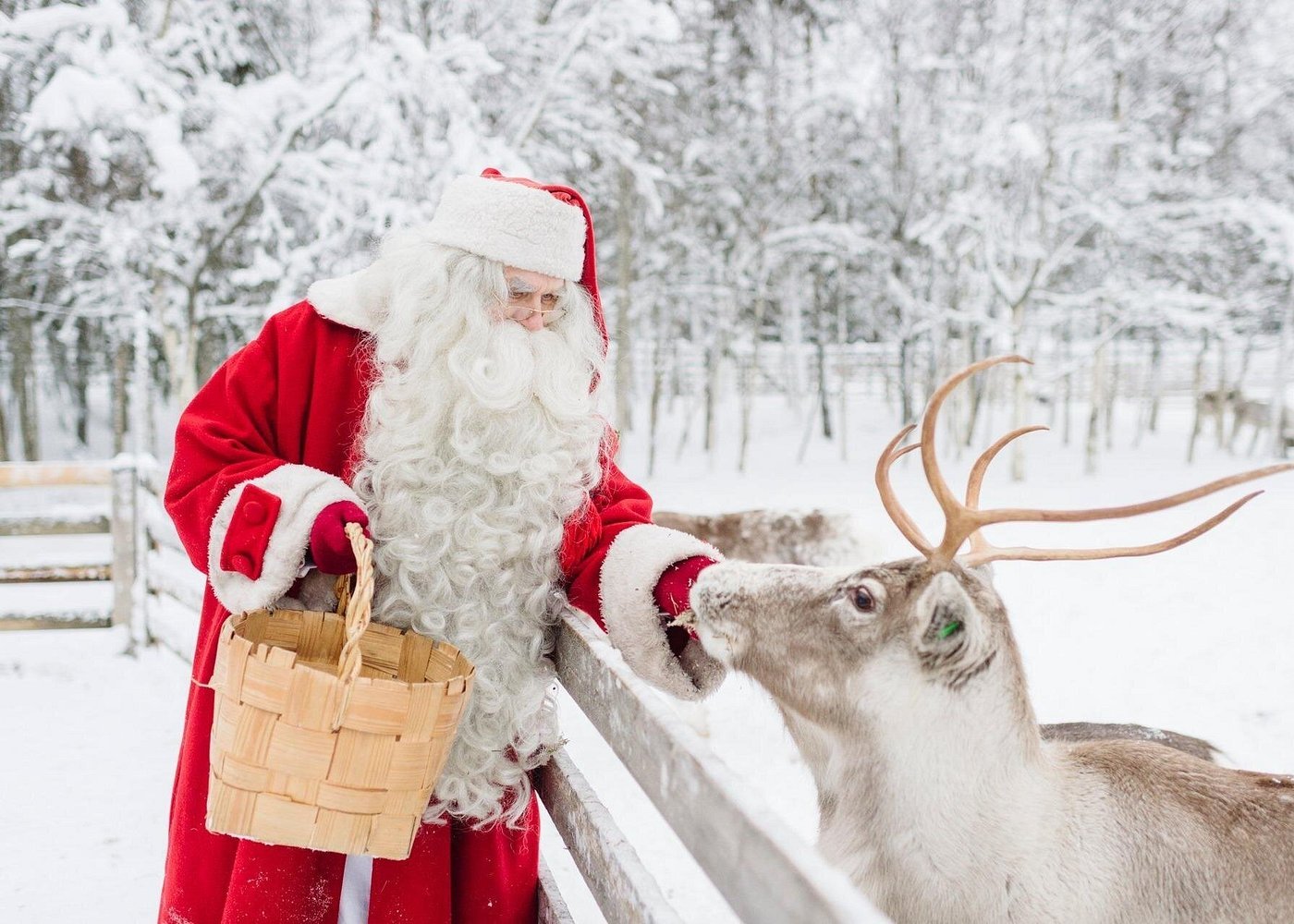
Santa Claus is officially from Finland. His village sits precisely on the Arctic Circle in Rovaniemi, the capital of Finnish Lapland — a location so specific that the postal address is simply "Arctic Circle, Finland." The Finnish Tourist Board declared Rovaniemi Santa's official hometown in 1985, and Finnair designated it Santa's official home airport. Every year, millions of letters from children around the world arrive here. And you can visit him in person.
Santa Claus Village is open year-round, but December transforms it into something genuinely magical — guaranteed snow, reindeer pulling sleighs through pine forest, elves in traditional dress, the smell of gingerbread and pine, and the man himself available for personal meetings in his office. For families with young children it is one of the most extraordinary travel experiences available anywhere. For adults it is equally moving in a different way — the setting, the snow, the reindeer, and the Arctic Circle underfoot combine into something that bypasses cynicism entirely.
Rovaniemi has its own airport (ROI) with direct flights from Helsinki in 1.5 hours — Finnair and Norwegian both serve the route. The overnight train from Helsinki is a comfortable 12-hour journey. Santa Claus Village is 8km from Rovaniemi city centre. Guided tours from Helsinki can be booked through Viator for a complete Lapland day trip experience.
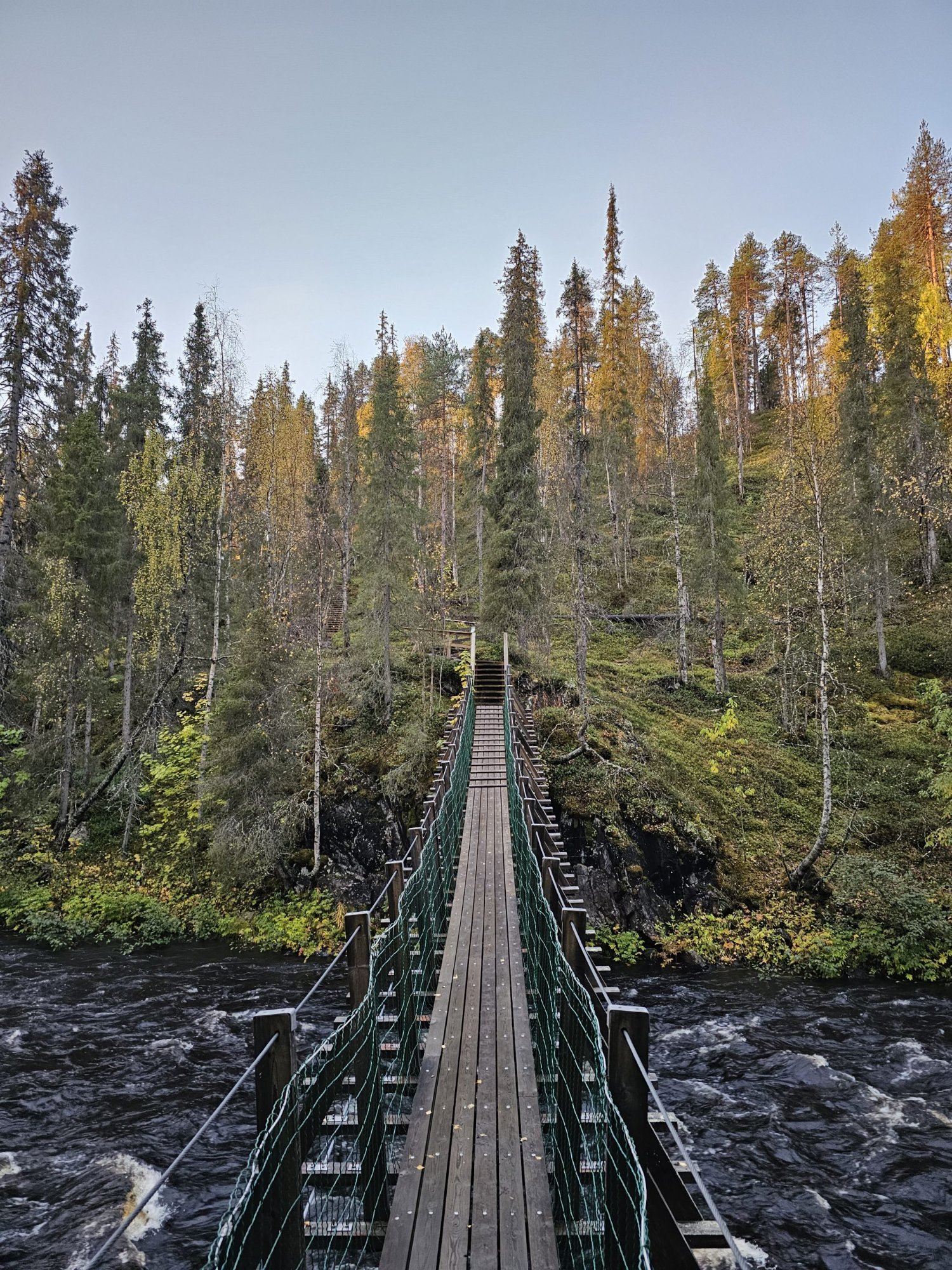
The Karhunkierros — Bear's Trail — is Finland's most celebrated long-distance hiking route: 82 kilometres through Oulanka National Park in the northern Finnish wilderness, passing through deep river gorges, over rope suspension bridges, past thundering waterfalls, and through the kind of ancient boreal forest where brown bears, wolverines, and golden eagles still roam. It is consistently ranked among the best hiking trails in Europe and is almost entirely unknown outside Scandinavia.
The route follows the Oulankajoki River through some of the most dramatic canyon scenery in Finland — the gorge walls drop steeply to the rushing river, pine roots grip the exposed rock faces, and the wooden suspension bridges across the rapids give views that no photograph captures adequately. In autumn (late September–October), the Finnish ruska — the blaze of red, orange, and gold as the birch and aspen turn — transforms the trail into something extraordinary.
The full trail takes 5–7 days and requires advance planning for hut accommodation. Guided all-inclusive treks are operated by Climbing Mountains, who handle all logistics, accommodation in wilderness huts, and guiding from experienced Finnish mountain leaders. The trailhead is near Kuusamo in northern Finland — accessible by flight or bus from Helsinki. The season runs June through October; autumn offers the best conditions and colours.
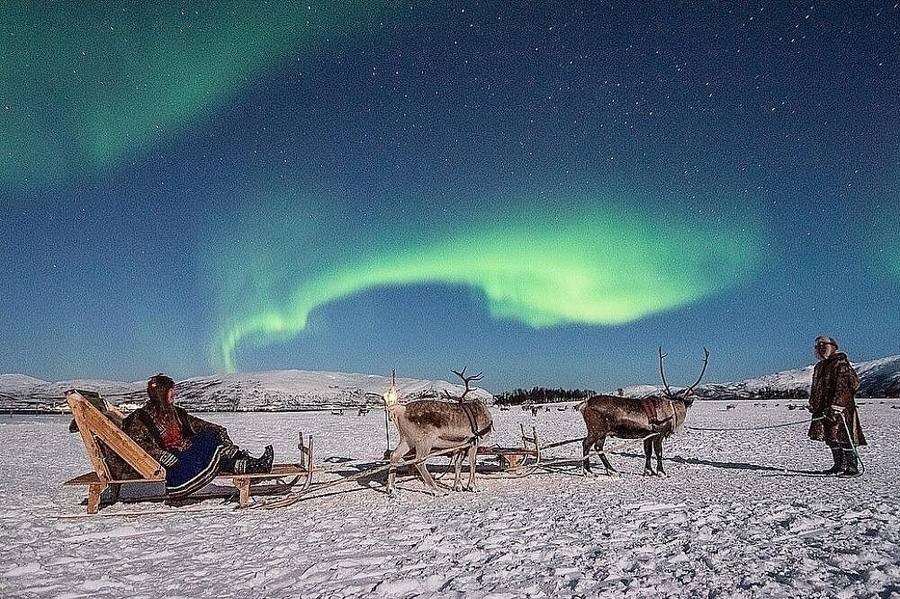
There are more reindeer than people in Finnish Lapland — approximately 200,000 semi-domesticated reindeer roam the region, herded by Sami and Finnish reindeer herders whose families have worked the land for generations. Driving your own reindeer sled through a snow-covered pine forest in temperatures of -15°C, in near-total silence broken only by the hoof-beats and the occasional snort, is one of the most uniquely Finnish experiences available anywhere on Earth.
Reindeer farms across Lapland offer guided sled experiences ranging from 1-hour excursions to full-day adventures that include feeding the reindeer, learning about traditional herding culture, and dining on traditional Lapland food by an open fire. The reindeer are gentle and accustomed to visitors — the experience is accessible for all ages and fitness levels.
Reindeer sled experiences are available from farms near Rovaniemi, Saariselkä, Levi, and Ylläs. The season runs December through March when snow is guaranteed. Tours can be booked through Viator, which aggregates experiences from multiple Lapland operators. Combine with a northern lights hunt in the evening for a full Lapland day.
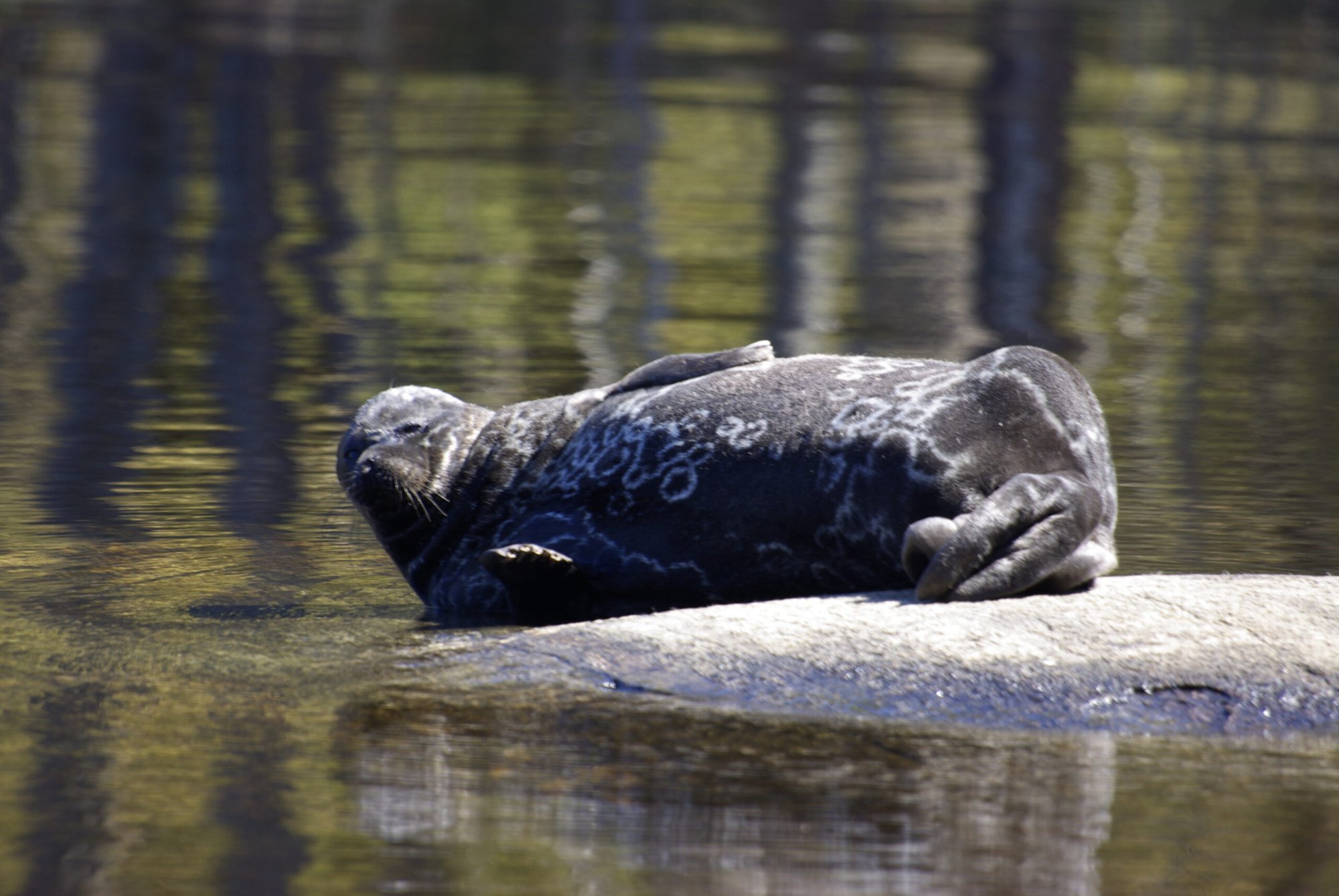
Lake Saimaa is Europe's fourth-largest lake — a vast labyrinth of interconnected waterways, channels, and archipelagos covering 4,400 square kilometres in southeastern Finland. It is extraordinarily beautiful for kayaking: clear water, pine-covered islands, granite outcrops, and the deep silence of the Finnish wilderness. But what makes Saimaa completely unique is its resident population of one of the world's rarest mammals — the Saimaa ringed seal.
The Saimaa ringed seal (Pusa hispida saimensis) is found only in Lake Saimaa, isolated since the last Ice Age when rising land cut the lake off from the Baltic Sea. With a population of only around 400 individuals, they are critically endangered — and kayaking is one of the best ways to encounter them in their natural habitat. Saimaa Canoeing operates guided kayak tours specifically designed around the seals, paddling slowly through the archipelago at the pace of the wildlife rather than the tourist.
Book directly through Saimaa Canoeing — they specialise in the ringed seal tours and have the best local knowledge of seal locations and behaviour. Tours run May through September from their base near Savonlinna. No prior kayak experience is required. The lake is calm and sheltered — sit-on-top kayaks are used for stability and ease.
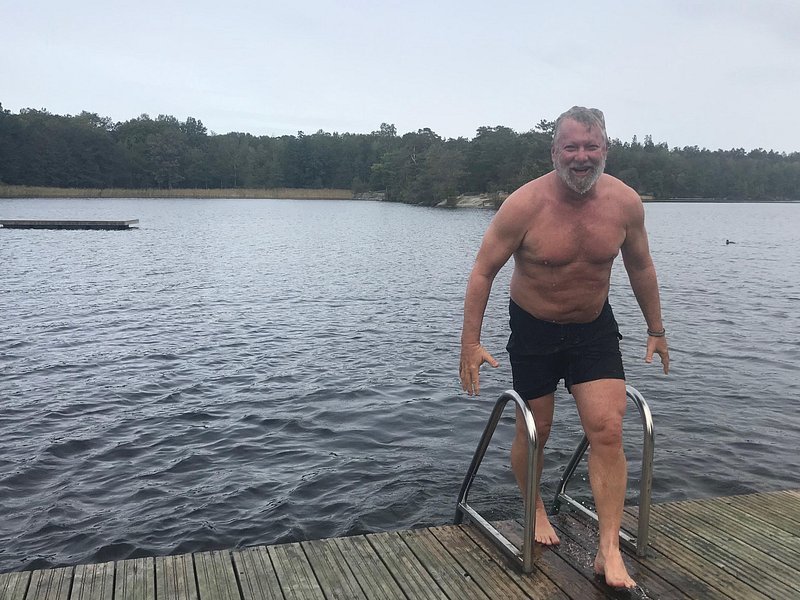
The Finnish sauna is not a spa amenity — it is a UNESCO-listed cultural institution, the most important ritual space in Finnish society. There are 3.3 million saunas in Finland for a population of 5.5 million. Business deals are negotiated in them. Children are born in them. People have gone to war with sauna logs wrapped in their kit. The Finnish relationship with the sauna is unlike anything else in European culture.
A proper Finnish sauna involves: the löyly (the steam produced by throwing water on hot stones, from a specific Finnish word with no translation), birch whisks (vihta) for beating the circulation back to life, a temperature of 80–100°C, total silence as a general rule, and the plunge into a freezing lake or, in winter, a hole cut in the ice. The contrast between extreme heat and extreme cold, repeated several times over an hour or two, produces a physical and mental state of deep calm that the Finns simply call "sauna feeling."
The authentic experience is at a lakeside sauna — ideally at a summer cottage. In Helsinki, Löyly and Allas Sea Pool offer excellent public sauna experiences. In Lapland, most hotels and resorts have wood-fired saunas. Book guided sauna experiences through Viator for a cultural introduction with a local host, or simply ask your accommodation — almost everywhere in Finland has access to one.
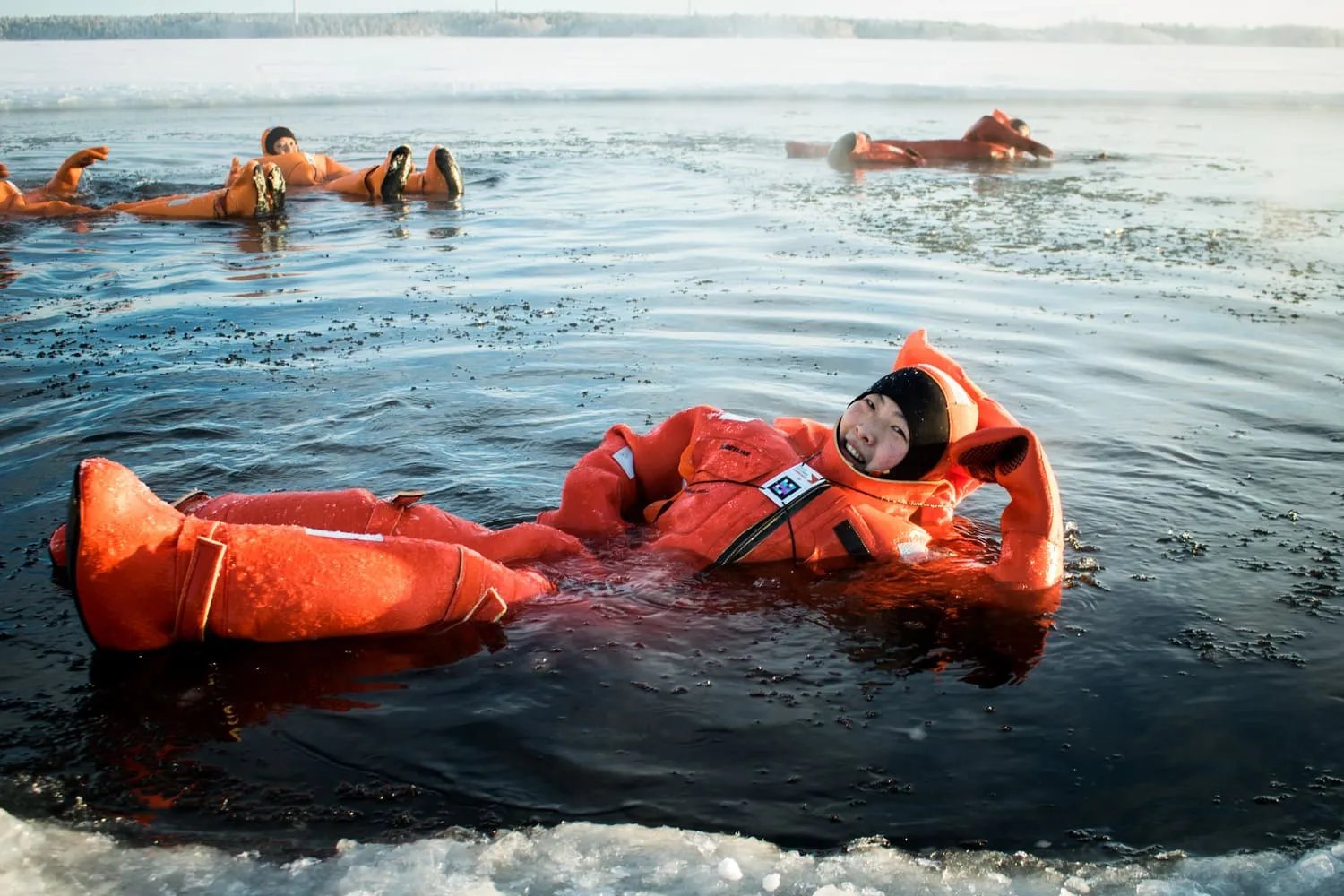
The Sampo is a real icebreaker — a 3,540-tonne vessel built in 1961 to keep the frozen Baltic Sea lanes open through winter, now operating as the world's only passenger icebreaker cruise ship. It departs from Kemi in northern Finland and ploughs through the frozen sea, breaking through ice up to a metre thick, giving passengers an experience of the Arctic maritime environment that is genuinely unlike anything else available to travellers anywhere in the world.
The highlight is the float. Passengers suit up in thermal survival suits — the bright orange dry-suits used by maritime rescue services — and lower themselves into the frozen sea. The suit keeps you warm and buoyant: you lie back on the surface of the Arctic ocean, floating among the ice floes, looking up at the Lapland sky. It is one of the most surreal and joyful experiences in travel — impossible to describe adequately but immediately understandable the moment you're in the water.
Book directly at icebreaker.fi — the Sampo operates December through April from Kemi harbour. Kemi is 120km from Rovaniemi, making it easily combinable with the Santa experience. The cruise lasts approximately 3 hours including the float. All equipment is provided. No prior experience required — the survival suits keep you floating automatically.
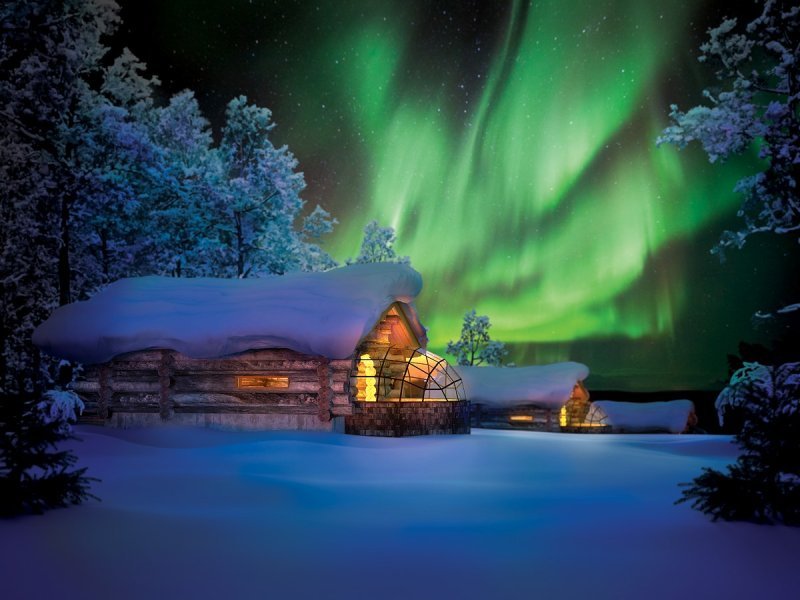
Kakslauttanen Arctic Resort in Saariselkä pioneered the glass igloo concept in the 1970s when founder Seppo Keränen noticed that the glass of his car windscreen stayed clear even in extreme cold, unlike ordinary glass. The thermal glass igloos he subsequently developed have become one of the most iconic accommodation experiences in the world — a heated, transparent dome in which guests lie in bed watching the aurora borealis dance directly overhead, undisturbed by cold or condensation.
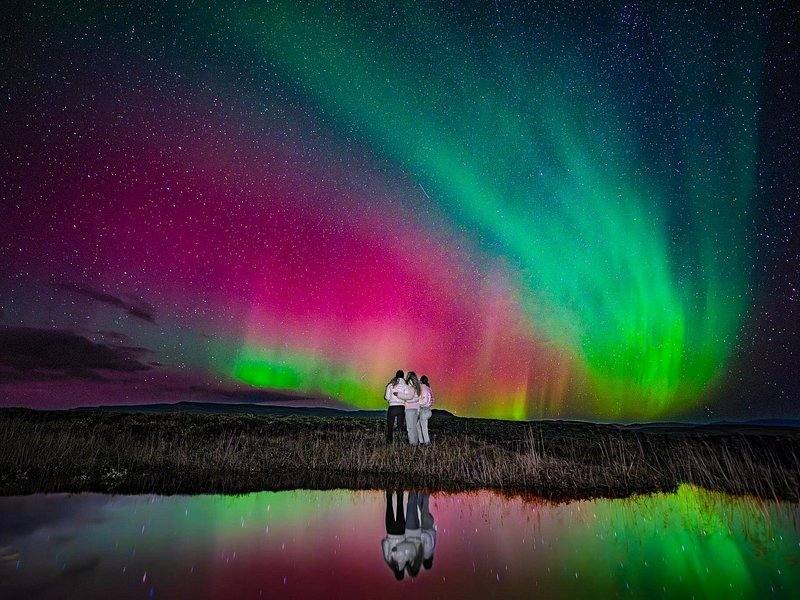
The northern lights are visible from Saariselkä approximately 200 nights per year — the resort sits at 68°N in the heart of the auroral zone. On clear nights the display can be visible for hours, shifting from faint green curtains to intense spiralling ribbons of green, purple, and white. Lying in bed in a warm glass igloo watching this happen directly above you, with the snow-covered forest visible outside and the temperature at -20°C, is the most magical night's sleep in the world.
Book directly at kakslauttanen.fi — glass igloos sell out months in advance for December–February, the peak northern lights and Christmas season. The resort is 30 minutes from Ivalo Airport (IVL), which has direct flights from Helsinki. The resort also offers snow igloos, log cabins, a snow restaurant, husky safaris, and snowmobile tours.
Finland has two completely different peak seasons — winter Lapland and summer lakes. Both are exceptional.