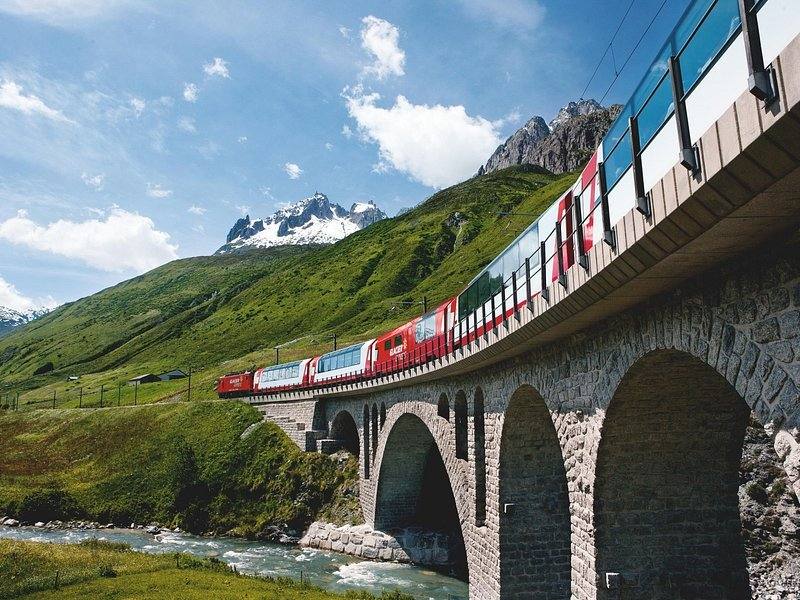
Großglockner High Alpine Road cycling Austria mountains lake
🇦🇹 Austria · Complete Activity Guide
🇦🇹

Things to Do in Austria

Alpine extremes, world-class opera, and experiences that are uniquely, unmistakably Austrian

Share Facebook Pinterest WhatsApp

Austria operates at two speeds simultaneously: extreme and refined. It's the country where you can cycle over a 2,500-metre alpine pass in the morning and sit in one of the world's great opera houses that evening. Where via ferrata routes scale vertical limestone faces above UNESCO lake districts, and cooking classes teach you to stretch strudel dough paper-thin in Viennese kitchens. The range is extraordinary for a country this size.

This guide covers the best things to do in Austria in 2026 — the experiences that make travellers say they'd come back just to do them again. From the Alps to Vienna to Salzburg, these are the ones that make Austria unforgettable.

1

Großglockner High Alpine Road Cycling

🚴 Cycling · Hard · Summer Only
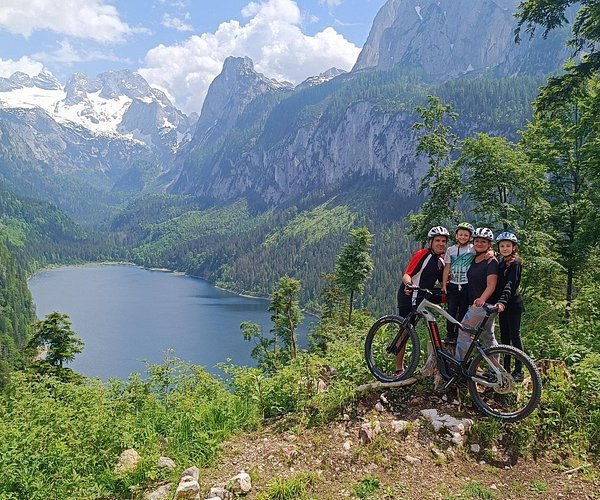
Großglockner High Alpine Road cycling Austria alpine lake mountain view

The Großglockner High Alpine Road is one of the greatest cycling climbs in Europe — a 48-kilometre toll road that winds from Bruck in Salzburg state to Heiligenblut in Carinthia, reaching 2,504 metres at the Hochtor pass. The numbers are serious: 14% maximum gradient, 36 hairpin bends, and Austria's highest mountain — the 3,798-metre Großglockner — dominating the skyline above the Pasterze glacier throughout.

The road was built between 1930 and 1935 as an engineering and scenic marvel, and it remains both. At altitude, the landscape shifts from alpine meadow to bare rock and permanent snowfields, with views across the Hohe Tauern range that extend on clear days to the Dolomites. The descent on either side is 30-plus kilometres of sweeping curves through scenery that has no equivalent anywhere in the Eastern Alps.

When and how to cycle the Großglockner

The road is open from approximately late April to early November, with the best cycling conditions in June through September. Start from Bruck an der Großglocknerstraße early in the morning — the climb takes most cyclists 2.5 to 4 hours depending on fitness. There is a toll for motor vehicles (cyclists are free). The road can be crowded with camper vans and motorcycles mid-morning; starting at dawn gives you the climb largely to yourself.
Distance
48 km one way
Max Altitude
2,504m at Hochtor
Max Gradient
14%
Season
Late April – November
Toll for Cyclists
Free
Difficulty
Hard
📋 Planning Tips
Start early — 6am if possible — to beat vehicle traffic and afternoon clouds. Bring warm layers regardless of the base temperature; the summit is 15–20°C colder than the valley. Carry enough food and water for 3–4 hours. There are visitor centres and cafés at the Fuscher Törl and Edelweißspitze viewpoints. Check road conditions at grossglockner.at before departure — the road occasionally closes for snow even in summer.
⭐ Why It's Worth It
The Großglockner is one of those climbs that earns its reputation completely. The combination of gradient, altitude, scenery, and the sheer scale of the mountain above you makes it unlike any other road cycling experience in the Alps. The glacier view from the Gletscherstraße spur road — where the Pasterze stretches across the valley below the Großglockner summit — is one of the great alpine vistas on the continent.
Großglockner High Alpine Road cycling tour Austria
Großglockner High Alpine Road — Guided Cycling Tour
Guided cycling ascent of Austria's greatest alpine road — 2,504m summit, glacier views, support vehicle included.
Book Tour →

2

Klettersteig Via Ferrata, Dachstein

🧗 Extreme · Hard · Summer
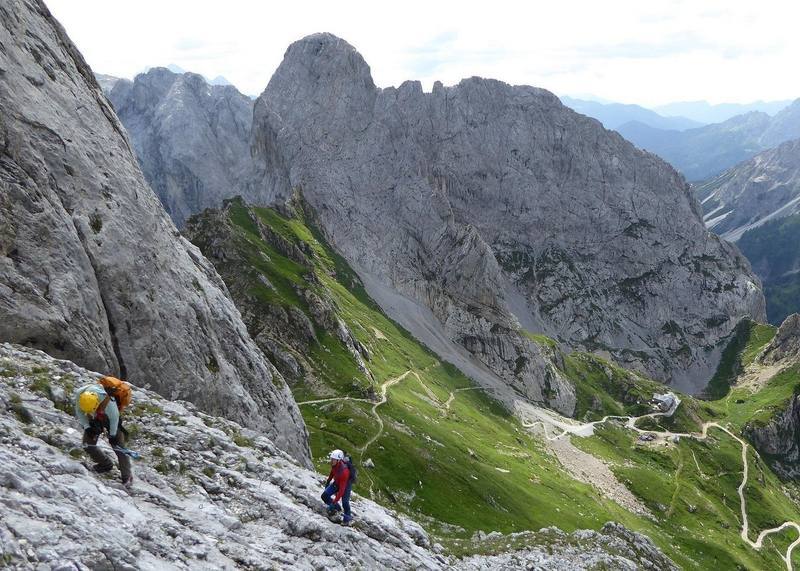
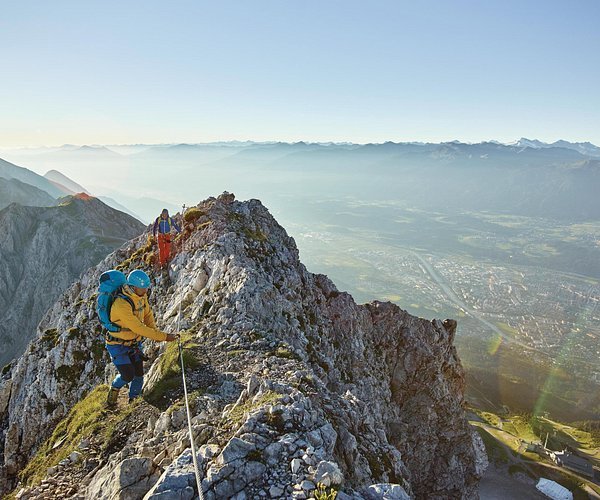
Via ferrata Dachstein Austria klettersteig climbing ridge mountain view Innsbruck

Austria is one of the birthplaces of via ferrata — the klettersteig (iron-rung route) tradition of fixed cables, iron rungs, and stemples that allows non-technical climbers to ascend vertical and near-vertical rock faces safely. The Dachstein massif above the Salzkammergut lakes offers some of the finest routes in the country: limestone faces of extraordinary quality, views across the Gosausee and the surrounding alpine landscape, and a range of difficulty levels from family-friendly to genuinely committing.

The Dachstein Klettersteig routes include the Via Ferrata Klettersteig on the south face, accessible from the Dachstein cable car, and several routes in the Gosaukamm range nearby. The rock is solid Dachstein limestone — rough, positive holds, and the kind of stone that makes Austrian alpine climbing famous. The iron infrastructure is well-maintained and regularly inspected.

Equipment and guided options

All via ferrata requires a klettersteig set — harness, via ferrata lanyard (Y-shaped with two carabiners), and helmet. These can be rented at the base stations in Ramsau am Dachstein and at the cable car. First-timers should strongly consider a guided half or full day — guides provide equipment, instruction on technique, and route selection appropriate to your fitness and experience. No prior climbing experience is required for beginner routes.
Location
Dachstein, Salzkammergut
Season
June – October
Equipment
Rentable at base
Guided Option
Yes — recommended
Difficulty
Moderate to Hard
Base Town
Ramsau am Dachstein
📋 Safety & Booking Tips
Never attempt a via ferrata without the correct equipment — a klettersteig set is non-negotiable, not optional. Check weather forecasts carefully — wet limestone becomes extremely slippery and lightning risk at altitude is serious. Book guided tours through Viator or local alpine guide associations (Bergführer). The Dachstein cable car provides easy access to the upper routes and dramatically reduces the approach time.
⭐ Why It's Worth It
Klettersteig is one of the most accessible genuine alpine experiences available — the fixed infrastructure means you can climb routes that would otherwise require years of technical training. Standing on a limestone ridge above the Gosausee with the Dachstein glacier above and the Salzkammergut lakes spread out below is an experience that no amount of cable car sightseeing can replicate. The exposure is real, the views are extraordinary, and the satisfaction of completing a hard route is something that stays with you.
Klettersteig via ferrata Dachstein Austria guided tour
Klettersteig Via Ferrata — Dachstein, Austria
Guided via ferrata on the Dachstein limestone faces — equipment provided, all levels, glacier and lake views throughout.
Book Tour →

3

Vienna State Opera Opening Night

🎭 Cultural · Year-Round
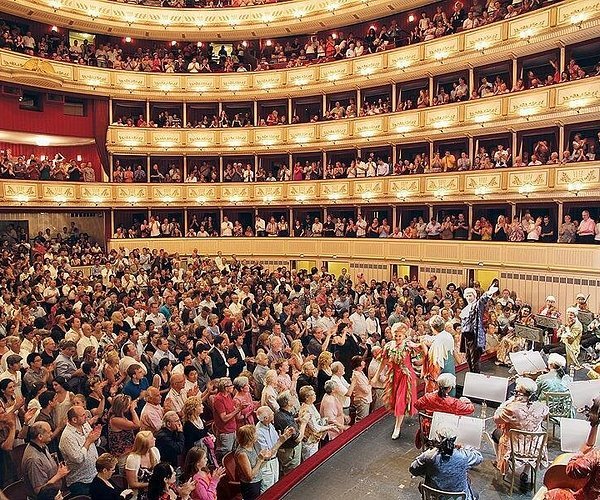
Vienna State Opera interior standing ovation audience performance Austria

The Vienna State Opera is one of the most important opera houses in the world — alongside La Scala in Milan and the Met in New York, it sits at the absolute top of the form. The building on the Ringstraße, completed in 1869, is a masterwork of neo-Renaissance architecture. The productions are legendary. The roster of conductors and performers who have worked here — Mahler, Karajan, Bernstein, Domingo — reads like a history of 20th-century classical music.

What makes Vienna unique is accessibility. Standing room tickets cost €3 to €10 and go on sale 80 minutes before each performance at the Stehparterre entrance. The sightlines from the standing areas are good, the acoustic is extraordinary, and the experience of watching a world-class production in this building — the gilded tiers, the chandelier, the curtain rising on a full orchestra — is one of the great cultural experiences in Europe at a price that is essentially nothing.

How to get Vienna State Opera tickets

Standing room: arrive at the Stehparterre entrance (on the right side of the building facing the Ringstraße) at least 90 minutes before the performance. Queue forms early for popular productions. Dress up — there is no strict dress code but the atmosphere rewards it. Seated tickets are available through wiener-staatsoper.at and sell out months in advance for premier performances and the opera ball season.
Standing Tickets
€3–10
On Sale
80 min before curtain
Season
Sept – June
Location
Opernring 2, Vienna
Duration
2.5–4 hours
Difficulty
Easy
📋 Practical Tips
Check the programme at wiener-staatsoper.at well in advance — the season runs September through June with a summer break in July and August. For standing room, arrive 90+ minutes early and queue at the Stehparterre entrance on the right side of the building. Programmes and translations are available at the venue. The U-Bahn U1 and U2 both stop at Karlsplatz, a short walk from the opera house.
⭐ Why It's Worth It
There is no better value in European culture than a €3 standing room ticket at the Vienna State Opera. The building alone is worth standing in for three hours — and the productions are genuinely world-class. Dress up, go early, find a good position in the stalls standing area, and spend an evening in one of the most beautiful rooms on the continent. It costs less than a coffee in Vienna.
Vienna State Opera tickets tour Austria
Vienna State Opera — Tickets & Guided Tours
Book seated tickets or a behind-the-scenes guided tour of the Vienna State Opera — one of the world's greatest opera houses.
Book Tour →

4

Original Sound of Music Tour, Salzburg

🎵 Cultural · Year-Round
Sound of Music tour Salzburg Austria Leopoldskron Palace lake filming location

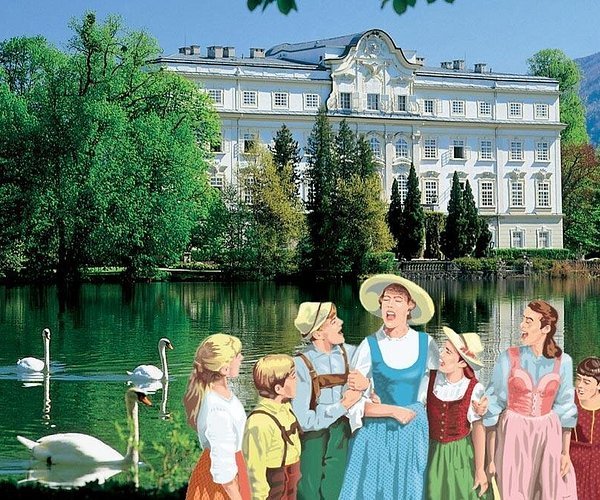
The 1965 film The Sound of Music was shot almost entirely on location in and around Salzburg, and the city's landscape — the baroque old town, the lake district, the alpine meadows above the Untersberg — is immediately recognisable to anyone who has seen it. The Original Sound of Music Tour, operated by Panorama Tours since 1972, visits the key filming locations in sequence: Mirabell Gardens (the Do-Re-Mi steps), Nonnberg Abbey, the Leopoldskron Palace lake terrace, and the mountain meadows used for the opening scene.

The Trapp family story is also genuine Austrian history — Georg von Trapp was a decorated naval commander of the Austro-Hungarian empire, and the family's escape from Nazi occupation in 1938 (somewhat dramatised in the film) is a real chapter in Salzburg's 20th-century story. The tour contextualises both the film locations and the historical background.

Booking the Original Sound of Music Tour

The tour runs daily year-round and takes approximately 4 hours, covering both city locations and the Salzkammergut lake district. Panorama Tours is the original operator — book through their website or through Viator to ensure you're on the genuine original tour rather than one of several imitations. The tour departs from Mirabellplatz in central Salzburg; transport from your hotel is often included.
Duration
~4 hours
Season
Year-round daily
Departs
Mirabellplatz, Salzburg
Transport
Often included
Original Operator
Panorama Tours (1972)
Difficulty
Easy
📋 Booking Tips
Book in advance during peak summer season (July–August) and over Christmas — the tour fills up. The Original Sound of Music Tour is operated by Panorama Tours; book through Viator or directly through panoramatours.com. Allow an extra half day in Salzburg to walk the old town after the tour — the Getreidegasse, Hohensalzburg Fortress, and the Dom are all within easy walking distance.
⭐ Why It's Worth It
Even if you're not a particular fan of the film, the Salzburg lake district is jaw-dropping and the tour gives you access to locations — including the Leopoldskron Palace lakeside terrace — that you couldn't otherwise visit. The combination of the baroque city and the surrounding mountains is one of the most beautiful urban settings in Europe, and the tour covers both in four hours. It's genuinely one of the best half-days available in Austria.
Original Sound of Music tour Salzburg Austria Panorama Tours
Original Sound of Music Tour — Salzburg
The original tour since 1972 — Mirabell Gardens, Nonnberg Abbey, Leopoldskron Palace, and the alpine lake district filming locations.
Book Tour →

5

Apple Strudel Cooking Class, Vienna

🥐 Cultural · Year-Round
Apple strudel cooking class Vienna Austria stretching dough hands-on

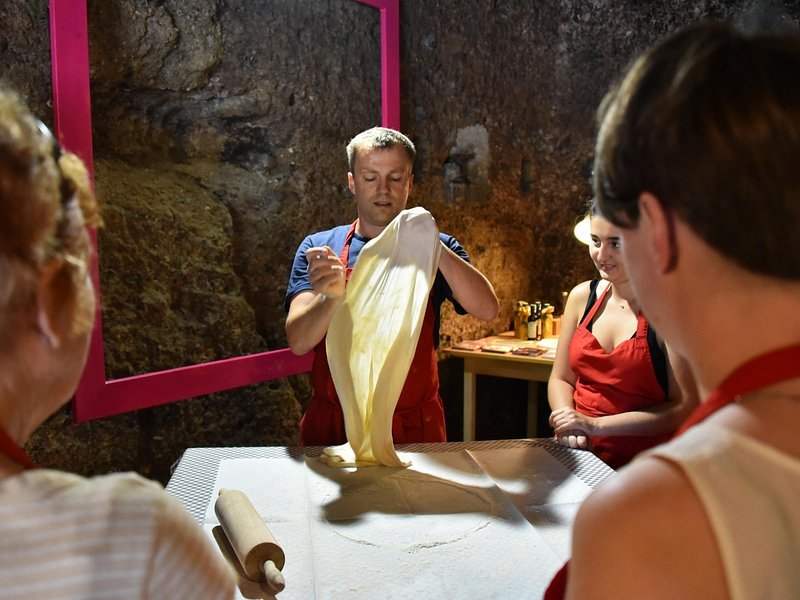
Apfelstrudel is Austria's most iconic pastry — layers of paper-thin stretched dough wrapped around spiced apple, raisins, and breadcrumbs, baked until golden and served with vanilla sauce or cream. It is also technically one of the most demanding pastries in European cuisine: the dough must be stretched by hand until it is thin enough to read a newspaper through, without tearing, across a tablecloth-sized surface. A hands-on strudel class is both a cooking lesson and a genuine test of patience and technique.

Vienna's strudel cooking classes are typically held in traditional Viennese kitchens, often in historic buildings in the first or second district. The class covers the full process: mixing and resting the dough, the stretching technique (which takes most people several attempts to get right), the filling preparation, rolling, and baking. You eat everything you make — ideally with a glass of Austrian Riesling.

What to expect in a Vienna strudel class

Classes typically run 2–3 hours and are taught in English. Group sizes are usually small — 6 to 12 people. No prior cooking experience is required or expected. The stretching technique is the focus of the class and the part that surprises most participants: the dough becomes extraordinarily thin and elastic when handled correctly, and the moment it works properly is very satisfying. Book through Viator for the best availability — classes in peak season fill up days in advance.

Duration
2–3 hours
Location
Vienna city centre
Language
English
Group Size
6–12 people
Season
Year-round
Difficulty
Easy
📋 Booking Tips
Book in advance — popular classes fill up several days ahead in summer and around Christmas. Wear comfortable clothes you don't mind getting floury. Classes typically include all ingredients, equipment, and a tasting of the finished product. Check whether wine or other drinks are included or available to purchase. Most classes are held in the 1st or 2nd district — easily reachable by U-Bahn.
⭐ Why It's Worth It
The strudel class is one of those activities that sounds like tourist fluff and turns out to be genuinely absorbing. The dough stretching is harder than it looks and more satisfying than you expect when it works. Making something from scratch in a Viennese kitchen and then eating it warm with vanilla sauce is a good afternoon in any city. It's also a skill you can actually take home — the technique works in any kitchen.
Apple strudel cooking class Vienna Austria hands-on
Apple Strudel Cooking Class — Vienna
Hands-on strudel class in a Viennese kitchen — stretch the dough paper-thin, fill, roll, bake, and eat everything you make.
Book Class →

Best Time to Visit Austria

Austria has two distinct peak seasons driven by its dual identity as an alpine and cultural destination.
🌸 Spring — April & May Ideal for Vienna and Salzburg — mild temperatures, fewer crowds, lower prices. The Großglockner road opens in late April or May. Alpine wildflowers at their peak in May.
☀️ Summer — June to September Best for cycling, via ferrata, and alpine hiking. Großglockner at its best June–August. Peak tourist season in Salzburg and Vienna — book accommodation ahead.
🍂 Autumn — October & November Excellent shoulder season for cities. Alpine colours in October are spectacular. Via ferrata season ends in October. Vienna State Opera season in full swing from September.
❄️ Winter — December to March Peak ski season in the Alps. Vienna Christmas markets (December) are among the best in Europe. The State Opera and concert season is at its most vibrant. Großglockner road closed.

Frequently Asked Questions — Austria

When is the best time to visit Austria?
Austria has two peak seasons. Summer (June–September) is best for the Großglockner, via ferrata, and alpine hiking. Winter (December–March) is peak ski season. Spring (April–May) and autumn (October–November) are ideal for Vienna and Salzburg — fewer crowds, lower prices, and comfortable temperatures for sightseeing.
How many days do you need in Austria?
A week is a good baseline. Two to three days in Vienna covers the State Opera, Schönbrunn, and the Innere Stadt. Two days in Salzburg covers the Sound of Music locations and the old town. Two to three days in the Salzkammergut or Tyrol covers hiking, via ferrata, and the Großglockner. A longer trip allows for the lake district around Hallstatt and deeper alpine exploration.
How do you get cheap Vienna State Opera tickets?
Standing room tickets cost €3–10 and go on sale 80 minutes before each performance at the Stehparterre entrance. Arrive at least 90 minutes early for popular productions — the queue forms quickly. The standing areas have good sightlines and excellent acoustics. Seated tickets are available at wiener-staatsoper.at and can sell out months ahead for premiere performances.
Is the Großglockner road open year-round?
No — the Großglockner High Alpine Road is typically open late April or May through early November, depending on snow. Exact dates vary each year. There is a vehicle toll but cyclists ride free. Best cycling conditions are June through September. Check grossglockner.at for current road status before you go.
Do you need experience for via ferrata in Austria?
No prior climbing experience is required for beginner and intermediate routes. All via ferrata requires a klettersteig set (harness, lanyard, helmet) — available to rent at base stations. First-timers should consider a guided experience. A reasonable level of fitness and comfort with heights is essential. The Dachstein area has routes for all levels from easy to very hard.
What is the Original Sound of Music Tour?
The Original Sound of Music Tour is operated by Panorama Tours, who have run the tour since 1972. It visits key filming locations including Mirabell Gardens, Nonnberg Abbey, the Leopoldskron Palace lake terrace, and the mountain meadows used for the opening scene. The tour runs daily year-round, takes approximately 4 hours, and departs from Mirabellplatz in central Salzburg.
Is Austria worth visiting beyond Vienna and Salzburg?
Absolutely. The Salzkammergut lake district (including Hallstatt) is one of the most beautiful landscapes in Central Europe. The Tyrol offers world-class hiking, via ferrata, and the Großglockner. The Wachau Valley along the Danube is outstanding for cycling and wine. Austria rewards travellers who rent a car and explore the alpine regions beyond the main tourist circuit.

🇦🇹 Austria Travel Tips

Austria runs on the Austrian Federal Railways (ÖBB) — trains are reliable, punctual, and connect Vienna, Salzburg, Innsbruck, and Graz efficiently. For alpine regions, a rental car gives the most flexibility. The Vignette (motorway sticker) is required for driving on Austrian motorways — available at border crossings and petrol stations. Tipping in restaurants is standard at 10%. Austria uses the euro. Tap water throughout the country comes from alpine springs and is excellent.
More Destinations to Explore
Switzerland itinerary TheCantMiss
🇫🇷🇧🇪🇱🇺🇨🇭 France, Belgium, Luxembourg & Switzerland
View Guide →
Germany travel guide
🇩🇪 Germany
Switzerland travel guide
🇨🇭 Switzerland
Italy travel guide
🇮🇹 Italy
Netherlands travel guide
🇳🇱 Netherlands
Czech Republic travel guide
🇨🇿 Czech Republic
Norway travel guide
🇳🇴 Norway
Spain travel guide
🇪🇸 Spain